




Is Your Money Safe in Online Banks? FDIC vs. Private Banks: A Comprehensive Guide to Banking Security
In an increasingly digital world, the way we manage our money has fundamentally transformed. Online banks, fintech apps, and a myriad of digital financial services promise convenience, higher yields, and cutting-edge technology. Yet, as our financial lives migrate online, a fundamental question persists: **Is my money truly safe in an online bank? And how does this compare to the traditional “private banks” we’ve long trusted?**
This question isn’t just about choosing between a brick-and-mortar branch and a mobile app; it’s about understanding the bedrock of financial security in an evolving landscape. Many assume a physical presence automatically equates to greater safety, while others worry about the intangible nature of digital institutions.
This comprehensive guide will demystify the critical layers of protection for your deposits, comparing the safeguards offered by online banks, traditional banks, and specialized private banking services. We’ll dive deep into FDIC insurance, explore the nuanced security measures of various financial institutions, and provide practical insights to empower you to make informed decisions about where your money truly belongs. Whether you’re a digital native or a seasoned saver, understanding these distinctions is crucial for safeguarding your financial future.
—
#
The Unshakeable Foundation: Understanding FDIC and NCUA Insurance
The cornerstone of deposit safety in the United States, regardless of whether you bank online or at a traditional branch, is federal deposit insurance. This protection is primarily provided by two independent government agencies: the Federal Deposit Insurance Corporation (FDIC) and the National Credit Union Administration (NCUA).
##
What is FDIC Insurance and How Does It Work?
The FDIC was established in 1933 during the Great Depression to restore public confidence in the banking system. Before the FDIC, bank runs were common, with depositors rushing to withdraw their money from failing banks, often losing their life savings. The FDIC changed all that, promising that your insured deposits are safe, even if your bank fails.
**Key Principles of FDIC Coverage:**
1. **Coverage Limit:** The standard insurance amount is **$250,000 per depositor, per insured bank, for each ownership category.** This “per ownership category” is critical and often misunderstood.
* **Single Accounts:** If you have a checking and savings account in your name at the same FDIC-insured bank, both combined are insured up to $250,000.
* **Joint Accounts:** If you have a joint account with another person, each co-owner is insured up to $250,000. So, a joint account with two owners at one bank is insured up to $500,000.
* **Certain Retirement Accounts:** IRAs, 401(k) accounts (if held as deposits), and other qualified retirement accounts are insured up to $250,000 *separately* from your single or joint accounts at the same bank.
* **Trust Accounts:** Revocable and irrevocable trust accounts have specific, often higher, coverage limits depending on the number of beneficiaries and structure.
* **Business Accounts:** Different rules apply for business accounts like sole proprietorships, partnerships, and corporations.
2. **What’s Covered:**
* Checking accounts
* Savings accounts
* Money Market Deposit Accounts (MMDAs)
* Certificates of Deposit (CDs)
* Cashier’s checks, money orders, and other official items issued by a bank.
3. **What’s NOT Covered:**
* **Investment products:** Stocks, bonds, mutual funds, annuities, life insurance policies, cryptocurrencies, and other non-deposit investment products are NOT FDIC insured, even if purchased through an FDIC-insured bank. These are typically covered by SIPC (Securities Investor Protection Corporation) up to $500,000 for securities and cash, but SIPC protects against broker failure, not market losses.
* Safe deposit box contents.
* Cryptocurrency holdings, even if managed through a bank or fintech platform.
* Investment products or accounts offered by non-bank entities.
**How to Verify FDIC Coverage:**
Every legitimate, federally insured bank in the U.S., whether online or traditional, will display the official FDIC logo on its website and at its physical locations (if applicable). You can also use the FDIC’s “BankFind” tool on their website (fdic.gov/bankfind) to confirm a bank’s insurance status and details.
**Practical Tip:** If your total deposits at a single bank exceed $250,000 (or $500,000 for joint accounts, etc.), consider diversifying your funds across multiple FDIC-insured banks to ensure all your money is fully protected. For example, you could keep $250,000 at Ally Bank and another $250,000 at Discover Bank, knowing each institution provides independent coverage.
##
NCUA Insurance for Credit Unions
Credit unions operate on a different model – they are member-owned, non-profit financial cooperatives. While they don’t fall under the FDIC, they have their own equivalent federal insurance: the National Credit Union Administration (NCUA).
The NCUA’s National Credit Union Share Insurance Fund (NCUSIF) provides the exact same level of coverage as the FDIC: **$250,000 per depositor, per insured credit union, for each ownership category.** So, if you bank with a credit union, you enjoy the same robust federal protection for your deposits.
**How to Verify NCUA Coverage:**
Federally insured credit unions display the NCUA logo. You can verify their status on the NCUA’s website (ncua.gov).
—
#
Online Banks: Convenience, Innovation, and Ironclad Federal Protection
In recent years, online-only banks have surged in popularity, offering compelling advantages such as higher interest rates, lower fees, and cutting-edge digital tools. But the core question for many remains: are they as safe as their traditional counterparts?
The short answer is: **Yes, if they are FDIC-insured, your deposits at an online bank are just as safe as those at a traditional bank.**
##
The FDIC Shield: The Primary Safeguard
Many leading online banks are fully FDIC-insured. This means that if an online bank were to fail, the FDIC would step in to protect your deposits up to the $250,000 limit per depositor, per ownership category. The absence of physical branches has no bearing on this federal protection.
**Examples of Reputable FDIC-Insured Online Banks:**
* **Ally Bank:** Known for high-yield savings accounts, competitive CD rates, and an excellent online experience. It is a full-fledged FDIC-insured bank.
* **Discover Bank:** Offers online checking, savings, and CDs, all backed by FDIC insurance.
* **Capital One 360:** The online-focused division of Capital One, providing FDIC-insured checking, savings, and CDs.
* **Marcus by Goldman Sachs:** A consumer banking arm of Goldman Sachs, offering high-yield savings and CDs with FDIC insurance.
* **Synchrony Bank:** Another online-only bank specializing in high-yield savings and CDs, also FDIC-insured.
These banks operate under the same federal regulations and oversight as traditional banks, ensuring their financial stability and adherence to consumer protection laws.
##
Beyond FDIC: Digital Security Measures and Fraud Protection
While FDIC insurance protects against bank failure, the digital nature of online banking brings specific considerations regarding cybersecurity and fraud. Fortunately, online banks are often at the forefront of implementing advanced security measures:
1. **Advanced Encryption:** All communication between your device and the bank’s servers is encrypted using industry-standard protocols (e.g., TLS/SSL) to prevent unauthorized access to your data.
2. **Multi-Factor Authentication (MFA):** This critical layer of security requires more than just a password to log in. It might involve a code sent to your phone, biometric authentication (fingerprint, facial recognition), or a security token. This significantly reduces the risk of account takeover even if your password is stolen.
3. **Real-time Fraud Monitoring:** Online banks employ sophisticated AI and machine learning algorithms to detect unusual activity on your accounts instantly. Suspicious transactions can trigger immediate alerts or temporary freezes.
4. **Zero-Liability Policies:** Most major online banks offer zero-liability protection for unauthorized transactions. This means you won’t be held responsible for fraudulent charges if you report them promptly.
5. **Secure Login Practices:** Features like automatic logouts after inactivity, virtual keyboards, and device recognition add further layers of protection.
6. **Regular Security Audits:** Online banks are subject to stringent internal and external security audits to identify and fix vulnerabilities.
**Perceived Drawbacks and How Online Banks Address Them:**
* **No Physical Branch for Help:** While you can’t walk into a branch, online banks invest heavily in robust customer support channels, including 24/7 phone support, live chat, secure messaging, and extensive online FAQs. Many provide personalized assistance on par with, or exceeding, traditional banks.
* **Reliance on Technology:** This is a double-edged sword. While it offers convenience, it also means reliance on your device’s security and your internet connection. However, banks employ measures to detect compromised connections and offer advice on secure browsing.
**Practical Tip:** Always use strong, unique passwords for your banking accounts. Enable multi-factor authentication whenever available, and be vigilant about phishing attempts (emails or texts trying to trick you into revealing your login credentials). Never click on suspicious links or download attachments from unknown sources.
—
#
Traditional Banks, Private Banking, and Wealth Management: Layered Security and Personalized Service
When people refer to “private banks,” they often envision large, established institutions with physical branches, perhaps catering to higher-net-worth individuals. It’s crucial to understand that the vast majority of these traditional banks in the U.S. – from national giants to community banks – are also **FDIC-insured**. This means the fundamental deposit safety for your checking and savings accounts is identical to that of FDIC-insured online banks.
##
The Role of FDIC Insurance in Traditional Banking
Major traditional banks like JPMorgan Chase, Bank of America, Wells Fargo, Citibank, and regional banks all carry FDIC insurance. Their branches display the FDIC logo prominently. So, for your basic deposit accounts, the safety mechanism is precisely the same as with an online bank. A common misconception is that a physical building makes your money “more” safe; in terms of deposit insurance, this is incorrect.
##
Beyond Basic Deposits: The Realm of Private Banking and Wealth Management
Where “private banks” and traditional institutions often differ is in the breadth of services offered and the additional layers of security (or rather, protection for *different types of assets*) they provide, particularly for high-net-worth clients.
**What is Private Banking and Wealth Management?**
These services typically cater to individuals and families with significant assets ($250,000 to several million, depending on the institution). They offer a highly personalized approach, often including:
* **Dedicated Relationship Managers:** A single point of contact for all financial needs.
* **Investment Management:** Portfolio creation and management (stocks, bonds, mutual funds, alternative investments).
* **Financial Planning:** Retirement planning, estate planning, tax strategies.
* **Specialized Lending:** Jumbo mortgages, lines of credit against investment portfolios.
* **Trust and Fiduciary Services:** Managing assets on behalf of beneficiaries.
* **Global Banking and Concierge Services.**
**Security Mechanisms Beyond FDIC for Wealth Management:**
1. **SIPC (Securities Investor Protection Corporation):** This is a critical protection for investment accounts. SIPC protects customers of failed brokerage firms up to **$500,000, including up to $250,000 for cash.** It protects against the loss of cash and securities if a SIPC-member brokerage firm fails, but **it does not protect against losses due to market fluctuations.**
* *Example:* If you have an investment account at Merrill Lynch (a Bank of America company) with stocks and cash, and Merrill Lynch were to fail, SIPC would protect your assets up to the limits.
2. **Custodial Services:** Private banks often act as custodians for clients’ assets, holding them securely and separately from the bank’s own assets. This ensures that even if the bank were to face financial difficulties, your specific assets held in custody would remain yours.
3. **Institutional Strength and Reputation:** Large, established private banks often have vast financial resources, diversified business lines, and a long history of stability. Their brand reputation is a significant asset they strive to protect.
* *Examples:* JPMorgan Private Bank, Goldman Sachs Private Wealth Management, Merrill Lynch Private Banking & Investment Group.
4. **Due Diligence and Fiduciary Responsibility:** Reputable wealth management firms and private banks often operate under a fiduciary standard, meaning they are legally obligated to act in their clients’ best interests. This ethical and legal framework adds a layer of trust.
5. **Sophisticated Cybersecurity Infrastructure:** Just like online banks, traditional banks with robust private banking divisions invest heavily in state-of-the-art cybersecurity to protect client data and assets from cyber threats.
**Perceived Advantages of Traditional/Private Banks:**
* **Physical Presence and Relationship:** For some, the ability to walk into a branch, speak to a human, and build a personal relationship with a banker or advisor provides greater comfort and security, particularly for complex transactions or during times of financial stress.
* **Integrated Services:** A single institution can often handle all banking, lending, and investment needs, providing a seamless financial ecosystem.
* **Human Element in Problem Solving:** While online banks have excellent digital support, some prefer direct human interaction for resolving complex issues.
**Drawbacks:**
* **Higher Fees:** Private banking services come with substantial fees, often requiring significant minimum asset levels.
* **Potentially Lower Interest Rates:** Traditional bank deposit accounts often offer lower interest rates compared to online-only banks due to higher overhead costs.
**Practical Tip:** When considering private banking or wealth management, always verify the firm’s regulatory registrations (e.g., with the SEC or FINRA) and ask about their specific asset protection policies, including SIPC coverage and how client assets are segregated. Don’t confuse market risk with the risk of institutional failure.
—
#
Online Banks vs. Traditional Banks: A Security Showdown (Focusing on Digital Risks)
The core safety of your deposits (FDIC/NCUA) is largely identical between online and traditional banks. However, the operational models and user experiences lead to different emphasis points regarding security. Let’s compare their approaches to digital risks.
##
Shared Cybersecurity Challenges
Both online and traditional banks face the same sophisticated cyber threats:
* **Phishing and Spoofing:** Scammers attempting to trick users into revealing credentials through fake emails, texts, or websites.
* **Malware and Ransomware:** Malicious software designed to steal data or disrupt systems.
* **Data Breaches:** Unauthorized access to sensitive customer information.
* **Insider Threats:** Security risks posed by employees.
* **Distributed Denial of Service (DDoS) Attacks:** Attempts to make online services unavailable by overwhelming them with traffic.
To combat these, both types of institutions invest billions in cybersecurity, employing dedicated teams, advanced threat detection systems, and continuous vulnerability assessments. They adhere to strict regulatory guidelines (e.g., Gramm-Leach-Bliley Act, PCI DSS) regarding data privacy and security.
##
Online Banks: Designed for Digital Security
Online banks, by their very nature, are built on a digital-first foundation. This often means:
* **Cutting-Edge Technology:** They tend to adopt newer security technologies faster, as their entire infrastructure is digital. This includes advanced encryption, AI-driven fraud detection, and biometric authentication (Face ID, Touch ID).
* **Focused Security Expertise:** Their entire operation revolves around the digital realm, allowing them to concentrate their security resources and expertise specifically on online threats.
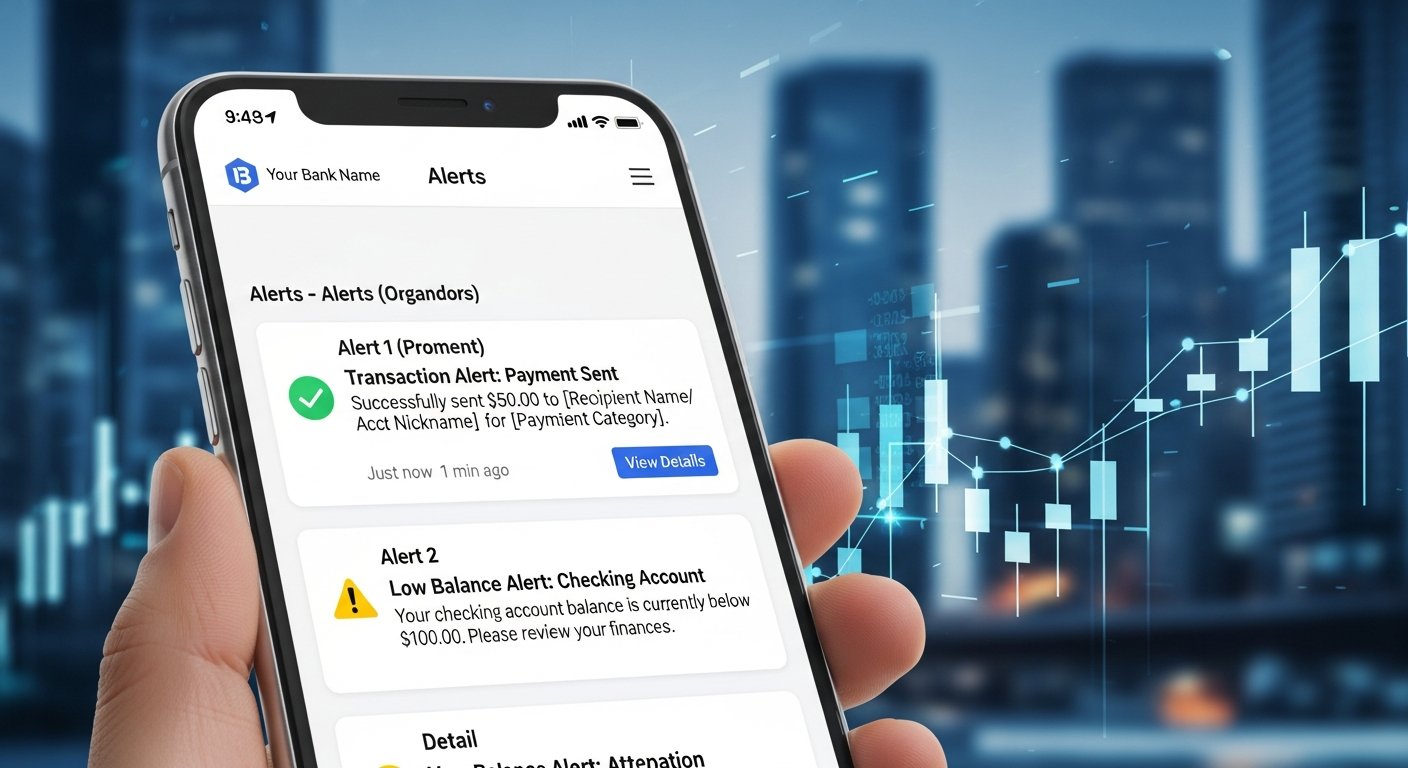
* **User Empowerment through Digital Tools:** Mobile apps and online portals often provide robust features like instant transaction alerts, the ability to freeze debit cards, and secure messaging within the app – giving users more control over their security.
* **Lower Physical Footprint, Different Risk Profile:** While they lack physical branches, this also means fewer physical points of entry for traditional crimes like armed robbery, though this is offset by increased digital exposure.
**Examples of Online Bank Security Features:**
* **Ally Bank:** Offers security features like two-factor authentication, account alerts, debit card controls (turn off/on), and a robust fraud protection guarantee.
* **Discover Bank:** Provides 24/7 account monitoring, alerts for suspicious activity, and a “Freeze It” feature for debit cards.
* **Chime (a fintech, banking services provided by Bancorp Bank or Stride Bank, N.A., both FDIC-insured):** Utilizes instant transaction alerts, fingerprint authentication, and the ability to block transactions.
##
Traditional Banks: Adapting and Integrating Security
Traditional banks, while having a physical presence, have also heavily invested in their digital security to protect their online and mobile banking platforms.
* **Hybrid Security Model:** They must secure both physical branches (vaults, cash handling, physical access controls) and their extensive digital infrastructure. This can be complex, but also means diversified security teams.
* **Legacy Systems vs. Modernization:** Older, larger banks sometimes grapple with integrating modern security protocols into legacy IT systems, though significant investments are continually made in this area.
* **Data Integration Challenges:** Managing data across various departments (retail banking, lending, investments) while maintaining consistent security protocols is a complex task.
* **Fraud Detection Across Channels:** They must monitor for fraud across in-person transactions, ATMs, online banking, and mobile apps.
**Examples of Traditional Bank Security Features:**
* **Chase:** Offers robust online security with login verification, security alerts, and a dedicated fraud monitoring team. They also have physical branches for in-person support.
* **Bank of America:** Provides advanced encryption, account alerts, fingerprint and Face ID login, and features like “Erica” (AI assistant) that can help with security questions.
* **Wells Fargo:** Emphasizes strong encryption, multi-factor authentication, and a detailed fraud protection center.
**The Bottom Line on Digital Security:**
Both online and traditional banks employ sophisticated measures to protect your money and data. The critical difference isn’t that one is inherently “safer” than the other, but rather *how* they implement and communicate these protections. Online banks are often perceived as being more technologically advanced because their entire service model relies on it. Traditional banks have adapted their digital offerings, often matching or exceeding the features of online-only competitors.
**Practical Tip:** Your personal cybersecurity practices are just as important as the bank’s. Use strong, unique passwords for every online account, enable multi-factor authentication (MFA) on all financial logins, monitor your statements regularly, and be highly suspicious of unsolicited communications requesting personal information. Assume nothing and verify everything.
—
#
Specific Recommendations and Examples
Choosing the right bank involves balancing safety, features, interest rates, and personal preferences. Here are some recommendations based on different needs:
##
For Everyday Banking (High-Yield Savings & Checking)
If your primary goal is to maximize interest on your savings while maintaining easy access to your checking funds, FDIC-insured online banks are often the superior choice.
* **Recommendation:** **Ally Bank, Discover Bank, Marcus by Goldman Sachs, Capital One 360.**
* **Why:** They consistently offer higher Annual Percentage Yields (APYs) on savings accounts and often have no monthly fees on checking accounts. They provide excellent mobile apps, extensive digital tools, and robust cybersecurity. All are FDIC-insured.
* **Practical Tip:** Look for banks that integrate well with payment apps (Zelle, Venmo), offer free ATM networks (e.g., Allpoint for Ally), and have strong customer support channels.
##
For High-Net-Worth Individuals & Complex Financial Needs
If you have significant assets, complex investment portfolios, or require personalized financial planning and specialized lending, a traditional bank with a strong private banking or wealth management division, or a dedicated wealth management firm, may be more appropriate.
* **Recommendation:** **JPMorgan Private Bank, Goldman Sachs Private Wealth Management, Merrill Lynch Private Banking (Bank of America), UBS, Northern Trust.**
* **Why:** These institutions offer a comprehensive suite of services, dedicated relationship managers, sophisticated investment strategies, and expertise in areas like estate planning and trust services. While your cash deposits will be FDIC-insured (if held at their banking entity), the primary protection for investment assets will be SIPC and the firm’s overall financial strength and regulatory oversight.
* **Practical Tip:** Interview several firms. Understand their fee structure, fiduciary responsibilities, and how they protect your diverse assets (deposits vs. investments). Verify their regulatory standing.
##
For Digital-First Banking with a Fintech Twist
Some fintech companies partner with FDIC-insured banks to offer banking services, providing a user-friendly digital experience with the backing of federal insurance.
* **Recommendation:** **Chime, Varo Bank, Aspiration.**
* **Why:** These platforms often provide innovative features like early direct deposit, budgeting tools, and round-up savings. They clearly state their FDIC insurance status, as their underlying banking services are provided by FDIC-insured partner banks.
* **Practical Tip:** Always double-check which specific FDIC-insured bank is holding your deposits when using a fintech app. This information should be transparently disclosed on their website and in their terms of service.
##
General Safety Tips Applicable to All Banks:
1. **Verify FDIC/NCUA Status:** Always confirm your bank or credit union is federally insured.
2. **Enable Multi-Factor Authentication (MFA):** This is your strongest defense against unauthorized access.
3. **Strong, Unique Passwords:** Use a password manager to create and store complex, unique passwords for all financial accounts.
4. **Monitor Accounts Regularly:** Check your statements and transaction history frequently for any suspicious activity.
5. **Beware of Phishing:** Never click on suspicious links in emails or texts, and never provide personal or account information in response to unsolicited requests.
6. **Use Secure Networks:** Avoid conducting banking transactions over public Wi-Fi.
7. **Keep Software Updated:** Ensure your operating system, web browser, and antivirus software are always up to date.
8. **Diversify Deposits:** If you exceed the $250,000 FDIC limit (per ownership category), spread your money across multiple FDIC-insured institutions.
—
#
FAQ: Your Top Questions About Banking Safety Answered
**Q1: Is my money safer in a traditional bank because it has physical branches?**
**A:** No, the presence of physical branches does not make your *deposits* inherently safer. The primary safeguard for your money in both online and traditional banks is federal deposit insurance (FDIC or NCUA), which covers your deposits up to $250,000 per depositor, per insured institution, per ownership category. While physical branches offer a tangible presence and in-person assistance, they don’t provide superior deposit protection compared to a federally insured online bank.
**Q2: What about credit unions? Are they FDIC insured?**
**A:** Credit unions are not FDIC-insured, but they are federally insured by the National Credit Union Administration (NCUA) through the National Credit Union Share Insurance Fund (NCUSIF). This provides the exact same level of protection as the FDIC: $250,000 per depositor, per insured credit union, for each ownership category. So, your money in a credit union is just as safe as in an FDIC-insured bank.
**Q3: What if an online bank goes out of business? Do I lose my money?**
**A:** If an FDIC-insured online bank goes out of business, you will not lose your insured deposits. The FDIC steps in immediately to protect customers. They typically either arrange for another healthy bank to take over the failed bank’s accounts (so your money is automatically transferred) or, in rarer cases, directly pay out insured deposits to customers. The process is designed to be swift and seamless, ensuring customers have access to their funds with minimal disruption.
**Q4: Is cryptocurrency held in an online bank account FDIC-insured?**
**A:** No, cryptocurrency is not considered a deposit and is not FDIC-insured. FDIC insurance only covers traditional fiat currency deposits (U.S. dollars) held in checking, savings, money market deposit accounts, and CDs. Even if you use a banking app or fintech platform that offers crypto services, your crypto holdings themselves are not protected by FDIC insurance. Some crypto platforms may offer private insurance for digital assets, but this is distinct from federal deposit insurance and typically covers risks like hacking or theft from the platform, not market value fluctuations.
—
#
Conclusion: Empowering Your Financial Security Choices
The question of whether your money is safe in online banks versus private banks is ultimately a nuanced one, yet the core answer is remarkably simple: **Your deposits are safe as long as they are held in a federally insured institution, whether that institution operates primarily online or through physical branches.** The bedrock of this safety is the FDIC (for banks) or NCUA (for credit unions) insurance, which guarantees the protection of your funds up to $250,000 per depositor, per ownership category, per institution.
Online banks have proven to be not just convenient and competitive, but also incredibly secure, leveraging advanced digital technologies and adhering to stringent federal regulations. Traditional banks, while maintaining their physical presence, have equally robust digital security measures and, for high-net-worth clients, offer additional layers of protection for investment assets through entities like SIPC.
The choice between an online-only bank and a traditional institution often boils down to personal preference for service, access to specific features, interest rates, and the level of personalized attention you require for your broader financial portfolio.
**Your clear takeaways for financial security are:**
* **Verify Federal Insurance:** Always confirm that any bank or credit union you use is FDIC or NCUA insured.
* **Practice Strong Personal Cybersecurity:** Your vigilance in using strong passwords, MFA, and avoiding scams is paramount.
* **Understand What’s Covered:** Differentiate between deposit insurance (FDIC/NCUA) and investment protection (SIPC). Cryptocurrencies are not federally insured.
* **Diversify if Necessary:** If your deposits exceed federal insurance limits at a single institution, spread your funds across multiple insured banks.
* **Choose Based on Your Needs:** Embrace the options available, knowing that both online and traditional banking models can offer secure and robust solutions for your financial journey.
In today’s dynamic financial landscape, knowledge is your strongest asset. By understanding the mechanisms that protect your money, you can confidently navigate the world of banking, choosing the solutions that best align with your financial goals and peace of mind.