
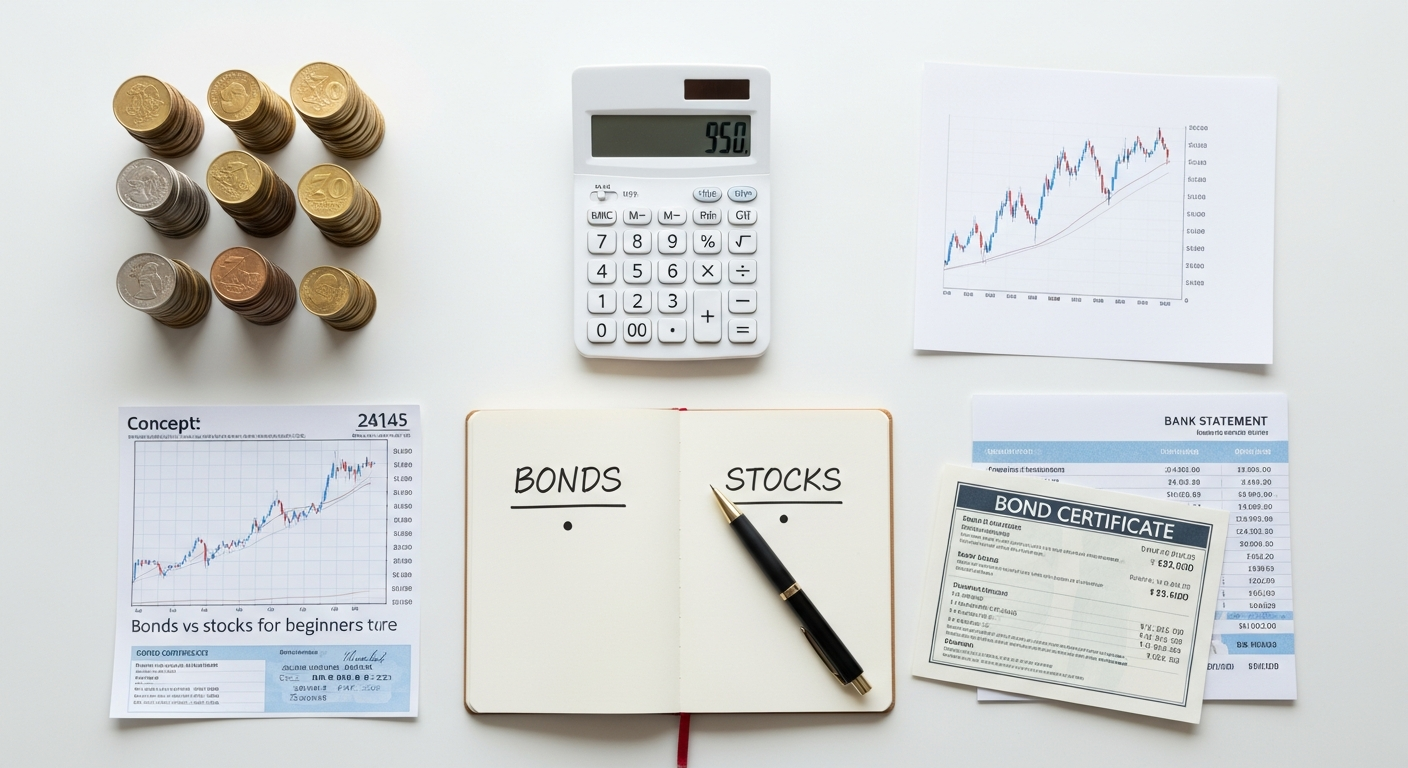
Understanding the Basics: What Are Stocks?
To truly grasp the “bonds vs stocks for beginners” dilemma, we must first establish a clear understanding of each asset class. Let’s begin with stocks.
When you buy a stock, you are essentially purchasing a small piece of ownership in a public company. This ownership stake is often referred to as a “share” or “equity.” As a shareholder, you become a part-owner of the company, and your fortunes are, to some extent, tied to the company’s performance. For instance, if you buy shares in a technology giant like Apple or a consumer goods behemoth like Procter & Gamble, you now own a tiny fraction of that entire enterprise.
How Do Stocks Make You Money?
- Capital Appreciation: This is the most common way investors profit from stocks. If the company you own shares in performs well – growing its revenue, increasing its profits, or innovating successfully – its market value tends to increase. As the company’s value rises, so does the price of its individual shares. If you bought a stock at $100 per share and later sell it at $120 per share, you’ve made a $20 profit per share due to capital appreciation. This growth potential is a significant draw for many investors.
- Dividends: Some companies, especially well-established, profitable ones, choose to share a portion of their earnings with shareholders in the form of regular payments called dividends. These are typically paid quarterly, though some companies pay monthly or annually. Dividends can provide a steady stream of income, making them attractive to investors seeking passive income. For example, if you own 100 shares of a company that pays a $1.00 quarterly dividend per share, you would receive $100 every quarter. This consistent income can be a crucial component of many Passive Income Ideas 2026 strategies, offering a tangible return on your investment even if the stock price doesn’t fluctuate significantly.
The Risk and Reward Profile of Stocks
Stocks are generally considered to be higher risk, higher reward investments compared to bonds. Here’s why:
- Potential for High Returns: Over the long term, stocks have historically delivered higher average returns than most other asset classes. This is due to their inherent growth potential tied to corporate innovation, economic expansion, and global market development. For a beginner with a long investment horizon, the potential for compounding returns from stocks can be a powerful engine for wealth creation.
- Higher Volatility: The downside to stocks’ high return potential is their volatility. Stock prices can fluctuate dramatically over short periods due to a myriad of factors: company-specific news (earnings reports, product launches, scandals), industry trends, economic data (inflation, interest rates, GDP growth), geopolitical events, and overall market sentiment. A stock that is up 10% one month could be down 5% the next. This volatility means there’s a greater chance you could lose money, especially if you need to sell your shares during a market downturn.
- Liquidity: Most publicly traded stocks are highly liquid, meaning they can be easily bought and sold on exchanges during market hours. This offers flexibility if you need to access your capital.
For beginners, understanding that stock market investing requires patience and a tolerance for short-term fluctuations is crucial. It’s not about timing the market, but rather about time in the market.
Understanding the Basics: What Are Bonds?
Now that we’ve covered stocks, let’s turn our attention to the other side of the equation in the “bonds vs stocks for beginners” discussion: bonds.
Unlike stocks, which represent ownership, a bond is essentially a loan. When you buy a bond, you are lending money to an entity—it could be a government (federal, state, or municipal) or a corporation. In return for your loan, the issuer (the borrower) promises to pay you back your original principal amount (the face value) on a specific date in the future, known as the maturity date. In the interim, the issuer also promises to pay you regular interest payments, often referred to as “coupon payments,” usually semi-annually.
Think of it like this: if you buy a $1,000 bond from the U.S. Treasury with a 3% annual interest rate and a 10-year maturity, you are lending the U.S. government $1,000. For the next 10 years, the government will pay you $30 per year (typically $15 every six months). At the end of 10 years, they will return your original $1,000.
How Do Bonds Make You Money?
- Interest Payments (Coupon): This is the primary way bondholders earn returns. The issuer pays you a fixed or variable interest rate over the life of the bond. These regular payments provide a predictable income stream. For investors seeking stability and regular cash flow, bonds are highly attractive.
- Principal Repayment: At the bond’s maturity date, the issuer returns your original investment (the principal). Assuming the issuer doesn’t default, this principal repayment is a guaranteed amount, offering capital preservation.
- Capital Appreciation (Less Common): While not their primary purpose, bonds can also experience capital appreciation. If interest rates fall after you’ve purchased a bond, your existing bond, which pays a higher interest rate, becomes more attractive to other investors, and its market price may increase. You could then sell it for more than you paid. Conversely, if interest rates rise, your bond’s value might decrease.
The Risk and Reward Profile of Bonds
Bonds are generally considered to be lower risk, lower reward investments compared to stocks. Here’s why:
- Lower Potential Returns: Historically, bonds have provided more modest returns than stocks. Their primary function in a portfolio is often for stability and income rather than aggressive growth.
- Lower Volatility: Bond prices tend to be less volatile than stock prices, offering a smoother ride. While they do fluctuate, especially with changes in interest rates, their movements are typically less dramatic than equities. This makes them a good choice for preserving capital.
- Capital Preservation: With most bonds, particularly those from highly-rated governments or corporations, the risk of losing your principal is relatively low. This makes them a cornerstone for conservative investors or those nearing retirement who prioritize protecting their nest egg.
- Default Risk: The main risk with bonds is default risk, also known as credit risk. This is the risk that the issuer might be unable to make its interest payments or repay your principal. Government bonds from stable countries (like U.S. Treasury bonds) have very low default risk, while corporate bonds, especially those from less financially stable companies (often called “junk bonds”), carry higher default risk. Credit rating agencies (like Standard & Poor’s, Moody’s, and Fitch) assess and rate the creditworthiness of bond issuers to help investors gauge this risk.
- Interest Rate Risk: As mentioned, rising interest rates can cause the market value of existing bonds to fall, as new bonds are issued with higher yields, making older, lower-yielding bonds less attractive.
For beginners, bonds can serve as a foundational element, offering a degree of safety and predictable income that can help balance the higher risk associated with stocks.
The Fundamental Differences: Risk, Return, and Volatility
Risk Profile: Growth vs. Stability
- Stocks: Carry higher risk because their value is directly tied to the performance of individual companies and broader economic conditions. If a company fails or the economy tanks, stock prices can plummet. However, this higher risk is accompanied by the potential for significant long-term growth. You’re taking on more uncertainty for the chance of greater reward.
- Bonds: Generally carry lower risk. When you buy a bond, you’re essentially getting a promise of repayment and interest. The main risks are the issuer defaulting (less likely with high-quality bonds like U.S. Treasuries) and interest rate fluctuations affecting the bond’s market value. Bonds are often seen as a “safe haven” during economic uncertainty, providing stability and capital preservation.
Expected Return: Growth vs. Income
- Stocks: Offer the potential for higher returns, primarily through capital appreciation over the long term. While dividends contribute, the bulk of stock returns historically comes from the growth in share prices. This growth potential makes them ideal for long-term wealth building.
- Bonds: Typically offer lower, but more predictable, returns, primarily through regular interest payments. While some capital appreciation is possible, it’s not the main driver of returns. Bonds are more suited for generating steady income and preserving capital.
Volatility: Rollercoaster vs. Smooth Ride
- Stocks: Are highly volatile. Their prices can swing wildly in response to news, sentiment, or economic data. A 1% or 2% daily move in a major stock index is not uncommon. This high volatility can be unsettling for beginners and underscores the importance of a long-term perspective to ride out the ups and downs.
- Bonds: Are generally less volatile. While bond prices do move, especially in response to interest rate changes, their fluctuations are typically more subdued than stocks. This lower volatility provides a smoother investment experience, which can be comforting for risk-averse investors or those closer to needing their money.
The Role in a Portfolio: Diversification
The beauty of understanding these differences is realizing that stocks and bonds are not necessarily competitors but rather complementary assets. A well-constructed portfolio often includes both:
- Stocks provide the engine for growth, aiming to outpace inflation and build substantial wealth over decades.
- Bonds act as the anchor, providing stability, income, and a hedge against stock market downturns. When stocks fall, bonds often hold their value or even rise, providing a crucial counterbalance.
This concept of combining different asset classes to reduce overall portfolio risk without necessarily sacrificing returns is known as diversification. For a beginner, it’s perhaps the most important lesson in investing: don’t put all your eggs in one basket.
Tailoring Your Portfolio: Matching Investments to Your Financial Goals
The “bonds vs stocks for beginners” decision isn’t one-size-fits-all. Your ideal allocation between these two asset classes should be a deeply personal choice, meticulously tailored to your unique financial goals, time horizon, and risk tolerance. Before you even think about buying your first stock or bond, it’s imperative to have a clear understanding of what you’re investing for.
1. Define Your Financial Goals
What are you hoping to achieve with your investments? Are you saving for:
- Short-term goals (1-3 years): A down payment on a house, a new car, a vacation, or building a robust emergency fund. For these goals, capital preservation and liquidity are key. You absolutely cannot afford significant losses.
- Medium-term goals (3-10 years): Funding a child’s education, a significant home renovation, or starting a business. Here, you might tolerate a bit more risk for potentially higher returns, but still need a relatively stable path.
- Long-term goals (10+ years): Retirement, legacy planning, or significant wealth accumulation. This is where you have the most time to recover from market downturns and can afford to take on more risk for the highest potential returns.
Understanding these time horizons is crucial because it dictates how much risk you can reasonably take. For instance, if you’re saving for a house down payment in two years, a highly volatile stock portfolio would be inappropriate. Conversely, if you’re saving for retirement in 30 years, an overly conservative bond-heavy portfolio might leave you short of your goals due to inflation eroding your purchasing power.
2. Assess Your Time Horizon
Your time horizon is the length of time you expect to hold your investments before needing the money. This is arguably the most significant factor in determining your stock-bond allocation:
- Younger Investors (longer time horizon): With decades until retirement, younger investors have the luxury of time to ride out market volatility. They can typically afford to have a higher percentage of their portfolio in stocks, as historical data shows stocks tend to outperform bonds significantly over long periods. The higher potential returns from stocks can compound powerfully over many years.
- Older Investors (shorter time horizon): As you approach retirement or other short-term goals, preserving capital becomes more critical than aggressive growth. Older investors often shift towards a higher allocation in bonds to reduce risk and provide a more stable income stream. This strategy helps protect accumulated wealth from sudden market downturns just before it’s needed.
3. Determine Your Risk Tolerance
Risk tolerance is your emotional and financial ability to withstand declines in the value of your investments. It’s a combination of:
- Financial Capacity: Can you afford to lose a portion of your investment without it severely impacting your lifestyle or ability to meet essential needs? Someone with a stable job, ample emergency savings, and no high-interest debt might have a higher financial capacity for risk.
- Emotional Comfort: How would you react if your portfolio dropped by 20% in a short period? Would you panic and sell, or would you view it as a temporary setback and an opportunity to buy more at lower prices? Understanding your emotional response to market volatility is vital.
Your risk tolerance usually falls into one of three categories:
- Aggressive: Comfortable with significant market fluctuations in pursuit of higher returns. Willing to accept higher potential losses.
- Moderate: Seeks a balance between growth and stability. Willing to accept some market risk but wants to limit potential downside.
- Conservative: Prioritizes capital preservation and stability over high returns. Uncomfortable with significant market volatility.
Many online questionnaires can help you gauge your risk tolerance, but ultimately, it’s a self-assessment. Be honest with yourself about what you can truly stomach.
Integrating Financial Planning Basics
Before you even begin to allocate between stocks and bonds, it’s crucial to have your financial house in order. A fundamental step is learning How To Create A Monthly Budget. A well-structured budget allows you to understand your income and expenses, identify areas for savings, and ultimately free up capital for investing. Without a clear budget, you might be investing money that you actually need for immediate expenses, leading to premature withdrawals or unnecessary debt. Furthermore, managing debt is another critical precursor. High-interest debt, such as credit card debt, often carries an effective “return” on repayment that far exceeds typical investment returns. Understanding and implementing strategies like the Snowball Vs Avalanche Debt Payoff Method can significantly improve your financial standing, ensuring you’re not paying more in interest than you’re earning on your investments. Only once these foundational steps are addressed can you truly make effective and sustainable investment decisions tailored to your personal circumstances.
Building a Balanced Portfolio: Diversification Strategies
Once you understand the individual characteristics of stocks and bonds and have assessed your financial goals, time horizon, and risk tolerance, the next crucial step in your “bonds vs stocks for beginners” journey is to learn how to combine them effectively into a balanced portfolio. This is where the power of diversification comes into play, a concept often summarized by the adage: “Don’t put all your eggs in one basket.”
Why Diversification Matters
Diversification is the strategy of spreading your investments across various asset classes, industries, and geographies to reduce overall risk. The core idea is that different investments react differently to the same economic events. When one part of your portfolio is performing poorly, another part might be performing well, thus smoothing out your overall returns and protecting you from catastrophic losses in any single area.
For instance, during an economic downturn, stock prices might plummet. However, high-quality bonds, especially government bonds, often perform well in such environments as investors seek safety. Conversely, during periods of strong economic growth, stocks tend to soar, while bonds might offer more modest returns. By holding both, you create a portfolio that is more resilient to various market conditions.
Asset Allocation: The Right Mix of Stocks and Bonds
Asset allocation is the process of deciding how much of your investment portfolio to dedicate to different asset classes, primarily stocks and bonds. There’s no single “correct” allocation; it depends entirely on your personal profile, as discussed in the previous section. However, there are some general guidelines and common approaches:
- The “100 Minus Your Age” Rule (a rough guide): A traditional rule of thumb suggests subtracting your age from 100 to determine the percentage of your portfolio that should be allocated to stocks, with the remainder going to bonds. For example, a 30-year-old would have 70% in stocks and 30% in bonds (100 – 30 = 70). A 60-year-old would have 40% in stocks and 60% in bonds.
- Modern Adaptations: Due to longer life expectancies and historically low bond yields, some investors now use “110 minus your age” or even “120 minus your age” to allow for a higher stock allocation and greater growth potential. This rule is a starting point, not a strict mandate.
- Target-Date Funds: For beginners, target-date funds offer a simple, “set-it-and-forget-it” approach to asset allocation. These are mutual funds or ETFs that automatically adjust their stock-bond mix over time. For example, a “2050 Target-Date Fund” would start with a high stock allocation for a younger investor aiming to retire around 2050, then gradually shift to a more conservative, bond-heavy allocation as the target date approaches.
- Personalized Approach: The most effective approach is to tailor your allocation based on your detailed assessment of goals, time horizon, and risk tolerance. If you have a high risk tolerance and a very long time horizon (e.g., 30+ years to retirement), you might start with 80-90% stocks and 10-20% bonds. If you are more conservative or closer to a goal, a 60/40 (stocks/bonds) or even 40/60 split might be more appropriate.
Beyond Stocks and Bonds: Further Diversification
While stocks and bonds form the core of most portfolios, true diversification extends further:
- Within Stocks: Don’t just buy one company’s stock. Diversify across:
- Industries: Technology, healthcare, finance, consumer goods, energy, etc.
- Company Size: Large-cap (established giants), mid-cap, small-cap (growth potential).
- Geography: U.S. stocks, international developed markets, emerging markets.
- Within Bonds: Diversify across:
- Issuer Type: Government bonds (Treasuries, municipal bonds), corporate bonds.
- Credit Quality: High-grade (low default risk), medium-grade.
- Maturity: Short-term, intermediate-term, long-term bonds.
- Other Asset Classes: As you become more experienced, you might consider adding real estate (e.g., through REITs), commodities, or alternative investments to your portfolio, though stocks and bonds remain the foundation.
Rebalancing Your Portfolio
Over time, the initial asset allocation you set will drift. If stocks perform exceptionally well, your stock allocation might grow larger than your target. If bonds underperform, their allocation might shrink. Rebalancing is the process of periodically adjusting your portfolio back to your target allocation. This typically involves selling some of your outperforming assets and buying more of your underperforming assets.
Rebalancing is crucial because:
- It helps maintain your desired risk level.
- It forces you to “buy low and sell high” (in a disciplined way).
- It prevents your portfolio from becoming overly concentrated in one asset class.
Rebalancing can be done annually, semi-annually, or when an asset class deviates significantly (e.g., +/- 5%) from its target allocation.
A well-diversified portfolio, strategically built with a thoughtful mix of stocks and bonds, is a cornerstone of long-term financial success. It not only mitigates risk but also positions you to capture returns from various market segments, contributing significantly to a secure financial future and potentially generating income for various Passive Income Ideas 2026. Whether through dividends from your stock holdings or interest payments from bonds, a balanced portfolio provides multiple avenues for your money to work for you.
Navigating Market Dynamics: When Do Bonds Outperform Stocks (and Vice-Versa)?
Understanding the fundamental characteristics of stocks and bonds is one thing, but truly mastering the “bonds vs stocks for beginners” comparison requires an appreciation for how these asset classes behave under different economic conditions. The market is dynamic, and what performs well in one environment might struggle in another. Recognizing these patterns can help you understand the rationale behind asset allocation and rebalancing.
Stocks Generally Outperform in:
- Periods of Economic Growth (Bull Markets): When the economy is expanding, corporate earnings typically rise, consumer spending increases, and business confidence is high. This environment is highly favorable for stocks, leading to capital appreciation and often increased dividends. Bull markets can last for many years, offering substantial returns.
- Low-Interest Rate Environments: When interest rates are low, borrowing money is cheaper for companies, which can fuel expansion, investment, and ultimately, higher profits. Low rates also make bonds less attractive (as they offer lower yields), pushing investors towards stocks in search of higher returns.
- Periods of Moderate Inflation (Controlled Inflation): A little inflation can be good for stocks, as companies can often pass on higher costs to consumers through price increases, boosting revenues. Stocks are often considered a decent hedge against moderate inflation because corporate assets and earnings tend to grow with inflation.
- Technological Innovation and Disruption: Eras marked by significant technological advancements often see specific sectors or companies experience explosive growth, leading to outsized stock returns for those involved.
Bonds Generally Outperform in:
- Periods of Economic Contraction or Recession (Bear Markets): When the economy slows down or enters a recession, corporate earnings decline, leading to falling stock prices. In these times, investors typically flock to safer assets like government bonds (especially U.S. Treasuries), driving up their prices and driving down their yields. This “flight to safety” makes bonds a valuable hedge against stock market downturns.
- High-Interest Rate Environments (for new bond purchases): While rising interest rates can negatively impact the market value of existing bonds, they make newly issued bonds more attractive because they offer higher yields. For investors looking to lock in higher income streams, periods of rising rates can be opportune for purchasing new bonds.
- Deflationary Environments: Deflation (a general decline in prices) is rare but can be particularly damaging to stocks, as corporate revenues and profits shrink. In such an environment, the fixed interest payments and principal repayment of bonds become more valuable because the purchasing power of money increases.
- Periods of Uncertainty and Volatility: When there’s significant geopolitical instability, market uncertainty, or high volatility in the stock market, investors often turn to bonds for their relative stability and capital preservation qualities.
The Interest Rate Conundrum
One of the most complex aspects for beginners is understanding the relationship between interest rates and bond prices. It’s an inverse relationship:
- When interest rates rise: The market value of existing bonds with lower fixed rates falls, because new bonds are being issued with higher, more attractive rates. To sell an older bond, you’d have to offer it at a discount.
- When interest rates fall: The market value of existing bonds with higher fixed rates rises, because they offer a better return than newly issued bonds.
This dynamic means that while bonds are generally less volatile than stocks, they are not immune to price fluctuations, especially longer-term bonds which are more sensitive to interest rate changes.
The Importance of a Balanced View
No one can consistently predict market turns or economic cycles. This is why a diversified portfolio, holding both stocks and bonds, is essential. It ensures that your portfolio is prepared for a range of economic scenarios. By having both growth-oriented stocks and stability-oriented bonds, you’re not betting everything on one outcome. Instead, you’re building a resilient portfolio that can navigate the inevitable ups and downs of the market, allowing you to stay invested for the long term and achieve your financial objectives.
Conclusion: Your Personalized Investment Journey
Embarking on your investment journey, especially when grappling with fundamental choices like “bonds vs stocks for beginners,” can seem daunting. However, by understanding the distinct characteristics, risk profiles, and roles of both stocks and bonds, you’ve taken a significant step towards becoming an informed and confident investor. Stocks offer the potential for substantial long-term growth and capital appreciation, making them powerful engines for wealth creation over decades, albeit with higher volatility. Bonds, conversely, provide stability, predictable income through interest payments, and capital preservation, acting as a crucial anchor in your portfolio, particularly during market downturns.
The key takeaway is that the decision between stocks and bonds is not an either/or proposition for most investors. Instead, it’s about finding the right balance—your optimal asset allocation—that aligns perfectly with your individual financial goals, your investment time horizon, and your personal comfort level with risk. A younger investor with a long time horizon and high risk tolerance might lean heavily towards stocks, while someone nearing retirement with a conservative outlook would likely favor a bond-heavy portfolio. Remember, your financial journey is unique, and your investment strategy should reflect that.
Before diving into specific investments, ensure your financial foundations are solid. Mastering How To Create A Monthly Budget will provide the necessary capital for investing, and tackling high-interest debt using strategies like the Snowball Vs Avalanche Debt Payoff Method will prevent it from eroding your investment returns. A well-managed financial life creates the freedom and capacity to invest effectively, contributing to your long-term wealth and opening doors to various Passive Income Ideas 2026.
As you move forward, remember that investing is a journey of continuous learning. Market conditions evolve, your personal circumstances will change, and your investment strategy should adapt accordingly. Regularly review your portfolio, rebalance as needed, and stay informed. With patience, discipline, and a clear understanding of your financial landscape, you are well-equipped to build a diversified portfolio that supports your aspirations and secures your financial future. At Fin3go, we are committed to providing you with the insights and tools to navigate this exciting path with confidence.
Frequently Asked Questions
Recommended Resources
Check out What Is Growth Hacking And How Does It Work on Kacerr for a deeper dive.
You might also enjoy Profit Margin Guide For Ecommerce Products from E-ComProfits.