
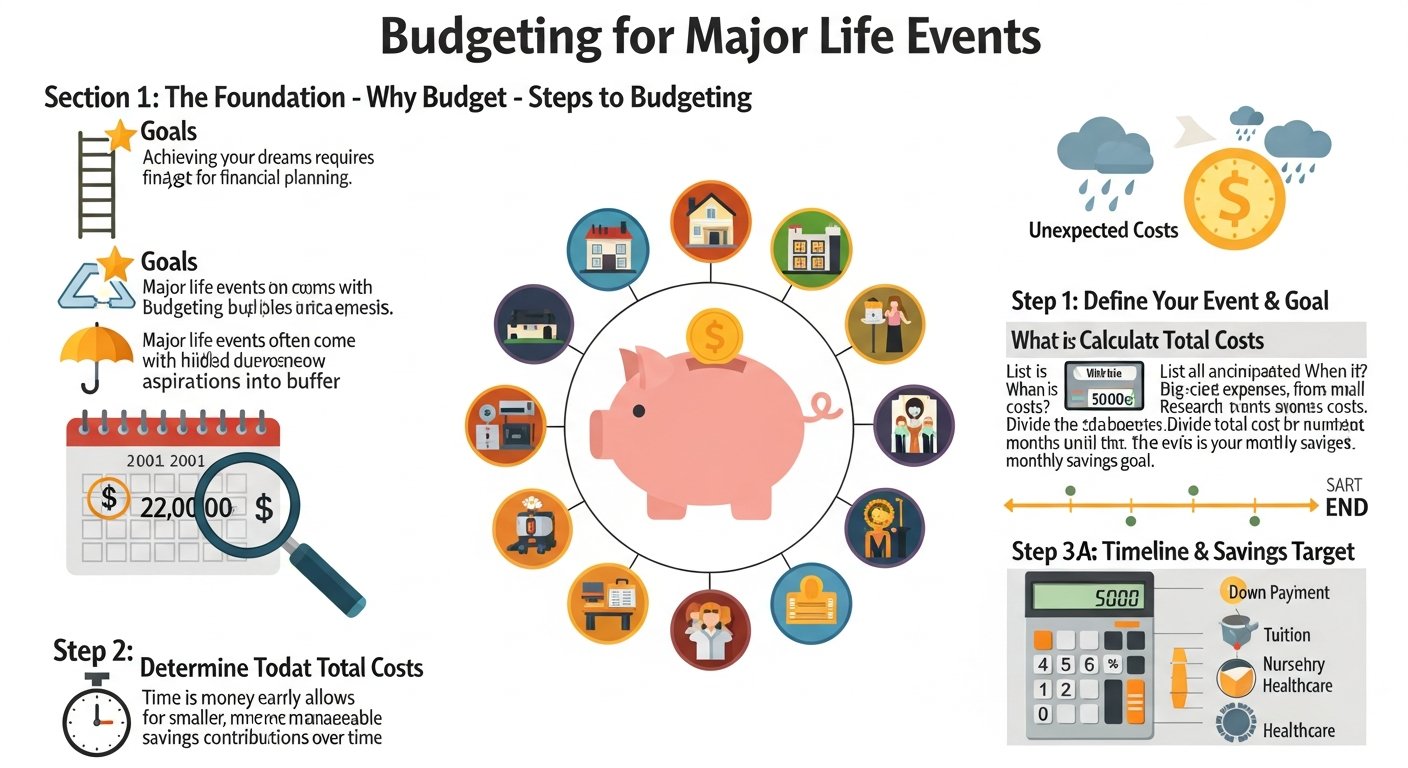
Budgeting for Major Life Events: Your Guide to Financial Preparedness
Life is a journey punctuated by significant milestones – buying a home, welcoming a child, pursuing higher education, or gracefully entering retirement. While these moments are often filled with joy and anticipation, they invariably come with substantial financial implications. This is where budgeting for major life events becomes not just a prudent choice, but a critical cornerstone of your financial well-being. At fin3go, we understand that proactive financial planning is the key to navigating these transitions with confidence, transforming potential stress into empowering opportunities. Effective budgeting empowers individuals to strategically allocate funds, ensuring financial stability, reducing stress, and enabling seamless goal attainment within the broader landscape of Personal Finance & Fintech Management. It involves identifying these significant life changes, setting clear financial goals, meticulously tracking income and expenses, and leveraging appropriate financial tools and strategies to turn aspirations into reality.
Understanding the Fundamentals of Major Life Event Budgeting
Before diving into the specifics of various life events, it’s essential to grasp the foundational concepts that underpin successful financial preparedness. These principles equip you with the mental framework and practical strategies needed to approach any significant life change with a well-devised financial plan.
What Constitutes a Major Life Event?
A major life event is any significant personal change that carries substantial financial implications, often requiring a shift in current spending, saving, or investment habits. These events can be planned or unexpected, joyful or challenging, but all demand a proactive approach to financial management. Recognizing these milestones is the first step in effective budgeting.
- Homeownership: Buying a first home, upgrading, or relocating.
- Family Expansion: Marriage, having a child, adoption, supporting aging parents.
- Education: Funding personal higher education, college for children, or vocational training.
- Career Changes: Job loss, starting a business, career transition, sabbatical.
- Retirement: The transition from active employment to a post-work lifestyle.
- Health Crises: Major medical emergencies, long-term care needs, chronic illness.
- Major Purchases: Large vehicle purchases, significant home renovations.
- Unexpected Events: Natural disasters, unforeseen legal challenges.
Why is Proactive Budgeting Crucial for Life’s Milestones?
The financial impact of major life events can be immense, often involving large lump sums, significant changes in monthly expenses, or a temporary disruption in income. Proactive budgeting mitigates these risks, providing a sense of control and security. Without a clear financial roadmap, individuals may face unexpected debt, delayed goals, or increased financial stress. Planning ahead allows for strategic resource allocation, leveraging financial tools, and making informed decisions that align with long-term financial goals.
- Financial Resilience: Building reserves and structured plans to withstand financial shocks.
- Goal Attainment: Ensuring that major life goals are achievable within realistic timeframes.
- Reduced Stress: Minimizing anxiety associated with large expenses or income changes.
- Optimized Savings: Making the most of compound interest and investment growth over time.
- Debt Avoidance: Preventing the need for high-interest loans to cover planned expenses.
- Informed Decision-Making: Allowing for thorough research and comparison of options.
Core Principles of Financial Planning for Major Events
Effective financial planning for major life events hinges on several fundamental principles. Adhering to these guidelines ensures a robust and adaptable financial strategy.
- Start Early: The power of compound interest makes early saving incredibly impactful. Even small, consistent contributions over time can grow into substantial sums.
- Define Specific Goals: Clearly articulate what each major life event entails financially. What are the estimated costs? What is the desired timeline?
- Track Income and Expenses Diligently: Understanding where your money comes from and where it goes is fundamental. This forms the basis of any budget.
- Prioritize Savings: Treat savings for major life events as a non-negotiable expense, perhaps even automating transfers to dedicated accounts.
- Build an Emergency Fund: A robust emergency fund (3-6 months of living expenses) acts as a crucial buffer, preventing you from derailing your major event savings for unexpected smaller crises.
- Assess and Manage Debt: High-interest debt can significantly impede your ability to save. Prioritize paying down expensive debt while saving for future goals.
- Regularly Review and Adjust: Life is dynamic. Your budget and financial plan should be reviewed quarterly or annually, and adjusted to reflect changes in income, expenses, or goals.
- Seek Professional Advice: For complex situations, a Certified Financial Planner (CFP®) can offer tailored strategies and insights.
[INLINE IMAGE 1: place after second H2]
Budgeting for Common Major Life Events
With the foundational principles established, we can now delve into specific applications. Each major life event presents unique financial challenges and opportunities, requiring tailored budgeting strategies. Let’s explore how to prepare for some of life’s most common milestones.
How to Budget for Buying a Home?
Budgeting for a home involves a multi-faceted approach, encompassing saving for a down payment, understanding mortgage options, accounting for closing costs, and planning for ongoing homeownership expenses. It’s one of the largest financial commitments many individuals make, demanding careful consideration and a disciplined savings strategy.
- Determine Affordability: Use online mortgage calculators to estimate what you can realistically afford based on your income, debt-to-income ratio, and desired monthly payment. Consider the 28/36 rule (no more than 28% of gross income on housing, 36% on total debt).
- Save for a Down Payment: Aim for at least 20% of the home’s purchase price to avoid Private Mortgage Insurance (PMI) and secure better interest rates. Explore government-backed loans (FHA, VA) if a 20% down payment is challenging. Open a dedicated high-yield savings account for this purpose.
- Account for Closing Costs: These typically range from 2% to 5% of the loan amount and include fees for appraisals, inspections, title insurance, and legal services. Budget for these separately from your down payment.
- Pre-Approval for Mortgage: Get pre-approved for a mortgage early in the process. This clarifies your borrowing power, solidifies your budget, and makes you a more attractive buyer.
- Budget for Ongoing Expenses: Beyond the mortgage payment, factor in property taxes, homeowner’s insurance, potential HOA fees, utilities, and a fund for home maintenance and repairs (e.g., 1-3% of the home’s value annually).
- Optimize Your Credit Score: A strong credit score (typically 740+) can significantly lower your mortgage interest rate, saving you tens of thousands over the life of the loan.
Learn more about choosing the right mortgage in our dedicated guide: How to Choose a Mortgage.
Financial Planning for Having a Child
Bringing a new life into the world is an incomparable joy, but it’s also a significant financial undertaking. From immediate delivery costs to long-term childcare and education, the expenses associated with raising a child are substantial. Proactive planning can alleviate much of the financial pressure.
- Estimate Initial Costs: Budget for prenatal care, delivery costs (even with insurance, there are co-pays and deductibles), newborn essentials (crib, car seat, clothes), and potential lost income during parental leave.
- Research Childcare Expenses: This is often one of the largest ongoing costs. Explore options like daycare centers, in-home care, or family assistance, and budget accordingly. Costs vary widely by region.
- Adjust Your Monthly Budget: Factor in recurring expenses like diapers, formula (if applicable), food, clothing, medical co-pays, and activities. Re-evaluate discretionary spending.
- Review Insurance Coverage: Ensure your health insurance covers your child. Consider increasing your life insurance coverage to protect your family’s future income.
- Start a College Savings Fund: Even small, consistent contributions to a 529 plan or other education savings vehicle can grow significantly over 18 years, leveraging compound interest.
- Update Estate Planning: Create or update your will, designate guardians for your child, and consider establishing trusts as needed.
Discover more about The Ultimate Guide to 529 Plans for your child’s education.
Saving for Retirement: A Long-Term Perspective
Retirement might seem distant, but it’s perhaps the most critical major life event to budget for due to its extended timeline and the power of compound interest. A well-funded retirement ensures financial independence and allows you to enjoy your post-work years without financial strain.
- Determine Your Retirement Goal: Estimate how much income you’ll need annually in retirement and for how many years. Financial advisors often recommend 70-80% of your pre-retirement income.
- Maximize Employer-Sponsored Plans: Contribute at least enough to your 401(k), 403(b), or similar plan to receive the full employer match – it’s free money! Maximize contributions if possible.
- Utilize Individual Retirement Accounts (IRAs): Open a Traditional or Roth IRA. Roth IRAs offer tax-free withdrawals in retirement, while Traditional IRAs offer tax-deductible contributions in the present (depending on income).
- Diversify Investments: Spread your investments across various asset classes (stocks, bonds, real estate) to mitigate risk and optimize returns over the long term. Consider target-date funds for a hands-off approach.
- Account for Inflation and Healthcare: Factor in the rising cost of living and significant healthcare expenses in retirement, which often increase as you age. HSAs (Health Savings Accounts) can be a valuable tool for future medical costs.
- Consider Social Security: Understand that Social Security will likely only cover a portion of your retirement expenses. Plan for it as a supplement, not your sole income source.
- Regularly Review with a Financial Advisor: A Certified Financial Planner can help you create a personalized retirement plan, adjust strategies as you approach retirement, and navigate complex investment decisions.
Budgeting for Education Costs (e.g., College Tuition)
The cost of higher education continues to rise, making it a significant financial hurdle for many families. Whether for yourself or your children, a dedicated education savings strategy is paramount.
- Research Expected Costs: Investigate tuition, fees, room and board, books, and living expenses for potential institutions. Public vs. private, in-state vs. out-of-state, all have vast cost differences.
- Explore 529 Plans: These state-sponsored savings plans offer tax benefits for education expenses. Contributions grow tax-deferred, and qualified withdrawals are tax-free.
- Consider Other Savings Vehicles: Custodial accounts (UTMA/UGMA) or Coverdell ESAs can also be used, though they have different contribution limits and tax implications.
- Apply for Financial Aid and Scholarships: Complete the Free Application for Federal Student Aid (FAFSA) annually. Actively search for scholarships based on merit, need, interests, or demographics.
- Balance Savings with Retirement: Financial experts generally advise prioritizing your retirement savings first, as you cannot borrow for retirement, but you can for education.
- Involve the Student: Encourage students to contribute to their education through part-time jobs, and understand the value of responsible borrowing if loans are necessary.
- Explore Community College or Trade Schools: These options can significantly reduce overall education costs, especially for the first two years or for specialized training.
Managing Finances During Job Loss or Career Change
Job loss or a voluntary career change can significantly impact income and financial stability. Preparing for such a transition is crucial for maintaining peace of mind and preventing financial distress.
- Build a Robust Emergency Fund: This is paramount. Aim for 6-12 months of living expenses specifically for potential income gaps.
- Review Your Budget: Immediately cut discretionary spending. Prioritize essential expenses like housing, food, and utilities.
- Understand Severance and Unemployment Benefits: Know what severance package you’re entitled to and apply for unemployment benefits promptly. These can bridge a crucial income gap.
- Explore Health Insurance Options: Understand COBRA options, marketplace plans, or spousal coverage to ensure continuous health coverage.
- Network Actively: Dedicate time to job searching and networking. The faster you find new employment, the less strain on your finances.
- Consider Temporary Work or Upskilling: Part-time work, freelancing, or investing in new certifications can provide income or improve future job prospects.
- Communicate with Creditors: If you anticipate difficulty making payments, contact creditors proactively to discuss options like deferment or modified payment plans.
Planning for Unexpected Medical Emergencies
Medical emergencies are by definition unforeseen, but their financial impact can be devastating without preparation. From unexpected hospital stays to ongoing treatments, healthcare costs can quickly accumulate.
- Maintain Adequate Health Insurance: Review your policy annually to understand your deductible, out-of-pocket maximum, and what is covered. Consider supplemental insurance if appropriate.
- Fund a Health Savings Account (HSA): If you have a high-deductible health plan (HDHP), an HSA is an excellent triple-tax-advantaged savings vehicle for medical expenses. Funds roll over year to year.
- Build an Emergency Fund: As mentioned, this fund is your first line of defense against any unexpected expense, including medical bills.
- Understand In-Network vs. Out-of-Network: Always verify that providers are in-network to avoid higher costs.
- Negotiate Medical Bills: Don’t hesitate to negotiate with hospitals or providers. They may offer discounts for upfront payment or payment plans.
- Create Advance Directives: While not financial, having a living will and medical power of attorney ensures your wishes are known during a health crisis.
Here’s a summary of key considerations for these major life events:
| Major Life Event | Typical Costs | Recommended Savings Timeline | Key Budgeting Actions | Relevant Financial Tools |
|---|---|---|---|---|
| Buying a Home | Down Payment (5-20% of price), Closing Costs (2-5%), Ongoing Maintenance | 5-10 years | Save down payment, optimize credit, get pre-approved, factor in ongoing costs. | Mortgage Calculator, High-Yield Savings Account, Credit Monitoring |
| Having a Child | Delivery ($5k-$30k), Childcare ($10k-$20k/year), Diapers, Food, Education | 1-3 years (initial), 18+ years (education) | Budget for initial expenses, research childcare, start 529 plan, review insurance. | 529 Plan, Life Insurance, Health Savings Account (HSA) |
| Retirement | Retirement Nest Egg (e.g., $1M-$3M+), Healthcare Expenses | 30+ years | Maximize 401(k)/IRA, diversify investments, plan for healthcare, consider advisor. | 401(k), IRA (Roth/Traditional), Robo-Advisor, Annuities |
| Education Costs | Tuition, Fees, Room & Board, Books ($10k-$70k+/year) | 10-18 years | Explore 529 plans, apply for aid/scholarships, balance with retirement. | 529 Plan, Coverdell ESA, FAFSA |
| Job Loss/Career Change | Loss of Income, Insurance Premiums | Ongoing (Emergency Fund) | Build 6-12 month emergency fund, cut discretionary spending, understand benefits. | High-Yield Savings Account, Unemployment Benefits, COBRA/Marketplace Health Insurance |
| Medical Emergencies | Deductibles, Co-pays, Uncovered Procedures, Long-Term Care | Ongoing (Emergency Fund & HSA) | Maintain insurance, fund HSA, build emergency savings, understand network. | Health Insurance, HSA, Emergency Fund |
[INLINE IMAGE 2: place after fourth H2]
Essential Tools and Strategies for Major Event Budgeting
In the age of digital finance, a wealth of tools and strategies are available to simplify and enhance your budgeting efforts for major life events. Leveraging these resources can provide greater clarity, automation, and control over your financial journey.
Leveraging Budgeting Apps and Software
Modern fintech solutions have revolutionized personal finance, making budgeting more accessible and intuitive than ever. These apps can help you track expenses, set goals, and monitor your progress towards major life events.
- Expense Tracking & Categorization: Automatically categorize transactions from linked bank accounts and credit cards, providing a clear picture of your spending.
- Goal Setting: Create specific savings goals for a down payment, a new baby, or retirement, and track your progress in real-time.
- Net Worth Tracking: Get a holistic view of your assets and liabilities to monitor your overall financial health.
- Bill Reminders: Avoid late fees by receiving alerts for upcoming bill due dates.
- Budgeting Methods: Many apps support popular budgeting methods like the 50/30/20 rule or zero-based budgeting.
| App Name | Key Features | Cost | Best For | Integration |
|---|---|---|---|---|
| Mint | Expense Tracking, Bill Reminders, Net Worth Tracking, Credit Score Monitoring | Free (Ad-supported) | Beginners, comprehensive overview, basic budgeting | Bank Accounts, Credit Cards, Investment Accounts |
| YNAB (You Need A Budget) | Zero-Based Budgeting, Goal Tracking, Debt Paydown Focus | $14.99/month or $99/year | Active budgeters, debt payoff, detailed financial control | Bank Accounts, Credit Cards |
| Personal Capital | Net Worth Tracking, Investment Analysis, Fee Analyzer, Cash Flow Tracking | Free (Advisory services optional) | Investors, high net worth individuals, comprehensive financial picture | Bank Accounts, Credit Cards, Investment Accounts, Mortgage |
| Simplifi by Quicken | Real-Time Spending, Custom Budgets, Subscription Tracking, Goal Progress | $3.99/month (billed annually) | Users needing modern interface, detailed spending insights | Bank Accounts, Credit Cards, Loans |
The Role of Emergency Funds and Savings Accounts
These are foundational elements of financial security, providing liquidity and safety for your funds. An emergency fund is non-negotiable for navigating life’s inevitable curveballs without derailing your major event savings.
- Emergency Fund: A readily accessible stash of cash, typically 3-6 months’ worth of essential living expenses, stored in a separate, easily accessible account. Its sole purpose is to cover unexpected expenses like job loss, medical emergencies, or major home repairs.
- High-Yield Savings Accounts (HYSAs): These offer significantly higher interest rates than traditional savings accounts, allowing your money to grow more quickly while remaining liquid. Ideal for emergency funds and short-to-medium term savings goals (e.g., a down payment in 1-3 years).
- Certificates of Deposit (CDs): Offer higher interest rates than HYSAs in exchange for locking up your money for a set term (e.g., 6 months to 5 years). Best for funds you won’t need until a specific future date.
Learn more about building a robust emergency fund in our guide: How to Build an Emergency Fund.
Debt Management and Credit Score Optimization
High-interest debt acts as a significant drag on your ability to save and invest for major life events. Furthermore, your credit score plays a vital role in securing favorable rates on mortgages, car loans, and even insurance.
- Prioritize High-Interest Debt: Focus on paying off credit card debt or personal loans with high-interest rates using methods like the debt snowball or debt avalanche.
- Understand Your Credit Score: Regularly check your credit report for errors and monitor your score. Factors like payment history, credit utilization, length of credit history, and credit mix all contribute.
- Maintain Low Credit Utilization: Aim to keep your credit card balances below 30% of your available credit to positively impact your score.
- Avoid Unnecessary New Debt: During periods of significant saving for a major event, resist the temptation to take on new loans or open too many new credit lines.
- Consolidate Debt: Consider debt consolidation loans with lower interest rates or balance transfer cards to simplify payments and reduce interest charges.
Deep dive into understanding your credit score here: Understanding Your Credit Score.
Investment Strategies for Long-Term Goals
For major life events with longer time horizons, such as retirement or a child’s college education, investing becomes a powerful engine for wealth accumulation. It allows your money to grow through compound interest and market returns.
- Define Your Risk Tolerance: Understand your comfort level with market fluctuations. This will guide your asset allocation (mix of stocks, bonds, etc.).
- Diversify Your Portfolio: Spread your investments across different asset classes, industries, and geographies to reduce risk. ETFs (Exchange-Traded Funds) and mutual funds offer instant diversification.
- Utilize Tax-Advantaged Accounts: Maximize contributions to 401(k)s, IRAs, Roth IRAs, and 529 plans. These accounts offer significant tax benefits that boost long-term growth.
- Consider Robo-Advisors: For beginners or those who prefer a hands-off approach, robo-advisors (e.g., Betterment, Wealthfront) offer automated investment management based on your goals and risk profile.
- Regularly Rebalance Your Portfolio: Over time, your asset allocation may drift. Periodically rebalance to maintain your desired risk level and alignment with your goals.
- Stay Invested: Market timing is notoriously difficult. A long-term perspective and consistent investing (dollar-cost averaging) tend to yield better results.
What are the Risks of Not Budgeting for Major Life Events?
While the benefits of proactive budgeting are clear, it’s equally important to understand the significant pitfalls and consequences of neglecting this crucial aspect of financial planning. Ignoring the need to budget for major life events can lead to severe financial distress and profoundly impact personal well-being.
Common Financial Pitfalls
Without a structured budget and savings plan, individuals are susceptible to a range of financial setbacks that can undermine their stability and future prospects.
- Accumulation of High-Interest Debt: When faced with major expenses without adequate savings, many resort to credit cards or high-interest personal loans, trapping them in a cycle of debt.
- Delayed or Unachieved Goals: The inability to afford a down payment, cover education costs, or retire comfortably can lead to dreams being postponed indefinitely or never realized.
- Depleted Emergency Fund: Unexpected major life events (like a medical crisis or job loss) can completely drain any existing emergency fund if not accounted for within a broader financial plan, leaving individuals vulnerable to subsequent minor setbacks.
- Increased Financial Stress and Anxiety: The constant worry about money, especially during significant life transitions, takes a heavy toll on mental and emotional health.
- Missed Investment Opportunities: Funds that could have been invested and grown through compound interest are instead used to cover immediate, unplanned expenses, resulting in a substantial opportunity cost.
- Negative Impact on Credit Score: Falling behind on payments due to unforeseen expenses can severely damage credit, making future borrowing more expensive or difficult.
The Impact on Personal Well-being
Financial health is inextricably linked to overall well-being. A lack of preparedness for major life events can have ripple effects far beyond just money.
- Emotional Strain: The stress of financial insecurity can lead to anxiety, depression, and marital conflict.
- Reduced Quality of Life: Inability to afford essential services or pursue desired experiences due to financial constraints.
- Compromised Health: Stress-related health issues, or delaying necessary medical care due to cost concerns.
- Relationship Strain: Financial disagreements are a leading cause of conflict in relationships and can negatively impact family dynamics.
- Loss of Control: Feeling overwhelmed and helpless when unexpected financial demands arise, leading to a diminished sense of personal agency.
- Intergenerational Impact: Financial struggles can extend to dependents, affecting children’s education or elderly parents’ care.
These risks underscore the undeniable importance of a proactive and strategic approach to budgeting for major life events. The effort invested today pays dividends in stability, freedom, and peace of mind tomorrow.
Achieving Financial Resilience Through Strategic Budgeting
Ultimately, budgeting for major life events is more than just managing money; it’s about building financial resilience, enabling you to navigate life’s inevitable changes with confidence and poise. By embracing a proactive approach, leveraging the right tools, and committing to consistent effort, you transform potential financial hurdles into stepping stones towards a secure and fulfilling future.
The journey of financial preparedness begins with understanding, moves through meticulous planning, and is sustained by diligent execution and regular review. Whether you’re saving for a down payment, planning for a family, securing your retirement, or simply building a robust emergency fund, each step you take contributes to a stronger financial foundation. fin3go is dedicated to providing you with the insights and resources within Personal Finance & Fintech Management to empower every stage of this journey.
Remember, financial planning is not a one-time event, but an ongoing process. Life will continue to present new opportunities and challenges. By embedding strategic budgeting into your daily financial habits, you ensure that you are not just reacting to events, but actively shaping your financial destiny, ready to embrace whatever comes next with confidence and a well-prepared wallet.
Major milestones demand a coordinated financial strategy—holistic financial planning ensures your budget, savings, insurance, and investments all work together rather than pulling in different directions.