


DeFi Demystified: Your Essential Beginner’s Guide to Decentralized Finance
What Exactly is Decentralized Finance (DeFi)? A Paradigm Shift
Decentralized Finance, or DeFi, is an umbrella term for financial applications built on blockchain technology, primarily Ethereum. The core idea behind DeFi is to recreate traditional financial services – like lending, borrowing, trading, and insurance – but without relying on central intermediaries such as banks, brokers, or exchanges. Imagine a financial system where you have direct control over your assets, transactions are transparent and immutable, and services are accessible to anyone with an internet connection, regardless of their location or credit history. That’s the promise of DeFi.
In the traditional financial system (often referred to as TradFi), banks and financial institutions act as trusted third parties. They hold your money, process transactions, verify identities, and enforce rules. While this system offers a certain level of security and convenience, it also comes with limitations: it can be slow, expensive, exclusive to those with good credit scores, and often lacks transparency. DeFi aims to solve these problems by leveraging the power of blockchain. Instead of relying on a central authority, DeFi protocols use smart contracts – self-executing agreements coded onto the blockchain – to automate and enforce financial agreements. This makes the system permissionless (anyone can participate), transparent (all transactions are publicly viewable on the blockchain), and censorship-resistant (no single entity can shut down the network or deny access). It represents a fundamental shift from a centralized, trust-based system to a decentralized, trust-minimized one, empowering individuals with unprecedented control over their financial lives. This revolutionary approach not only makes financial services more efficient but also opens them up to a global audience, fostering true financial inclusion.
How Does DeFi Work? The Blockchain and Smart Contracts at its Core
To truly grasp Decentralized Finance, it’s essential to understand its foundational technologies: blockchain and smart contracts. At its heart, DeFi operates on a public, decentralized ledger called a blockchain. While various blockchains support DeFi, the Ethereum network currently hosts the vast majority of DeFi applications. Think of the blockchain as a continuously growing list of records, called blocks, which are linked together using cryptography. Each block contains a timestamp and transaction data, and once a block is added to the chain, it cannot be altered, making the system incredibly secure and transparent. This distributed ledger is maintained by a global network of computers, meaning there’s no single point of failure and no central authority controlling the data.
The real magic of DeFi, however, lies in smart contracts. These are self-executing contracts with the terms of the agreement directly written into lines of code. Unlike traditional contracts, which rely on legal systems and intermediaries for enforcement, smart contracts automatically execute when predetermined conditions are met, without human intervention. For instance, a lending smart contract might automatically release collateral back to a borrower once the loan and interest are fully repaid. These contracts are immutable once deployed, meaning their code cannot be changed, which adds a layer of trust and predictability to DeFi applications. DeFi protocols are essentially collections of interconnected smart contracts that enable various financial services – from lending and borrowing to trading and insurance. These applications, often referred to as dApps (decentralized applications), interface with users through simple web interfaces, abstracting away the complex blockchain mechanics. This intricate interplay between blockchain’s distributed ledger and the automated logic of smart contracts creates a robust, permissionless, and highly efficient ecosystem where financial services can operate transparently and without intermediaries, fundamentally reshaping how we interact with money and assets.
Exploring the Pillars of DeFi: Key Services and Applications
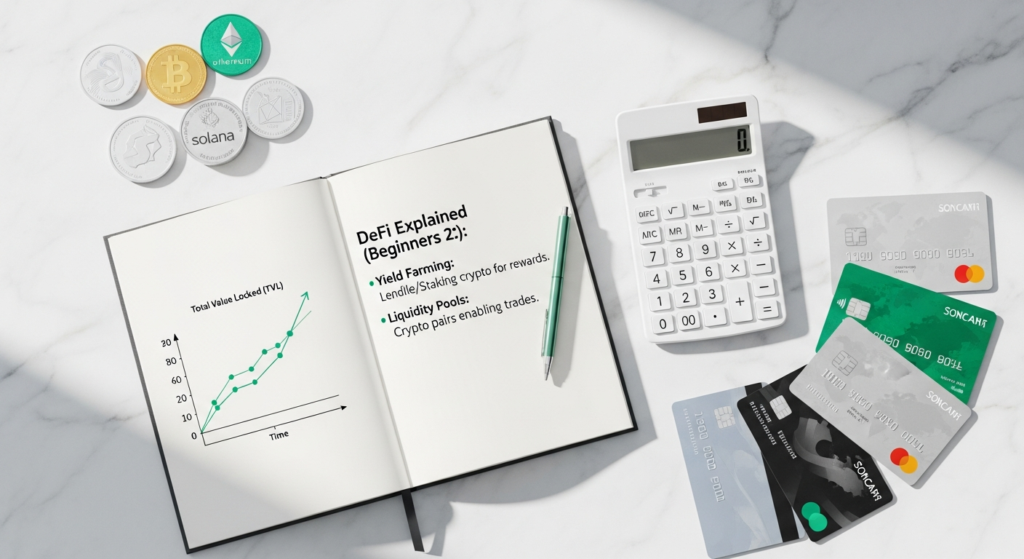
Another cornerstone of DeFi is Decentralized Exchanges (DEXs). DEXs such as Uniswap and SushiSwap enable users to trade cryptocurrencies directly with each other, peer-to-peer, without the need for a centralized exchange to hold their funds. They typically use a system called Automated Market Makers (AMMs), where users contribute their crypto assets to “liquidity pools,” and trades are executed against these pools using algorithmic pricing. Users who provide liquidity to these pools are known as “liquidity providers” (LPs) and earn a portion of the trading fees, a concept central to passive income strategies in DeFi. Beyond lending, borrowing, and trading, DeFi also encompasses: Yield Farming, where users strategically move their crypto assets between different protocols to maximize returns and earn additional cryptocurrency rewards; Staking, where participants lock up their tokens to support the operations of a blockchain network and earn rewards; and Stablecoins, cryptocurrencies designed to maintain a stable value relative to a fiat currency (like the US dollar), which are vital for reducing volatility within the DeFi ecosystem and facilitating transactions without the wild price swings often associated with other cryptocurrencies. These diverse applications collectively form a vibrant and interconnected financial network, offering a wealth of opportunities for those willing to learn and participate.
Your First Steps into DeFi: A Beginner’s Practical Roadmap
Venturing into the world of Decentralized Finance can seem intimidating, but with a structured approach, beginners can navigate it safely and effectively. The very first step is acquiring a cryptocurrency wallet. This isn’t a physical wallet but a software application that allows you to securely store your cryptocurrencies and interact with DeFi protocols. Popular options include MetaMask, which is a browser extension and mobile app, highly compatible with the Ethereum ecosystem where most DeFi activity takes place. Setting up a wallet involves creating a “seed phrase” (a list of 12-24 words); this phrase is the ultimate key to your funds, so it’s paramount to write it down and store it offline in a secure, private location. Never share it with anyone, and be wary of phishing attempts trying to trick you into revealing it.
Once you have a wallet, you’ll need to fund it with some cryptocurrency. Typically, you’ll start with Ether (ETH), as it’s the native currency of the Ethereum network and is required to pay “gas fees” (transaction costs) for any activity you perform in DeFi. You can acquire ETH from a centralized exchange like Coinbase or Binance and then transfer it to your MetaMask wallet. With funds in your wallet, the next crucial step is research and education. Before engaging with any DeFi protocol, thoroughly understand how it works, its underlying mechanisms, and the associated risks. Start with smaller, well-established protocols that have undergone audits by reputable security firms. Begin with small amounts of capital that you are comfortable losing, as the DeFi space is still experimental and carries inherent risks. Experiment with simpler applications first, like using a DEX to swap tokens or exploring a lending platform. Always double-check the website URLs to avoid scam sites, and never connect your wallet to platforms you don’t trust. Practicing good operational security, starting small, and continuously learning will build your confidence and expertise as you explore the expansive opportunities DeFi has to offer.
The Transformative Potential: Unpacking the Benefits of DeFi
Decentralized Finance isn’t just a technological curiosity; it carries the promise of genuinely transformative benefits that could reshape global finance. One of the most compelling advantages is financial inclusion. Billions of people worldwide are unbanked or underbanked, lacking access to basic financial services due to geographical barriers, stringent credit requirements, or high fees. DeFi, being permissionless and internet-based, offers a pathway to financial empowerment for anyone with a smartphone and internet access, regardless of their location or socioeconomic status. This democratizes access to lending, borrowing, saving, and investing opportunities previously limited to traditional financial institutions.
Another significant benefit is transparency. Because DeFi protocols operate on public blockchains, all transactions are recorded and verifiable by anyone. This inherent transparency reduces the potential for fraud and manipulation, fostering a level of trust and accountability that is often lacking in traditional finance. Users can audit the operations of a protocol, understand its financial health, and verify transactions in real-time. Furthermore, DeFi offers the potential for lower fees and faster transactions. Eliminating intermediaries means cutting down on administrative costs and processing delays. While gas fees on networks like Ethereum can sometimes be high, the core architecture of DeFi aims for more efficient and cost-effective financial operations compared to legacy systems, especially for international transactions which can be notoriously slow and expensive. The innovative nature of DeFi also encourages rapid development and experimentation, leading to a constant stream of new financial products and services. From passive income opportunities through yield farming and staking to novel insurance models and prediction markets, DeFi is fostering an environment of unprecedented financial innovation. It provides users with greater control over their assets, enabling them to participate in a global financial system that is more open, efficient, and equitable.
Navigating the Terrain: Understanding the Risks and Challenges of DeFi
While Decentralized Finance presents a compelling vision for the future of money, it’s crucial for beginners to approach it with a clear understanding of its inherent risks and challenges. The space is still nascent and experimental, making due diligence paramount. One of the most significant risks is smart contract bugs and exploits. DeFi protocols are built on smart contracts, which are lines of code. Like any software, these contracts can contain vulnerabilities or bugs that malicious actors can exploit, leading to the loss of user funds. Despite rigorous audits by security firms, exploits do occur, sometimes with devastating consequences. It’s essential to only interact with protocols that have a proven track record, clear audit reports, and a strong community.
Another major challenge is market volatility. Many cryptocurrencies used in DeFi, including Ether (ETH) and various governance tokens, are highly volatile. This means their prices can fluctuate dramatically in short periods. While stablecoins mitigate some of this risk, the value of your collateral or the assets you’ve lent out can significantly change, impacting your overall portfolio. This volatility also contributes to a concept known as “impermanent loss” in liquidity providing, where the value of your assets in a liquidity pool can sometimes be less than if you had simply held them outside the pool. High gas fees are another practical hurdle, particularly on congested networks like Ethereum. These transaction fees can make smaller transactions uneconomical and impact overall profitability for users. Beyond technical risks, regulatory uncertainty looms large. Governments worldwide are still grappling with how to regulate DeFi, and future regulations could significantly impact its development, accessibility, and legality. Furthermore, user error remains a primary concern. Losing your seed phrase, falling for phishing scams, or sending funds to the wrong address can result in irreversible losses, as there’s no central authority to reverse transactions or recover lost funds. DeFi places a high degree of responsibility on the individual, requiring careful attention to security practices and a continuous learning mindset to mitigate these substantial risks effectively.
The Road Ahead: The Future and Evolution of Decentralized Finance
The journey of Decentralized Finance is far from over; in fact, it’s just beginning to hit its stride. The future of DeFi promises continued innovation, addressing current challenges and expanding its reach far beyond its current scope. One of the most pressing areas of development is scalability. Current blockchain networks, particularly Ethereum, can become congested, leading to slow transaction times and high gas fees. Solutions like Layer 2 scaling technologies (e.g., Optimism, Arbitrum, Polygon) are rapidly evolving to process transactions off the main blockchain, significantly increasing throughput and reducing costs. These advancements will make DeFi more practical and accessible for everyday use cases and micro-transactions.
Another key trend is interoperability. Currently, different blockchains often operate in isolation. The future of DeFi involves “cross-chain” solutions that allow assets and data to move seamlessly between various blockchain networks, fostering a more interconnected and robust ecosystem. This will unlock new possibilities for innovation and efficiency, allowing users to leverage the strengths of multiple chains. We can also expect to see a growing emphasis on user experience (UX). As DeFi matures, applications will become more intuitive and user-friendly, abstracting away much of the underlying technical complexity, thereby making it easier for mainstream users to participate. This drive for simplicity is crucial for wider adoption. Furthermore, the convergence of DeFi with other emerging technologies like Non-Fungible Tokens (NFTs) and the Metaverse is creating entirely new financial paradigms, from fractionalized ownership of digital assets to decentralized virtual economies. Ultimately, the long-term vision for DeFi involves bridging the gap with traditional finance. We may see hybrid models emerge where regulated financial institutions leverage blockchain technology and DeFi principles to offer more efficient services, slowly integrating the best of both worlds. While regulatory clarity will play a significant role in this evolution, the trajectory for DeFi points towards a more open, efficient, and interconnected global financial system that empowers individuals and redefines the very meaning of financial freedom.
Decentralized Finance is undoubtedly one of the most exciting and disruptive innovations of our time, poised to redefine how we interact with money and financial services. While it offers unparalleled opportunities for financial inclusion, transparency, and innovation, it also comes with a unique set of risks that demand careful consideration and continuous learning. For beginners, the key is to start small, educate yourself thoroughly, prioritize security, and continuously adapt as the ecosystem evolves. At Fin3go, we encourage you to explore this space with an informed and cautious optimism. The journey into DeFi is an exciting one, offering a glimpse into a future where finance is truly open and accessible to all. Embrace the learning curve, stay vigilant, and prepare to witness, and perhaps even participate in, the evolution of a new financial era.
FAQ: Your Quick Guide to Decentralized Finance Basics
What is the main difference between DeFi and traditional banking?
The fundamental difference lies in intermediaries. Traditional banking relies on centralized institutions (banks) to facilitate all transactions and services, acting as trusted third parties. DeFi, conversely, operates on decentralized blockchain networks, using smart contracts to automate and execute financial services directly between users, without any central authority. This means DeFi is permissionless, transparent, and censorship-resistant, giving users greater control over their assets but also more responsibility.
Is DeFi safe for my money?
DeFi carries both significant potential and notable risks. While blockchain technology itself is highly secure, DeFi protocols are built on smart contracts which can have bugs or vulnerabilities that can be exploited, leading to loss of funds. Additionally, the high volatility of cryptocurrencies, regulatory uncertainty, and the risk of user error (e.g., losing your seed phrase) contribute to the overall risk profile. It’s crucial to understand that there are no central authorities to recover lost funds or reverse transactions. Always research thoroughly, start with small amounts, and use reputable, audited protocols.
Do I need to be a tech expert to use DeFi?
No, you don’t need to be a tech expert, but a basic understanding of how cryptocurrencies and digital wallets work is beneficial. Many DeFi platforms are becoming increasingly user-friendly, with intuitive interfaces that abstract away much of the underlying complexity. However, you’ll need to understand concepts like gas fees, token swapping, and wallet security. Starting with simple dApps and gradually learning more will build your confidence and expertise in the space.
How do I make money in DeFi? What are common ways to earn?
There are several ways to potentially earn money in DeFi. Common methods include: Lending your crypto assets to earn interest; Providing Liquidity to decentralized exchanges (DEXs) to earn a share of trading fees; Yield Farming, which involves strategically moving assets between protocols to maximize returns and earn additional tokens; and Staking, where you lock up cryptocurrencies to support a blockchain network and receive rewards. Keep in mind that all these methods come with their own set of risks, including impermanent loss, smart contract risk, and market volatility.