


Eco-Friendly Banking: Going Paperless by 2026 for a Greener Future
The rustle of paper statements, the clatter of a printer spitting out receipts, the endless stream of junk mail from your bank – for decades, these were the hallmarks of managing your money. But times are changing, and with increasing urgency, the world is shifting towards a more sustainable future. By 2026, the concept of eco-friendly paperless banking won’t just be an option; it will be an expectation, a necessity, and a smarter way to manage your personal finances.
This isn’t merely about convenience; it’s about a profound paradigm shift driven by environmental responsibility and technological advancement. For personal finance readers like you, understanding this transition is crucial. It’s about more than just saving a tree; it’s about enhanced security, streamlined efficiency, and aligning your financial decisions with your values. This guide will help you navigate the journey to truly green and efficient banking by 2026.
What Does Paperless Banking Mean for You and the Planet?
The phrase “paperless banking” might conjure images of simply stopping mailed statements. While that’s a key component, the movement towards eco-friendly digital finance is far more expansive, touching every aspect of how banks operate and how you interact with your money.
What is the Environmental Impact of Traditional, Paper-Heavy Banking?
To truly appreciate the “green” aspect of paperless banking, let’s consider the environmental footprint of its traditional counterpart:
- Deforestation and Resource Depletion: Manufacturing paper requires vast quantities of timber. Each ton of paper consumes approximately 17 trees, along with significant amounts of water (thousands of gallons per ton) and energy. The pulping process often involves harsh chemicals that can pollute water and air. When you receive a bank statement, a checkbook, or promotional mail, you’re directly contributing to this resource consumption.
- Carbon Emissions from Production and Transportation: The energy used to produce paper, print documents, and then transport them via trucks, planes, and postal services generates substantial greenhouse gas emissions. Think of the journey a single statement makes from the paper mill, to the printer, to the postal service, and finally to your mailbox.
- Waste Generation: A significant portion of banking-related paper (junk mail, old statements, receipts) ends up in landfills, where it contributes to methane gas emissions as it decomposes, or is incinerated, releasing further pollutants. Even recycled paper has an energy cost.
- Indirect Energy Consumption: While not directly paper-related, traditional banking often relies on extensive physical infrastructure – countless branches, ATMs, and data centers – each consuming substantial amounts of electricity for lighting, heating/cooling, and equipment. While data centers are still necessary for digital banking, the ability for banks to reduce their physical footprint with a digital-first approach can lead to significant energy savings overall.
How Does Eco-Friendly Banking Extend Beyond Just Eliminating Paper?
True eco-friendly banking extends far beyond merely eliminating paper. It encompasses a holistic approach to sustainability that considers a bank’s entire operational footprint and its investment practices.
- Reduced Physical Infrastructure: Digital-first banks, or traditional banks with robust digital platforms, can significantly reduce the need for physical branches, leading to lower energy consumption, less construction waste, and a smaller operational footprint.
- Sustainable Investments and Lending: A genuinely green bank actively directs its capital towards environmentally responsible projects. This means investing in renewable energy (solar, wind), sustainable agriculture, green building initiatives, and impact funds, rather than funding industries like fossil fuels, deforestation, or weapons manufacturing. Many banks are now transparent about their ESG (Environmental, Social, and Governance) policies, allowing you to see where your money is being used.
- Carbon Offsetting and Net-Zero Commitments: Many progressive financial institutions are committing to achieving net-zero carbon emissions by a certain date, often through a combination of reducing their own emissions and investing in verified carbon offset projects.
- Transparent Reporting: Eco-friendly banks often provide transparent reporting on their environmental impact, investment portfolios, and progress towards sustainability goals. This allows customers to make informed choices and hold institutions accountable.
What are the Practical Benefits of Paperless Banking for You?
While the environmental imperative is strong, embracing paperless banking also offers significant, tangible benefits for your personal finances and peace of mind:
- Unparalleled Convenience and Accessibility: Access your accounts 24/7 from anywhere with an internet connection. Check balances, transfer funds, pay bills, and review statements from your couch or while traveling. No more waiting for bank hours or rushing to an ATM.
- Enhanced Efficiency and Speed: Digital transactions are often instantaneous. Bill payments can be scheduled or made in seconds. Statements arrive electronically the moment they’re ready, often weeks before a physical copy would land in your mailbox. This instant access to information helps with real-time financial management.
- Superior Organization and Record Keeping: Say goodbye to stacks of paper, overflowing filing cabinets, and the frantic search for a specific statement. All your digital records – statements, transaction histories, tax documents – are stored securely online, easily searchable, and accessible whenever you need them. Many banks allow you to download years of statements in PDF format, ideal for record-keeping and tax purposes.
- Increased Security (When Done Right): Paradoxically, digital banking can be more secure than paper-based methods. Physical mail can be intercepted, checks can be stolen, and paper records can be lost or destroyed. Digital platforms, with their layers of encryption, multi-factor authentication, and sophisticated fraud detection, often offer stronger protection against theft and unauthorized access (more on this in the next section).
- Potential Cost Savings: While many banks have moved away from charging for paper statements, going paperless can still save you money on postage, checks, and potentially even fees associated with manual transactions. Quicker payment processing can also help you avoid late fees.
- Real-time Alerts and Notifications: Receive instant alerts for transactions, low balances, or suspicious activity directly on your phone or email. This proactive monitoring is a powerful tool against fraud and helps you stay on top of your finances.
By 2026, these benefits will be the standard, not the exception. The transition is not just about adopting a new technology; it’s about embracing a more responsible, efficient, and secure way to manage your financial life.
How Can You Navigate the Digital Landscape of Paperless Banking?

The shift to paperless banking relies heavily on robust digital infrastructure. For many, the primary concern isn’t convenience but security. Understanding how digital banking protects your assets and data, and knowing the diverse options available, is key to making an informed transition.
Is Paperless Banking Truly Secure Against Cyber Threats?
It’s a valid question: if my financial life is entirely online, what protects it from hackers and cybercriminals? The truth is, when properly secured by both the bank and the user, digital banking often offers superior protection compared to the vulnerabilities of physical paper.
What Security Measures Do Banks Implement?
- Advanced Encryption (TLS/SSL): All data transmitted between your device and your bank’s servers is encrypted using industry-standard protocols (like TLS 1.2 or higher). This scrambles your information, making it unreadable to anyone trying to intercept it. Look for “https://” in the website address and a padlock icon.
- Multi-Factor Authentication (MFA): This is your strongest line of defense. MFA requires at least two forms of verification to log in or complete sensitive transactions. This could be something you know (password), something you have (your phone for a one-time code via SMS/app), or something you are (biometric data like fingerprint or face ID).
- AI-Powered Fraud Monitoring: Banks employ sophisticated artificial intelligence and machine learning algorithms that continuously analyze your transaction patterns. If an unusual or suspicious transaction occurs (e.g., a large purchase in a new location), the system flags it and may alert you or temporarily freeze the transaction.
- Firewalls and Intrusion Detection Systems: These technologies act as digital gatekeepers, protecting a bank’s network from unauthorized access and monitoring for malicious activity.
- FDIC/NCUA Insurance: Just like traditional accounts, deposits in FDIC-insured banks (most U.S. banks) or NCUA-insured credit unions are protected up to $250,000 per depositor, per institution, in case of bank failure. This protection applies whether your money is in a physical branch or managed digitally.
- Zero-Liability Policies: Most major banks and payment networks (Visa, Mastercard, American Express) offer zero-liability policies, meaning you won’t be held responsible for unauthorized transactions if you report them promptly.
What is Your Role in Maintaining Digital Security for Paperless Banking?
- Strong, Unique Passwords: Use a combination of uppercase, lowercase, numbers, and symbols. Never reuse passwords across different sites. Consider a reputable password manager (e.g., LastPass, 1Password) to generate and store complex passwords.
- Enable MFA Everywhere: If your bank offers it, turn on multi-factor authentication for all your accounts. This is the single most effective step you can take.
- Secure Wi-Fi: Avoid conducting banking transactions over public, unsecured Wi-Fi networks (e.g., coffee shops, airports), as these can be vulnerable to eavesdropping. Use a Virtual Private Network (VPN) if you must use public Wi-Fi.
- Beware of Phishing and Smishing: Be extremely cautious of unsolicited emails (phishing) or text messages (smishing) asking for your account details, passwords, or clicking suspicious links. Banks will rarely ask for sensitive information via email. Always type the bank’s URL directly into your browser.
- Regular Account Monitoring: Review your transaction history and statements frequently to spot any unauthorized activity immediately. Many banks allow you to set up custom alerts for specific transaction types or amounts.
- Keep Software Updated: Ensure your operating system, web browser, and antivirus software are always up to date, as updates often include critical security patches.
What Practical Tools and Solutions Facilitate Paperless Banking?
The modern banking landscape offers a wealth of tools designed to make paperless management seamless and intuitive.
- Online Banking Portals: The cornerstone of digital banking. These web-based platforms allow you to view account activity, transfer funds between accounts, pay bills, set up automatic payments, download statements, manage alerts, and even apply for loans or credit cards.
- Mobile Banking Apps: Your bank’s app is your financial command center on the go. Features typically include mobile check deposit (snapping a photo of a check), peer-to-peer payments (like Zelle integration), budgeting tools, biometric login, and personalized insights into spending.
- Digital Wallets (Apple Pay, Google Pay, Samsung Pay): These allow you to make secure, contactless payments in stores and online using your smartphone or smartwatch, eliminating the need for physical cards and receipts. Your card number is tokenized, meaning the merchant never sees your actual card details, adding an extra layer of security. For more on this, explore our deep dive on payment apps.
- E-Statements & E-Bills: Enroll in electronic statements for all your bank, credit card, utility, and loan accounts. Many providers also offer e-bills, where your bills are sent directly to your online banking portal for easy review and payment.
- Budgeting and Financial Management Apps: While many bank apps include basic budgeting features, third-party apps like Mint, You Need A Budget (YNAB), or Empower (formerly Personal Capital) can aggregate all your financial accounts, track spending, set budgets, and provide a holistic view of your net worth, all without a single piece of paper.
- Secure Cloud Storage: For important documents you still generate or need to save (e.g., loan agreements, tax documents), secure cloud storage services like Google Drive, Dropbox, or a dedicated secure digital vault can provide organized, accessible, and backed-up records.
How Will Blockchain Technology Impact Eco-Friendly Banking?
Beyond cryptocurrencies, blockchain technology holds significant promise for enhancing eco-friendly banking practices. Its inherent transparency and immutability can be leveraged for:
- Transparent Supply Chains: Banks can use blockchain to verify the ethical and sustainable sourcing of goods and services by their corporate clients, ensuring investments align with green principles.
- Carbon Credit Tracking: Blockchain can provide a secure, tamper-proof ledger for tracking carbon credits and emissions, making environmental impact reporting more accurate and verifiable.
- Decentralized Green Finance: Future applications could include decentralized finance (DeFi) platforms focused on green bonds or sustainable investments, offering more direct and transparent funding for eco-projects.
- Enhanced Security and Efficiency: The distributed ledger technology can further bolster the security of digital transactions and reduce processing times, contributing to overall operational efficiency and reduced energy consumption compared to traditional, centralized systems.
What is the Regulatory Landscape for Green and Digital Banking?
The regulatory environment for fintech and green banking is rapidly evolving, aiming to balance innovation with consumer protection and systemic stability. Key aspects include:
- Emerging Green Finance Regulations: Governments and international bodies are introducing frameworks to define “green” investments, prevent greenwashing, and encourage financial institutions to integrate ESG factors into their risk management and reporting.
- Data Privacy Laws (e.g., GDPR, CCPA): These regulations are crucial for digital banking, ensuring that personal financial data is handled securely and transparently, building trust in paperless systems.
- Open Banking Directives: Initiatives like Open Banking in Europe encourage data sharing between banks and third-party providers (with customer consent), fostering innovation in digital financial services and potentially enabling more sophisticated eco-financial tools.
- Compliance Challenges: As banks adopt new technologies and green initiatives, they face challenges in complying with existing anti-money laundering (AML) and know-your-customer (KYC) regulations, which often require robust digital identity verification.
Staying abreast of these regulatory developments is vital for both financial institutions and consumers to ensure a secure and compliant transition to eco-friendly paperless banking.
How Do Digital Solutions Facilitate Eco-Friendly Cross-Border Payments?
Traditional cross-border payments often involve multiple intermediaries, complex paper trails, and significant processing times, contributing to higher costs and a larger environmental footprint. Digital, paperless solutions offer a greener and more efficient alternative:
- Reduced Paperwork: Digital platforms eliminate the need for physical forms, invoices, and receipts that traditionally accompany international transfers.
- Faster Processing: Fintech innovations and blockchain-based solutions can significantly speed up cross-border transactions, reducing the energy consumption associated with prolonged processing and reconciliation.
- Lower Carbon Footprint: By minimizing physical infrastructure and optimizing transaction routes, digital cross-border payments reduce the need for physical travel and paper-intensive processes, leading to a lower overall carbon footprint.
- Enhanced Transparency: Digital ledgers can provide greater transparency in international money flows, helping to track and verify funds used for sustainable development projects.
How Do You Choose Your Paperless Banking Partner?
Your choice of banking institution will significantly impact your paperless experience and how much you contribute to eco-friendly finance.
1. Traditional Banks (e.g., Chase, Bank of America, Wells Fargo, Citi, Capital One):
- Pros: Established trust, extensive branch networks (for those who still desire some physical interaction), wide range of financial products (mortgages, investments, business accounts), robust online portals and mobile apps. Many have made significant investments in digital infrastructure.
- Cons: Often have legacy systems that can be slower to adapt to cutting-edge features. While many are improving, their core business models might not be inherently focused on environmental sustainability, and their investment portfolios may still include fossil fuels or other non-green sectors. Fees might be higher for certain services if you don’t meet specific criteria.
- Recommendation: If you prefer the stability and comprehensive offerings of a large bank, ensure you maximize their digital features (e-statements, online bill pay, mobile app) and research their specific sustainability initiatives (e.g., some now offer green checking accounts or invest in green bonds).
2. Neobanks / Challenger Banks (e.g., Chime, Varo, Ally Bank, SoFi, Revolut, N26, Monzo):
- Pros: Digital-first, often no physical branches (leading to lower overhead and potentially lower fees), innovative features (early direct deposit, advanced budgeting tools, fractional investing), strong mobile-app user experience, often target specific demographics with tailored services. Many offer competitive interest rates on savings accounts.
- Cons: No physical branches can be a drawback for those who prefer in-person support. Customer service is primarily online, chat, or phone. May have a less comprehensive suite of products compared to traditional banks. While digital by nature (thus paperless), their investment portfolios might not always have an explicit green focus unless they specifically state so.
- Recommendation: Ideal for tech-savvy individuals comfortable with a fully digital banking experience who prioritize low fees, innovative features, and excellent mobile apps. Ally Bank and SoFi, for example, are known for their strong online platforms and competitive rates.
3. Green-Focused Banks and Eco-Conscious Fintechs (e.g., Aspiration, Ando Money, Atmos Financial, Amalgamated Bank, Beneficial State Bank):
- Pros: Their core mission is environmental and social responsibility. They are transparent about where your money is invested (e.g., exclusively in renewable energy, sustainable agriculture, affordable housing). Many are Certified B Corporations, meeting high standards of verified performance, accountability, and transparency. Often offer features like “plant a tree with every debit card purchase” or carbon tracking.
- Cons: May have a more limited range of products or services compared to large traditional banks. Might have fewer ATMs (often relying on surcharge-free networks) or no physical branches. Might be newer institutions, so some may prefer more established names.
- Recommendation: The best choice for individuals whose primary motivation is to align their financial institutions with their environmental values.
- Aspiration: Offers “Spend & Save” accounts that are fossil-fuel-free and allow you to plant trees with purchases.
- Ando Money: Commits to never funding fossil fuels and invests solely in green initiatives.
- Atmos Financial: Dedicated to climate-positive banking, funding projects like solar and energy efficiency.
- Amalgamated Bank & Beneficial State Bank: Are established institutions explicitly focused on social and environmental impact.
By evaluating these options against your personal needs for convenience, security, and ethical alignment, you can choose the right partner for your paperless journey by 2026.
What are Future Trends in Eco-Friendly Digital Finance Beyond 2026?
While 2026 marks a significant milestone for paperless banking, the evolution of eco-friendly digital finance will continue to accelerate. Future trends include:
- Hyper-Personalized Eco-Financial Advice: AI-driven platforms will offer increasingly tailored recommendations for sustainable spending, investing, and saving, based on individual carbon footprints and financial goals.
- Embedded Finance for Sustainability: Eco-friendly banking features will become seamlessly integrated into non-financial apps and services, making sustainable choices the default.
- Advanced Carbon Tracking and Offsetting: Banks will offer more sophisticated tools for real-time carbon footprint tracking of purchases and automated micro-offsetting options.
- Gamification of Green Habits: Financial apps may incorporate gamified elements to encourage and reward eco-conscious financial behaviors, making sustainability engaging and accessible.
- Quantum-Resistant Security: As technology advances, banks will invest in quantum-resistant encryption to protect digital assets from future cyber threats, ensuring long-term security for paperless systems.
These innovations will further solidify eco-friendly banking as a cornerstone of responsible and forward-thinking financial management.
How Can You Make the Switch to Paperless Banking by 2026?
The thought of overhauling your banking habits might seem daunting, but the transition to paperless can be gradual and straightforward. By 2026, you’ll want to be fully entrenched in a digital-first financial life. Here’s how to get there:
Step 1: How Do You Assess Your Current Banking Habits and Paper Trail?
Before you make any changes, understand where you currently stand.
- Gather your recent mail: What paper documents do you currently receive? Bank statements, credit card bills, utility bills, loan statements, insurance policies, investment reports, promotional flyers, physical checks?
- Identify recurring services: Which services generate the most paper? Which do you access most frequently?
- List your current payment methods: Do you still write physical checks? Do you receive paper invoices for services?
Step 2: How Can You Go Digital with Your Existing Accounts?
This is the easiest and most impactful immediate step.
- Enroll in E-Statements: Log into your online banking portal for every bank account, credit card, and loan you have. Look for options like “Paperless Statements,” “Go Green,” or “E-Statements” and opt-in. Do the same for your utility providers (electricity, gas, water, internet) and insurance companies. You’ll typically receive an email notification when your statement is ready to view online.
- Set Up Online Bill Pay: Most banks offer a free online bill pay service. Link your various payees (utilities, mortgage, credit cards) and schedule payments directly through your bank’s portal. This eliminates checks, envelopes, and stamps.
- Activate Mobile Banking and Alerts: Download your bank’s official mobile app. Enable push notifications for transactions, deposits, withdrawals, and low balances. This gives you real-time visibility and helps prevent fraud.
- Request to Stop Physical Mail: Beyond statements, many institutions send promotional mail or notices. Contact your bank’s customer service or check your online preferences to opt out of as much physical mail as possible.
Step 3: How Do You Secure Your Digital Financial Life Proactively?
Security is paramount. Reinforce your digital defenses.
- Enable Multi-Factor Authentication (MFA): This is non-negotiable. If your bank offers it (and most do), activate MFA for all logins.
- Implement a Password Manager: Use a reputable password manager (e.g., LastPass, 1Password, Bitwarden) to create and store strong, unique passwords for all your online accounts, especially financial ones.
- Regularly Review Transactions: Make it a habit to quickly scan your bank and credit card activity every few days, or at least once a week. Catching a fraudulent transaction early is critical.
- Understand Your Bank’s Security Features: Familiarize yourself with how your bank protects you. Know how to report suspicious activity or lost/stolen cards quickly.
Step 4: How Do You Explore New Eco-Friendly Banking Options?
If your current bank doesn’t fully align with your eco-friendly goals, consider making a switch or adding a supplementary account.
- Research Green Banks: Look into institutions like Aspiration, Ando Money, Atmos Financial, Amalgamated Bank, or Beneficial State Bank. Evaluate their commitment to sustainability, their fees, interest rates, available features, and customer service reviews.
- Compare Neobanks: Consider digital-first banks like Ally Bank, SoFi, or Varo if you prioritize modern features, competitive rates, and a seamless mobile experience, and are comfortable with a fully branchless model.
- Feature and Fee Comparison: Use online comparison tools or financial review sites to weigh the pros and cons of different institutions. Look beyond just sustainability to see if they meet your practical banking needs (e.g., ATM access, specific loan products, investment options).
Step 5: How Do You Transition and Monitor When Changing Banks?
If you decide to move your primary banking relationship:
- Open the New Account First: Get your new account fully set up and familiar with its features before closing your old one.
- Shift Direct Deposits and Automatic Payments Gradually: This is the most critical step. Update your employer for direct deposit. Then, update all your recurring bill payments (mortgage, rent, utilities, subscriptions, credit cards) to pull from your new account. Keep a checklist to ensure nothing is missed.
- Transfer Funds: Once all direct deposits and payments are fully transitioned, transfer the bulk of your funds to the new bank.
- Keep Old Accounts Open (Temporarily): Maintain your old account with a small balance for a month or two to catch any forgotten payments or deposits. Once you’re confident everything has transitioned, you can close it.
- Organize Digital Documents: Create a system for saving your digital statements and important documents. Many banks allow you to download statements as PDFs for several years. Store these in an organized folder on your computer and/or in secure cloud storage.
What Practical Tips Can You Use Immediately for Paperless Banking?
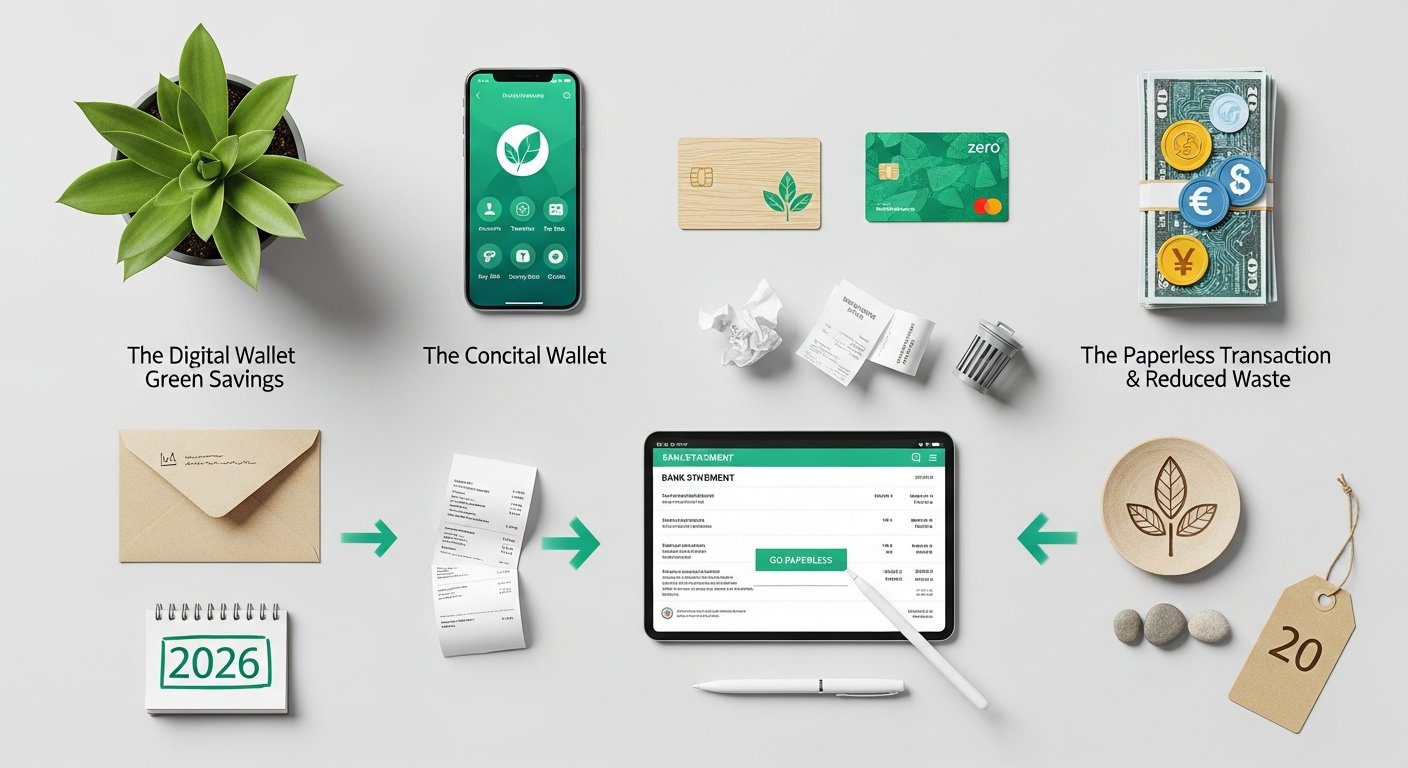
Here are some immediate steps you can take to start your eco-friendly paperless banking journey:
- Sign up for e-statements with your current bank TODAY. This is a quick win for the environment and your organization.
- Download and explore your bank’s mobile app. Enable notifications and get comfortable with its features.
- Set up transaction alerts. Get an email or text whenever a purchase over a certain amount is made, or when your balance drops below a threshold.
- Use online bill pay for at least one recurring bill this month. Experience the convenience firsthand.
- Review your physical mail. Identify what paper you’re receiving that you no longer need or that can be converted to digital delivery. Start with one category, like credit card offers, and unsubscribe.
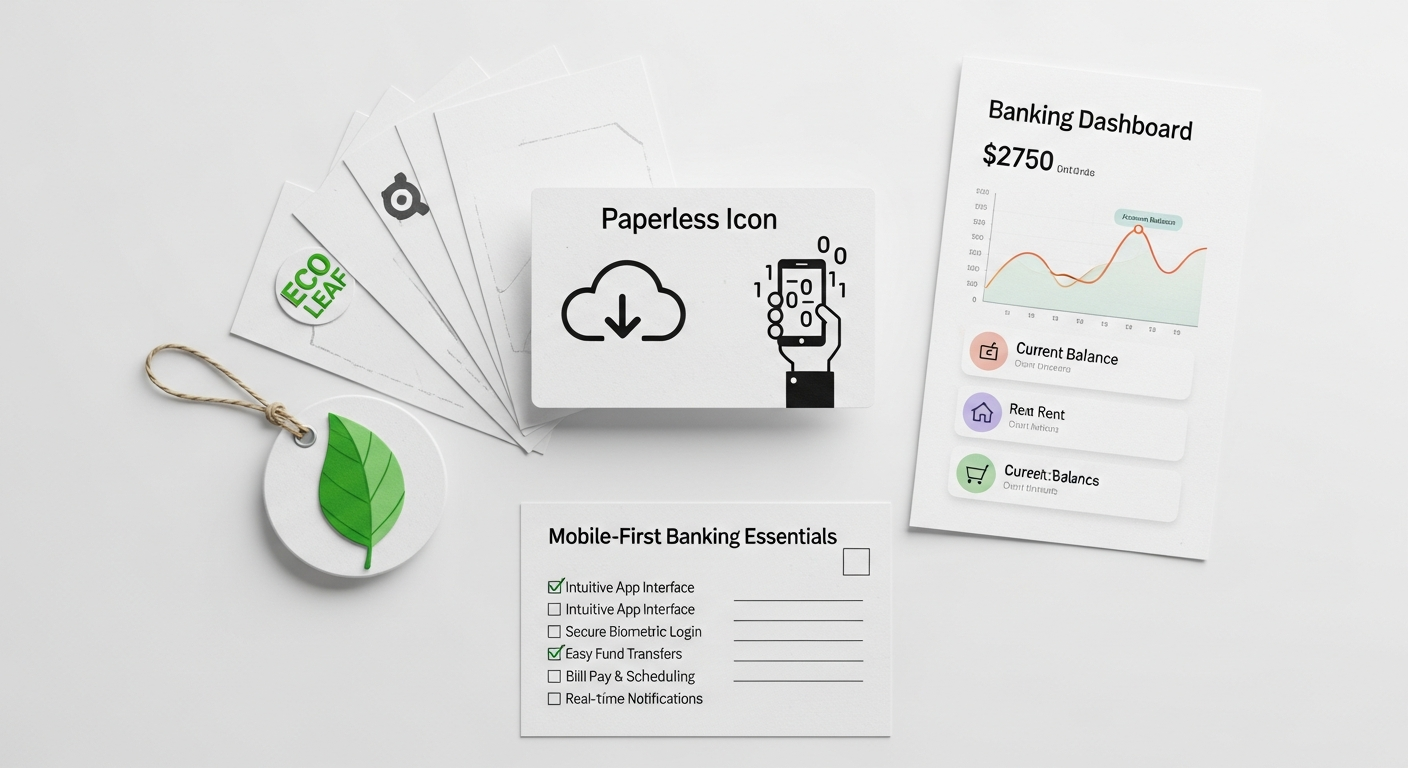


Frequently Asked Questions About Eco-Friendly Paperless Banking
Q1: Is paperless banking truly secure against hackers and identity theft?
A1: Yes, when properly implemented by your bank and diligently used by you, paperless banking can be more secure than traditional methods. Banks employ advanced encryption, multi-factor authentication, AI-driven fraud detection, and robust cybersecurity infrastructure. Your role includes using strong, unique passwords, enabling MFA, avoiding public Wi-Fi for sensitive transactions, and being vigilant against phishing. Physical paper, by contrast, can be stolen from mailboxes, garbage, or even through home invasion.
Q2: What if I need a physical record for taxes, loans, or personal archives?
A2: Digital records are perfectly acceptable and often preferred for most official purposes. You can easily download and print statements as PDFs whenever needed. Many banks allow you to access several years of statements online. For long-term archival, save important PDFs to a secure folder on your computer and back them up to a cloud service (e.g., Google Drive, Dropbox) or an external hard drive. This ensures you always have access without the clutter of physical paper.
Q3: Can I still get cash or deposit checks with a paperless bank that has no physical branches?
A3: Absolutely. Most digital-first banks (neobanks) partner with large ATM networks (like Allpoint or MoneyPass) that offer thousands of surcharge-free ATMs nationwide for cash withdrawals. For cash deposits, many allow you to deposit at participating retail locations (e.g., Green Dot network at CVS, Walgreens, Walmart) or through USPS money orders. For checks, nearly all mobile banking apps offer “mobile check deposit” where you simply take a photo of the check.
Q4: What about older family members who are less tech-savvy? How can they transition?
A4: The transition for less tech-savvy individuals requires patience and guided support. Start with simple steps:
- Introduce Mobile Check Deposit: This is often an easy win.
- Set up Online Bill Pay: Show them how to schedule bills, reducing physical checks.
- Walk Through Online Statements: Help them navigate their bank’s website to view statements, explaining how to download them if desired.
- Emphasize Security: Explain MFA and the dangers of phishing in simple terms.
- Hybrid Approach: They might start with one paperless account while keeping a traditional one, or continue receiving paper statements for critical accounts while switching utilities to paperless. Gradual exposure is key.
Your Role in a Sustainable Financial Future with Paperless Banking
The journey towards eco-friendly paperless banking by 2026 is more than a trend; it’s a critical evolution in how we manage our finances and interact with the planet. It represents a powerful confluence of environmental responsibility, technological innovation, and personal empowerment. By embracing digital finance, you’re not just reducing your carbon footprint; you’re also unlocking unparalleled convenience, organization, and security for your financial life.
The deadline of 2026 isn’t an arbitrary date; it’s a marker for when paperless banking will no longer be a novelty but a fundamental aspect of responsible financial management. Whether you choose to leverage your current bank’s digital prowess, switch to an innovative neobank, or align with a truly green financial institution, your choices have a tangible impact.
Don’t wait for 2026 to arrive. Take the practical steps outlined today: enroll in e-statements, activate your mobile banking app, enable multi-factor authentication, and begin exploring options that resonate with your values. Your active participation in this green revolution will not only streamline your personal finances but also contribute meaningfully to a more sustainable and resilient future for generations to come. Your money can be a force for good – it’s time to let it flow green.