

What is Peer-to-Peer (P2P) Lending?
Peer-to-peer (P2P) lending, often referred to as marketplace lending or social lending, is a financial innovation that enables individuals and businesses to obtain loans directly from other individuals or institutional investors, bypassing traditional financial intermediaries like banks. At its core, P2P lending is about disintermediation – removing the conventional middleman to create a more direct and often more efficient financial transaction.
The concept gained significant traction in the early 2000s, with the emergence of dedicated online platforms that facilitate these connections. These platforms leverage advanced technology and algorithms to match borrowers with lenders, manage the loan application and approval process, conduct credit assessments, and handle loan servicing, including payment collection and distribution.
For borrowers, P2P lending can offer an attractive alternative to traditional bank loans, potentially providing lower interest rates, more flexible terms, or access to credit for those who might not qualify through conventional channels. For investors, it presents an opportunity to earn potentially higher returns on their capital compared to traditional savings accounts or fixed-income investments, by directly funding a diversified portfolio of loans. The appeal lies in its ability to democratize lending and investing, making financial services more accessible and potentially more rewarding for a broader spectrum of participants.
The P2P Lending Ecosystem: Key Players and Their Roles
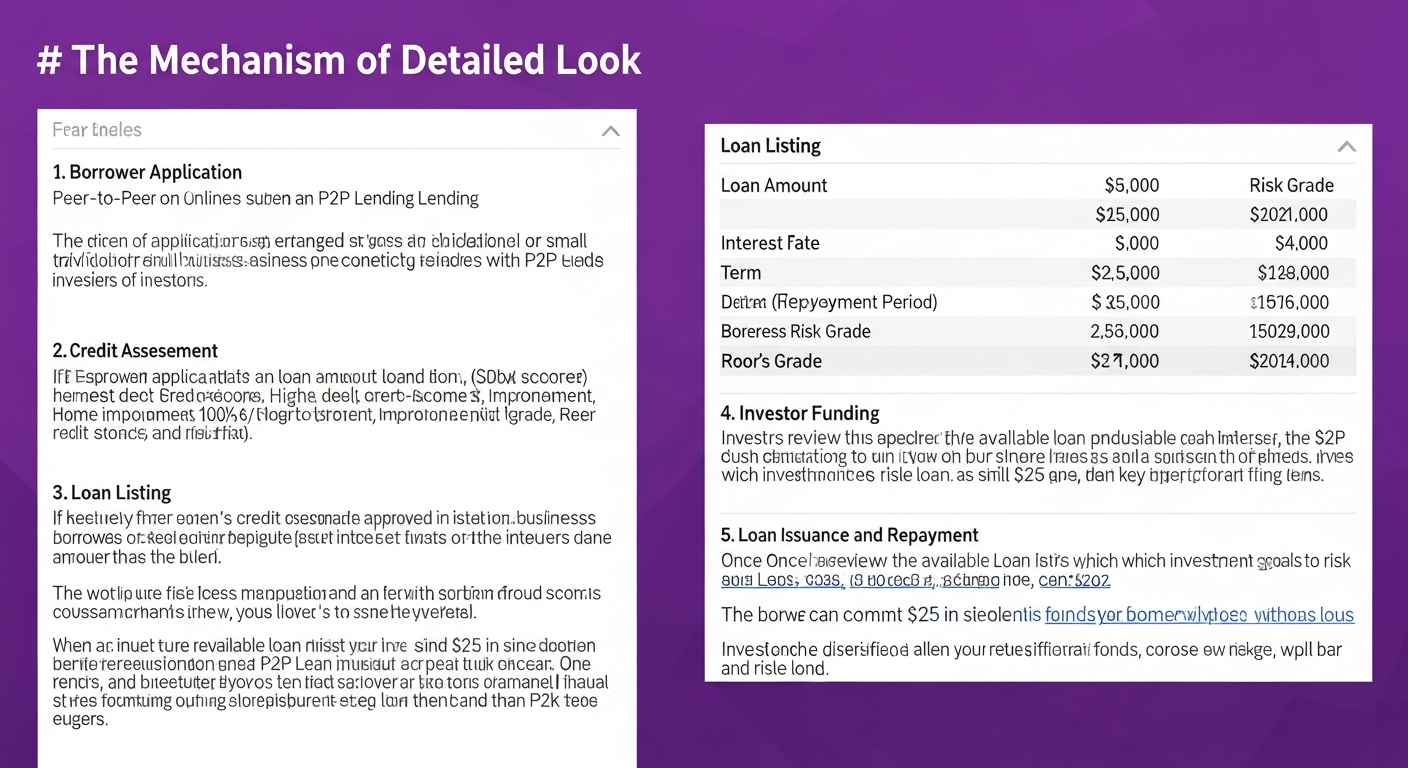
Understanding how peer-to-peer lending works requires an appreciation for the distinct roles played by the various participants within its ecosystem. This symbiotic relationship ensures the smooth operation and continued growth of the P2P lending model.
P2P Lending Platforms: The Matchmakers
- Facilitation and Connection: P2P platforms are the central hubs that connect borrowers with investors. They provide the technological infrastructure, legal framework, and operational support necessary for these transactions to occur seamlessly.
- Borrower Vetting and Risk Assessment: A critical function of these platforms is to rigorously vet potential borrowers. This involves comprehensive credit checks, identity verification, and an assessment of financial stability. Platforms utilize proprietary algorithms, often incorporating traditional credit scores (like FICO) with alternative data points, to assign a credit grade or risk rating to each loan application. This rating helps investors gauge the potential risk and corresponding interest rate of a loan.
- Loan Servicing: Once a loan is funded, the platform typically handles all aspects of loan servicing. This includes collecting monthly repayments from borrowers, deducting platform fees, and distributing the principal and interest payments to the respective investors. In cases of late payments or defaults, platforms often have dedicated collections departments to manage recovery efforts.
- Regulatory Compliance: P2P platforms operate within a complex regulatory environment, which varies by jurisdiction. They are responsible for adhering to consumer protection laws, anti-money laundering (AML) regulations, and know-your-customer (KYC) requirements, ensuring transparency and fairness in their operations.
Borrowers: Individuals and Businesses Seeking Capital
- Diverse Needs: Borrowers come to P2P platforms for a variety of reasons. Individuals might seek personal loans for debt consolidation, home improvements, medical expenses, or significant purchases. Small businesses often use P2P loans for working capital, equipment financing, or expansion projects.
- Application and Qualification: Borrowers submit an application through the platform, providing personal and financial details. Their eligibility and the interest rate offered are largely determined by their creditworthiness, income, and debt-to-income ratio.
- Commitment to Repayment: A borrower’s primary responsibility is to make timely repayments according to the agreed-upon schedule. Failure to do so can lead to late fees, damage to their credit score, and potential collection actions.
Investors (Lenders): Capital Providers
- Seeking Returns: Investors are individuals, family offices, or institutional entities looking to earn passive income and attractive returns on their capital by funding a portfolio of loans. They are drawn to P2P lending for its potential yield, which can often surpass those offered by traditional savings products or bonds.
- Risk Appetite and Diversification: Investors assess the risk grade of available loans and decide which ones to fund, often investing small amounts across many different loans (fractional investing) to diversify their portfolio and mitigate risk.
- Passive Management: Once funds are committed, the platform manages the ongoing loan servicing. Investors passively receive their principal and interest payments, typically on a monthly basis, directly into their platform account.
The seamless interaction among these players, orchestrated by the P2P platform, is what enables the efficient flow of capital from those who have it to those who need it, forming the backbone of how peer-to-peer lending works.
How P2P Lending Works for Borrowers
The Application Process
The journey for a borrower typically begins with an online application on a chosen P2P lending platform. This initial step involves providing a range of personal and financial information, including:
- Personal Details: Name, address, date of birth, social security number (for individuals), and business registration details (for businesses).
- Financial Information: Income details, employment history, bank account information, existing debts, and sometimes tax returns or financial statements.
- Loan Purpose: Borrowers typically specify why they need the loan (e.g., debt consolidation, home renovation, medical expenses, business expansion). This helps platforms categorize loans and can influence investor interest.
Credit Assessment and Loan Offers
Once the application is submitted, the P2P platform springs into action with its proprietary credit assessment process. This is a crucial phase that determines eligibility, interest rates, and loan terms:
- Credit Score Evaluation: Platforms pull credit reports from major credit bureaus (e.g., Equifax, Experian, TransUnion) to assess the borrower’s creditworthiness. A strong credit score is usually indicative of a lower risk and can lead to more favorable interest rates.
- Income and Debt-to-Income Ratio: The platform verifies income to ensure the borrower has the capacity to repay the loan. The debt-to-income (DTI) ratio is also a key metric, indicating the percentage of a borrower’s monthly gross income that goes towards debt payments.
- Proprietary Algorithms: Beyond traditional metrics, many P2P platforms use sophisticated algorithms that analyze a wider array of data points to assign a unique credit grade or risk rating to each borrower. This rating directly influences the interest rate and fees offered. Lower risk grades typically receive lower interest rates, while higher risk grades carry higher rates to compensate investors for the increased potential for default.
- Loan Offer Presentation: Based on the assessment, the platform presents the borrower with one or more loan offers, detailing the approved loan amount, interest rate, repayment term (e.g., 3 or 5 years), and any associated origination fees.
Funding and Repayment
If a borrower accepts a loan offer, the next steps involve funding and the start of repayments:
- Investor Funding: The loan request is then listed on the platform’s marketplace, where investors can browse and choose to fund a portion or all of the loan. This process can take anywhere from a few hours to several days, depending on the loan’s attractiveness and market demand.
- Disbursement: Once fully funded by investors, the loan amount (minus any origination fees) is disbursed directly into the borrower’s bank account.
- Monthly Repayments: Borrowers make fixed monthly payments, which typically include both principal and interest. These payments are usually debited automatically from the borrower’s bank account on a predetermined schedule. This is where a robust How To Create A Monthly Budget becomes absolutely essential. Without a clear understanding of income and expenses, borrowers risk overextending themselves and struggling with repayments, which can lead to late fees and damage to their credit history.
- Early Payoff Options: Many P2P loans allow for early repayment without penalty, offering borrowers flexibility to save on interest if their financial situation improves. This can be particularly appealing for those using P2P loans for debt consolidation, perhaps employing strategies akin to the Snowball Vs Avalanche Debt Payoff Method to aggressively tackle their debt.
The transparency and efficiency of this process are key reasons why P2P lending has become a popular choice for borrowers seeking a modern approach to obtaining financing.
How P2P Lending Works for Investors
For investors, peer-to-peer lending presents an intriguing opportunity to generate passive income and potentially achieve attractive returns that often outperform traditional fixed-income investments. The process is designed to give investors control over their risk exposure while benefiting from the platform’s infrastructure.
Platform Registration and Funding Account
The investor’s journey begins with creating an account on a chosen P2P lending platform. This typically involves:
- Identity Verification (KYC/AML): As with any financial service, investors must undergo Know Your Customer (KYC) and Anti-Money Laundering (AML) checks, providing personal identification and verifying their bank account.
- Funding the Account: Investors link their bank account to the P2P platform and transfer funds, which will then be used to invest in loans.
Browsing Loan Listings and Risk Assessment
Once the account is funded, investors gain access to the platform’s marketplace, where they can browse available loan listings. This is where the investor’s due diligence and risk appetite come into play:
- Loan Filters: Platforms provide extensive filtering options, allowing investors to sort loans by various criteria such as:
- Credit Grade/Risk Rating: The platform’s assessment of the borrower’s creditworthiness. This is a primary indicator of risk and potential return.
- Interest Rate: Directly correlated with the risk grade. Higher rates typically imply higher risk.
- Loan Purpose: Debt consolidation, home improvement, business expansion, etc.
- Loan Term: Common terms are 36 or 60 months.
- Borrower Demographics: Sometimes, basic anonymized demographic data might be available.
- Due Diligence: Savvy investors review details for each loan, including the borrower’s anonymized profile, credit history summary, debt-to-income ratio, and the platform’s specific risk assessment. Understanding these factors is crucial for making informed investment decisions.
- Understanding Default Rates: Investors must acknowledge that defaults are an inherent part of lending. Platforms publish historical default rates, which investors use to project potential losses and calculate expected net returns.
Investing in Loans and Diversification
The core of P2P investing involves allocating capital to specific loans:
- Fractional Investing: Most P2P platforms allow investors to invest small amounts (e.g., $25 or $50) in multiple loans. This is critical for diversification, as it spreads risk across many borrowers rather than concentrating it in a few. This strategy is vital for mitigating the impact of individual loan defaults.
- Manual vs. Auto-Invest: Investors can manually select individual loans based on their criteria, or they can use auto-invest tools. Auto-invest allows investors to set specific parameters (e.g., credit grade, loan purpose, maximum investment per loan) and the platform automatically allocates funds to matching loans as they become available. This is a popular feature for those seeking truly Passive Income Ideas 2026.
Receiving Returns and Loan Servicing
Once investments are made, the platform takes over the day-to-day management:
- Monthly Payments: As borrowers make their scheduled monthly repayments, the platform collects these funds, deducts its service fees, and then distributes the principal and interest portions to the respective investors. These payments are credited to the investor’s platform account.
- Reinvesting or Withdrawing: Investors typically have the option to reinvest their received payments into new loans, leveraging the power of compounding, or withdraw the funds to their linked bank account.
- Servicing and Collections: In the event of a late payment, the platform’s servicing team will contact the borrower. If a loan goes into default, the platform initiates collection efforts, which may include working with third-party collection agencies. Any funds recovered are then distributed proportionally to investors, minus collection fees. Investors should be prepared for the possibility of capital loss on defaulted loans, which further underscores the importance of diversification.
P2P investing requires a balance of due diligence, strategic diversification, and a clear understanding of the associated risks and rewards. It’s a dynamic asset class that can significantly enhance an investment portfolio when approached thoughtfully.
Types of Peer-to-Peer Lending
The P2P lending landscape is diverse, catering to various financial needs and risk appetites. Understanding the different categories helps both borrowers and investors identify the most suitable platforms and opportunities.
Consumer Loans (Personal Loans)
This is arguably the most common and well-known segment of P2P lending. Consumer loans are typically unsecured, meaning they are not backed by collateral. Borrowers use these funds for a wide range of personal needs:
- Debt Consolidation: A significant portion of P2P personal loans are used to consolidate high-interest credit card debt or other existing loans into a single, lower-interest payment. This can be a strategic move for borrowers looking to simplify their finances and reduce overall interest costs, often aligning with principles discussed in the Snowball Vs Avalanche Debt Payoff Method.
- Home Improvement: Financing renovations, repairs, or upgrades to a property.
- Medical Expenses: Covering unexpected or uninsured medical costs.
- Major Purchases: Funding large expenses like weddings, vacations, or car purchases (though specific auto loan P2P platforms also exist).
For investors, consumer loans offer diversification across a large pool of borrowers with varying credit profiles. Interest rates are determined by the borrower’s creditworthiness, with higher rates for riskier borrowers.
Business Loans
P2P platforms also serve the small and medium-sized enterprise (SME) sector, offering an alternative to traditional bank loans for businesses that may struggle to secure financing through conventional channels. These loans can be used for:
- Working Capital: Funding day-to-day operations, managing cash flow gaps.
- Equipment Financing: Purchasing machinery, vehicles, or technology essential for business operations.
- Business Expansion: Funding new projects, hiring staff, or opening new locations.
- Inventory Purchase: Stocking up on goods in anticipation of demand.
P2P business loans can be secured (backed by assets like invoices or real estate) or unsecured. The terms and interest rates are influenced by the business’s financial health, operational history, and the perceived risk of the industry.
Real Estate Lending
This segment focuses specifically on financing real estate projects, ranging from residential to commercial properties. P2P real estate platforms connect investors with property developers or individuals seeking funds for:
- Development Finance: Funding for the construction of new properties.
- Bridging Loans: Short-term financing used to bridge a gap, such as buying a new property before selling an old one.
- Buy-to-Let Mortgages: Funding for properties intended for rental income.
- Property Refurbishment: Loans for renovating existing properties.
P2P real estate loans are typically secured by the underlying property, offering investors a tangible asset as collateral, which can reduce risk compared to unsecured loans. However, they often involve larger loan amounts and different risk factors, such as market fluctuations and property valuation.
Other Niche Categories
Beyond these primary categories, some P2P platforms cater to highly specialized niches, including:
- Student Loans: Financing for higher education.
- Auto Loans: Loans specifically for vehicle purchases.
- Invoice Financing: Businesses selling their unpaid invoices at a discount to investors for immediate cash flow.
The continuous innovation in fintech means that new P2P lending categories and models are always emerging, expanding the reach and utility of this alternative finance method.
The Advantages and Disadvantages of P2P Lending
Like any financial instrument, peer-to-peer lending comes with its own set of benefits and drawbacks for both borrowers and investors. A balanced understanding of these aspects is essential for informed decision-making.
For Borrowers:
Advantages:
- Potentially Lower Interest Rates: For borrowers with good credit, P2P loans can sometimes offer lower interest rates compared to traditional bank loans or credit cards, especially for debt consolidation.
- Faster Access to Funds: The online application and automated approval processes often lead to quicker loan decisions and fund disbursement than conventional banks.
- More Flexible Criteria: P2P platforms may be more willing to lend to individuals or small businesses with less-than-perfect credit histories or unconventional income streams, who might be overlooked by traditional banks.
- Online Convenience: The entire process, from application to repayment, is typically handled online, offering unparalleled ease and accessibility.
- Fixed Payments: Most P2P loans come with fixed interest rates and fixed monthly payments, making budgeting easier for borrowers who diligently How To Create A Monthly Budget.
Disadvantages:
- Higher Rates for Riskier Borrowers: While good-credit borrowers might get lower rates, those with poor credit scores will likely face significantly higher interest rates than traditional options.
- Origination Fees: Most platforms charge an upfront origination fee, which is deducted from the loan amount before disbursement.
- Reliance on Platform: Borrowers are entirely dependent on the P2P platform for loan servicing. If a platform faces financial difficulties or ceases operations, it can create complexities.
- Limited Loan Options: Depending on the platform and market conditions, the maximum loan amount or available terms might be more restrictive than traditional banks for certain borrowers.
For Investors:
Advantages:
- Attractive Returns: P2P lending has the potential to offer higher returns compared to traditional savings accounts, certificates of deposit (CDs), or even some bond investments, making it an appealing option for Passive Income Ideas 2026.
- Diversification Opportunities: It allows investors to diversify their portfolios beyond traditional asset classes like stocks and bonds, potentially reducing overall portfolio volatility.
- Passive Income Stream: Once funds are invested, the platform manages the loan servicing, providing a relatively passive income stream from monthly repayments.
- Social Impact: Some investors appreciate the direct impact of their investments, helping individuals or small businesses achieve their financial goals.
- Control and Transparency: Investors can often choose specific loans to fund, based on their risk tolerance and criteria, with transparency into borrower profiles (anonymized) and loan performance.
Disadvantages:
- Credit Risk/Default Risk: The most significant risk is that borrowers may default on their loans, leading to a loss of principal and interest for the investor. Unlike bank deposits, P2P investments are typically not FDIC-insured.
- Liquidity Risk: P2P loans are generally illiquid. While some platforms offer secondary markets to sell loan parts, there’s no guarantee of finding a buyer, meaning capital can be tied up for the full loan term.
- Platform Risk: If the P2P platform itself fails or goes out of business, there could be complications in servicing existing loans and recovering investments, although most reputable platforms have contingency plans.
- Regulatory Uncertainty: The regulatory landscape for P2P lending is still evolving in many regions, which can introduce uncertainties.
- Lack of Collateral: Most consumer P2P loans are unsecured, meaning there’s no asset for investors to seize in case of default.
Weighing these pros and cons carefully is crucial for anyone considering participating in the P2P lending market, whether as a borrower or an investor.
Navigating Risks and Maximizing Returns in P2P Lending
To truly understand how peer-to-peer lending works effectively, both borrowers and investors must appreciate the strategies for mitigating risks and optimizing outcomes. While P2P offers compelling opportunities, success hinges on informed decision-making and proactive management.
For Investors: Smart Strategies for Growth and Protection
- Diversification is Paramount: This cannot be stressed enough. Instead of putting a large sum into a single loan, spread your investment across hundreds, if not thousands, of smaller loan parts (e.g., $25 per loan). This strategy significantly reduces the impact of any single default on your overall portfolio returns. It’s the golden rule of P2P investing.
- Thorough Due Diligence on Platforms: Before committing funds, research the P2P platform extensively. Look into their track record, default rates, credit assessment methodologies, fee structure, and contingency plans in case of platform failure. Reputable platforms are transparent about their operations and risks.
- Understand Credit Grades and Risk Models: Familiarize yourself with how the platform grades borrower risk. Higher-risk loans typically offer higher interest rates, but also come with a greater probability of default. Balance your portfolio with a mix of risk grades that align with your personal risk tolerance.
- Start Small and Scale Up: Especially for newcomers, it’s wise to begin with a smaller investment to understand the platform’s mechanics and the behavior of your portfolio before committing larger sums.
- Reinvest Returns for Compounding: To truly maximize your returns, consider reinvesting your monthly principal and interest payments back into new loans. This allows you to benefit from the power of compounding, accelerating your wealth accumulation over time, a key aspect of successful Passive Income Ideas 2026.
- Monitor Your Portfolio Regularly: Keep an eye on your loan performance, default rates, and payment statuses. While P2P is largely passive, occasional review helps you understand trends and adjust your investment strategy if needed.
- Be Aware of Economic Cycles: Default rates tend to rise during economic downturns. Adjust your risk exposure and investment strategy accordingly during different economic phases.
For Borrowers: Responsible Borrowing Practices
- Shop Around for the Best Rates: Don’t settle for the first offer. Compare interest rates, origination fees, and terms across multiple P2P platforms to find the most competitive loan for your credit profile.
- Understand All Fees and Terms: Read the loan agreement carefully. Be aware of origination fees, late payment penalties, and any other charges. Ensure you understand the repayment schedule and total cost of the loan.
- Borrow Only What You Can Comfortably Repay: This is fundamental to financial health. Before taking out a loan, meticulously review your How To Create A Monthly Budget to ensure that the monthly loan payments fit comfortably within your cash flow. Over-borrowing can lead to financial strain, missed payments, and damage to your credit score.
- Consider Debt Consolidation Strategically: If using a P2P loan for debt consolidation, ensure the new loan’s interest rate is significantly lower than your existing debts, and that it helps you manage your finances more effectively. Tools like the Snowball Vs Avalanche Debt Payoff Method can be applied to your consolidated debt, allowing you to pay it down more aggressively.
- Maintain Good Payment Habits: Timely payments are crucial. They protect your credit score, prevent late fees, and improve your financial standing for future borrowing needs.
By adhering to these principles, both investors and borrowers can navigate the P2P lending landscape more successfully, harnessing its potential while mitigating its inherent risks.
Integrating P2P Lending into Your Broader Financial Strategy
Understanding how peer-to-peer lending works is just the first step; the true value lies in how you integrate it into your comprehensive financial plan. P2P lending can serve distinct purposes for different financial goals, whether you’re building wealth or managing debt.
For Investors: Diversifying and Generating Passive Income
For investors, P2P lending can be a powerful component of a diversified portfolio, particularly for those seeking compelling Passive Income Ideas 2026. Here’s how to think about its role:
- Portfolio Diversification: P2P lending offers an asset class that often performs differently than traditional stocks and bonds. Adding P2P loans to your portfolio can help reduce overall risk and volatility, especially in uncertain market conditions. It provides exposure to consumer and small business credit markets.
- Income Generation: The consistent monthly payments of principal and interest make P2P lending an excellent source of passive income. This income can be used for living expenses, reinvested for compound growth, or used to fund other investments.
- Risk-Adjusted Returns: While P2P lending carries credit risk, carefully diversified portfolios can achieve attractive risk-adjusted returns that may surpass traditional fixed-income investments. It’s crucial to align your P2P investment strategy with your overall risk tolerance and financial goals.
- Long-Term Strategy: For optimal
Recommended Resources
Learn more about this topic in Best Passive Income Ideas 2026 at Trading Costs.
You might also enjoy How To Build Confidence As A Leader from AssetBar.