

The Retirement Savings Riddle: Why It Matters More Than Ever
In an ever-evolving economic landscape, the traditional pillars of retirement security are shifting. Gone are the days when a guaranteed pension and Social Security alone could comfortably sustain a post-work lifestyle. Today, individuals bear a greater responsibility for funding their own golden years. This increased onus, coupled with longer life expectancies and the relentless march of inflation, makes proactive retirement planning not just a recommendation, but an absolute necessity.
Consider the realities of 2026 and beyond: healthcare costs continue to climb, the cost of living in many areas is rising, and the desire for an active, fulfilling retirement often involves expenses like travel, hobbies, and family support. Without a robust personal savings strategy, the dream of financial independence can quickly become a struggle for financial survival. The goal isn’t merely to stop working; it’s to have the freedom to live life on your own terms, without the constant worry of money. This requires a deliberate, informed approach, and understanding the expert advice is your first step towards building that peace of mind.
Expert Advice #1: Start Early, Be Consistent – The Power of Compounding

If there’s one piece of advice that financial experts universally champion, it’s this: start saving for retirement as early as possible and maintain unwavering consistency. This isn’t just a platitude; it’s rooted in the profound financial principle known as the power of compounding.
The Magic of Compounding Explained
Compounding is often called the “eighth wonder of the world” for good reason. It’s the process where the returns on your investments also start earning returns. Imagine you invest $1,000 and it earns 10% in a year, growing to $1,100. The next year, if it again earns 10%, it’s not just on the original $1,000, but on the new $1,100, meaning you earn $110. Over decades, this snowball effect becomes incredibly powerful.
To illustrate, consider two individuals: Alex starts saving $300 a month at age 25, investing it consistently until age 65. Ben waits until age 35 to start, but also saves $300 a month until age 65. Assuming an average annual return of 7%, Alex, who started 10 years earlier, will have accumulated significantly more money – potentially hundreds of thousands of dollars more – than Ben, even though both contributed the same monthly amount for 30 years. Alex’s extra decade of compounding made an enormous difference. Key takeaway: Time is your greatest asset in retirement planning.
Practical Steps to Start Early
- Automate Your Savings: The easiest way to ensure consistency is to remove the decision-making. Set up automatic transfers from your checking account to your retirement accounts (401(k), IRA, etc.) on payday. Treat this contribution as a non-negotiable expense, just like rent or utilities.
- Embrace Your First Job: Don’t underestimate the impact of even small contributions early in your career. Even if you can only contribute a modest percentage of your salary, the time your money has to grow is invaluable.
- Understand Employer Match: Many employers offer to match a certain percentage of your 401(k) contributions. This is essentially free money. Always contribute at least enough to get the full employer match – it’s an immediate, guaranteed return on your investment that you simply shouldn’t leave on the table.
Strategies for Consistency
Maintaining consistency isn’t just about starting; it’s about staying the course. This involves regular financial check-ups and adjustments. Budgeting is a core component here. Regularly reviewing your expenses helps you identify areas where you can save more and redirect those funds to your retirement accounts. Life happens – job changes, family emergencies, market fluctuations – but a consistent savings habit, even if it means adjusting the amount periodically, is crucial. Fin3go Tip: Make reviewing your retirement contributions an annual habit, perhaps when you do your taxes or during open enrollment for your benefits.
Expert Advice #2: Define Your Retirement Vision – The “Magic Number” Is Personal
Envisioning Your Retirement Lifestyle
This is the initial, crucial step in “How to plan for retirement.” Take time to truly imagine your post-work life. Ask yourself detailed questions:
- Do you dream of extensive international travel, or a quiet life close to home?
- Will you pursue expensive hobbies like golf, boating, or collecting, or are your interests more modest?
- Do you plan to stay in your current home, downsize, or relocate to a new city or country?
- Will you work part-time, volunteer, or fully embrace leisure?
- What role will family play? Do you anticipate supporting adult children or grandchildren?
The answers to these questions will profoundly influence your spending habits and, consequently, your savings goals.
Estimating Your Retirement Expenses
Once you have a vision, translate it into numbers. Start by looking at your current monthly expenses. This provides a baseline, but remember to adjust for retirement-specific factors:
- Housing: Will your mortgage be paid off? If so, that’s a significant expense removed. However, property taxes, insurance, and maintenance costs will persist. If you plan to rent, factor in rental inflation.
- Healthcare: This is often the largest unpredictable expense in retirement. While Medicare covers a portion, significant out-of-pocket costs, supplemental insurance, and potential long-term care needs must be considered. Healthcare costs in 2026 and beyond are projected to continue rising, making this a critical area for planning.
- Transportation: Will you still commute? Will you travel more or less? Vehicle maintenance, fuel, and insurance costs need to be factored in.
- Food: Your grocery and dining-out habits might change.
- Discretionary Spending: This covers travel, entertainment, hobbies, dining out, and gifts. These expenses are often higher in the early years of retirement when people are more active.
- Inflation: Don’t forget that the cost of living will increase over decades. A basket of goods costing $100 today might cost $200 or more in 20-30 years. Your retirement savings need to account for this erosion of purchasing power.
Many financial advisors suggest aiming for 70-80% of your pre-retirement income to maintain your lifestyle, but this is a broad guideline. Your personal estimate will be more accurate.
Calculating Your “Magic Number”
Once you have an estimated annual retirement expense, you can use a common rule of thumb to calculate your lump-sum savings goal. One popular method is the “25 times annual expenses” rule (often associated with the 4% rule). This suggests that if you have saved 25 times your annual expenses, you can theoretically withdraw 4% of your portfolio each year, and your principal should last indefinitely, assuming reasonable investment returns and adjusting for inflation.
For example, if you determine you’ll need $60,000 per year in retirement, your “magic number” would be $60,000 x 25 = $1,500,000.
It’s important to stress that this is an estimate and should be reviewed and adjusted regularly as your vision changes and you get closer to retirement. This calculation provides a tangible target, transforming an abstract goal into a concrete financial objective.
Expert Advice #3: Leverage the Right Tools & Strategies – Optimize Your Savings Journey
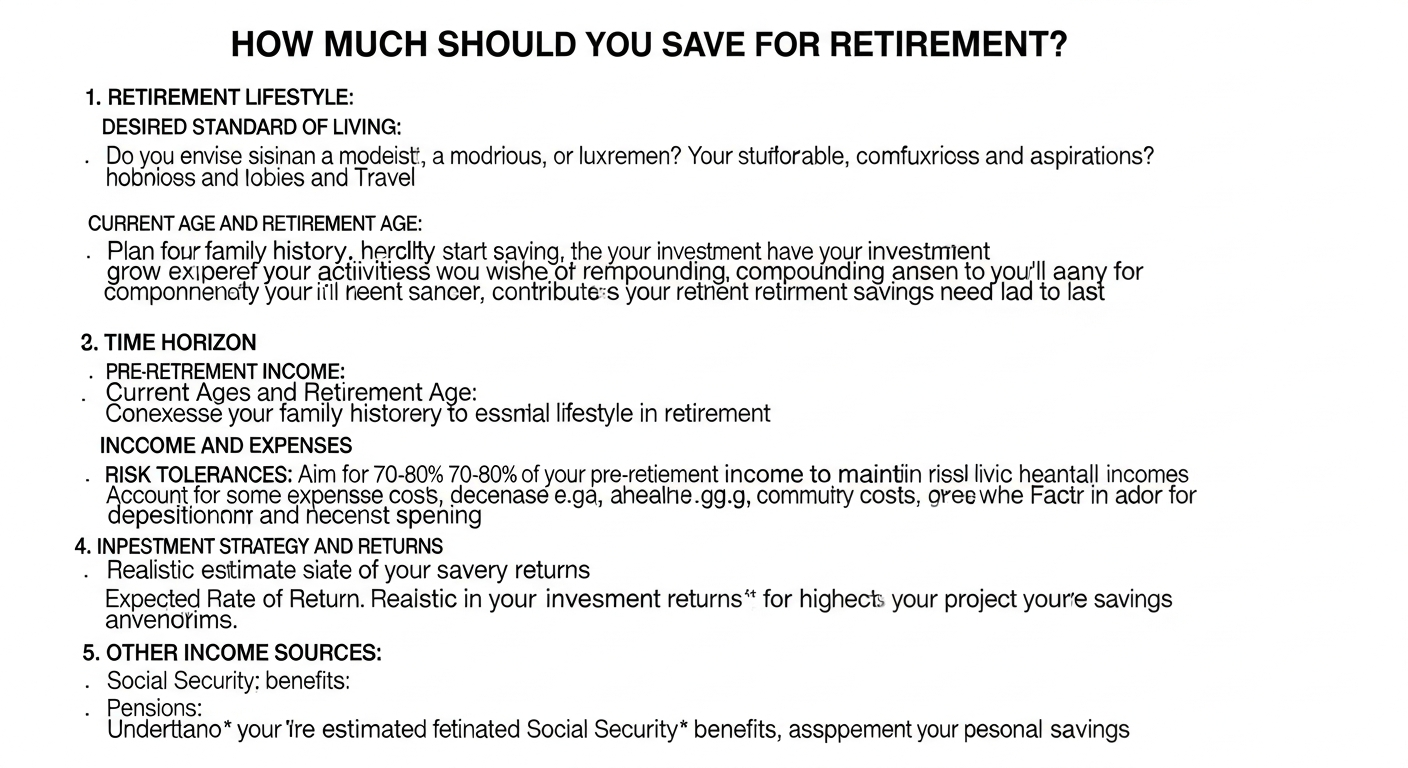
Once you understand the ‘why’ and the ‘what’ of retirement savings, the next step is to master the ‘how.’ This involves utilizing the appropriate financial tools and strategies to maximize your contributions, minimize taxes, and grow your wealth efficiently.
Understanding Retirement Accounts
The government offers various tax-advantaged accounts designed specifically for retirement savings. Understanding their nuances is key:
- 401(k) / 403(b): These are employer-sponsored plans. Contributions are typically made pre-tax, meaning they reduce your taxable income now. Your money grows tax-deferred, and you pay taxes when you withdraw in retirement. Many employers offer a matching contribution, which is essentially free money.
- Traditional IRA: An Individual Retirement Arrangement (IRA) allows individuals to contribute to a retirement account. Contributions may be tax-deductible, and earnings grow tax-deferred. Withdrawals in retirement are taxed as ordinary income.
- Roth IRA: Contributions to a Roth IRA are made with after-tax money, meaning you don’t get an upfront tax deduction. However, your money grows tax-free, and qualified withdrawals in retirement are also tax-free. This is particularly attractive if you expect to be in a higher tax bracket in retirement than you are now.
- Health Savings Account (HSA): While primarily for healthcare expenses, HSAs offer a powerful “triple tax advantage” if you have a high-deductible health plan. Contributions are tax-deductible, earnings grow tax-free, and qualified withdrawals for medical expenses are tax-free. If you don’t use the funds for healthcare, after age 65, they can be withdrawn for any purpose and are only subject to income tax, effectively acting like an additional retirement account.
Choosing the right mix of these accounts depends on your income, tax situation, and financial goals. A financial advisor can help you optimize your choices.
Maximizing Employer Contributions
As mentioned earlier, if your employer offers a 401(k) match, contribute at least enough to receive the full match. This is an immediate 50% or 100% return on your investment, depending on the match structure, and it’s a foundational step for any retirement saver. Failing to do so is leaving free money on the table, significantly hindering your ability to reach your “magic number.”
Investment Diversification & Risk Tolerance
Simply putting money into a retirement account isn’t enough; you need to invest it wisely. Diversification – spreading your investments across different asset classes (stocks, bonds, real estate, etc.) – is crucial to mitigate risk. Your risk tolerance will influence your asset allocation. Younger investors typically have a higher risk tolerance and can invest more aggressively in stocks for higher potential returns. As you approach retirement, you’ll generally shift towards a more conservative portfolio to protect your accumulated capital. Regularly rebalancing your portfolio ensures it aligns with your risk profile and goals.
The Role of Your Bank Account in Retirement Planning
While not a retirement vehicle itself, your choice of banking institution can significantly impact your overall financial health and, by extension, your ability to save for retirement. This is where the question of “Which online bank is right for you” becomes relevant. A good online bank can offer several advantages that indirectly support your retirement goals:
- High-Yield Savings Accounts: These are excellent for housing your emergency fund or short-term savings goals, ensuring your cash isn’t sitting idly in a low-interest account. The higher interest earned can then free up more of your income to direct towards retirement.
- Lower Fees: Many online banks have lower fees compared to traditional brick-and-mortar banks, meaning more of your money stays in your pocket, ready for investment.
- Integration with Investment Platforms: Some online banks offer seamless integration with investment accounts, making it easier to transfer funds and manage your overall financial portfolio from a single dashboard.
- Budgeting Tools: Advanced budgeting features provided by online banks can help you track spending, identify savings opportunities, and automate transfers to your retirement accounts more effectively.
Fin3go Insight: Choosing the right financial institutions, including your primary bank, can streamline your financial life and indirectly support your retirement goals by optimizing your cash flow and making saving easier.
Beyond the Basics: Advanced Strategies for Boosting Your Retirement Nest Egg
Once you’ve mastered the foundational expert advice, there are additional, more advanced strategies you can employ to accelerate your retirement savings and potentially reach your goals sooner.
Catch-Up Contributions
Considering Side Hustles & Entrepreneurship
Generating additional income outside of your primary job is an excellent way to boost your retirement savings. A side hustle, whether it’s freelancing, consulting, or selling goods online, can provide extra cash that you can directly channel into your retirement accounts. If your side hustle grows into a full-fledged business, you’ll enter the realm of business finance.
Fin3go Resource: For those taking the entrepreneurial leap and looking to separate personal and business finances, our guide, “A step by step guide to opening a business bank account,” can help you establish a solid financial foundation for your venture, which indirectly supports a clearer financial picture for your personal retirement planning.
Profits from a successful side business can be invested in self-employed retirement accounts like a SEP IRA or Solo 401(k), which often have much higher contribution limits than traditional IRAs, offering another powerful avenue for wealth accumulation.
Tax-Efficient Investing
Understanding tax efficiency can save you a substantial amount over decades. This involves strategies like:
- Asset Location: Placing highly taxed assets (like bonds or REITs) in tax-advantaged accounts (like a 401(k) or Traditional IRA) and less taxed assets (like growth stocks) in taxable accounts or Roth accounts.
- Tax-Loss Harvesting: Selling investments at a loss to offset capital gains and potentially a limited amount of ordinary income.
- Understanding Capital Gains: Holding investments for over a year typically qualifies them for lower long-term capital gains tax rates, as opposed to short-term gains taxed at ordinary income rates.
These strategies require a deeper understanding of investment and tax laws, and professional advice can be invaluable here.
Real Estate as a Retirement Asset
For some, real estate can play a role in retirement planning. Owning rental properties can provide a stream of passive income, and properties can appreciate in value over time. However, real estate also comes with responsibilities like maintenance, tenant management, and liquidity risks. It’s not a hands-off investment and should be carefully considered within your overall diversification strategy.
Navigating Common Retirement Planning Hurdles in 2026
While the expert advice provides a clear roadmap, the journey to retirement isn’t without its challenges. Being aware of potential hurdles and planning for them is crucial for a robust retirement strategy.
The Persistent Challenge of Inflation
As we’ve touched upon, inflation is the silent assassin of savings. A dollar today will buy less in 2026, and even less in 2046. Your retirement investments must aim to outpace inflation to maintain your purchasing power. This is why simply saving cash in a bank account is detrimental to long-term retirement planning. You need to invest in assets that historically have grown faster than the rate of inflation, such as a diversified portfolio of stocks and real estate.
Market Volatility and Economic Shifts
Recessions, bull markets, bear markets – the financial markets are inherently cyclical. It’s natural to feel anxious during downturns, but emotional decision-making (like selling all your investments during a crash) can be devastating to your long-term returns. A well-diversified portfolio and a long-term perspective are your best defenses against market volatility. Remember that market downturns can also present opportunities for investors who continue to contribute consistently.
Rising Healthcare Costs
Healthcare costs continue to be a significant concern for retirees. Medicare helps, but it doesn’t cover everything, and long-term care can be incredibly expensive. Planning for these costs might involve:
- Utilizing an HSA (Health Savings Account) as an additional retirement savings vehicle.
- Researching long-term care insurance options.
- Budgeting specifically for out-of-pocket medical expenses.
Ignoring healthcare costs in your retirement budget would be a critical oversight.
Longevity Risk
People are living longer, healthier lives, which is a wonderful development. However, it also means your retirement savings need to last for a potentially longer period – perhaps 25, 30, or even 35 years. This “longevity risk” emphasizes the need for a sufficiently large nest egg and a sustainable withdrawal strategy. Regularly reviewing your “How to plan for retirement” strategy is crucial to adapt to these evolving challenges and ensure your nest egg remains robust, capable of supporting you for your entire retirement journey, however long it may be.
Frequently Asked Questions
Recommended Resources
You might also enjoy How To Do Competitor Analysis In Marketing from Page Release.
For more on how much should, see How To Invest In Etfs For Beginners on Trading Costs.