
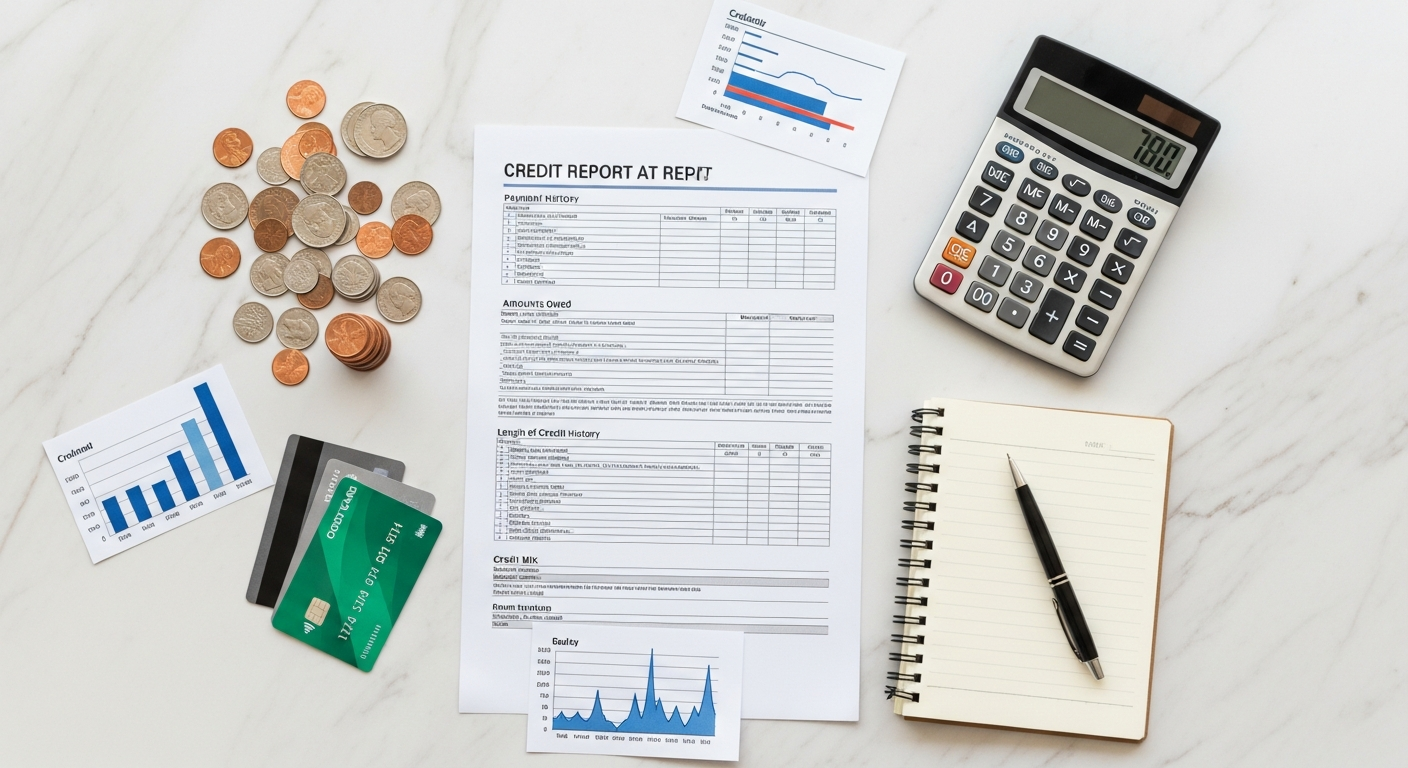
Master Your Money: A Comprehensive Guide to Reading and Understanding Your Credit Report in 2026
In the dynamic landscape of personal finance, your credit report stands as a crucial document, a detailed narrative of your financial reliability. Far from being a mere record, it’s a powerful tool that dictates access to loans, credit cards, housing, and even certain employment opportunities. In 2026, understanding this vital document is more important than ever, given ongoing shifts in economic trends and reporting standards. At Fin3go, we believe financial literacy is your strongest asset, and demystifying your credit report is a cornerstone of building a robust financial future.
Many people find their credit report daunting, a complex maze of numbers and terms. But fear not! This comprehensive guide will break down every section, empower you to read it with confidence, identify potential issues, and leverage its insights to your advantage. By the end of this article, you’ll not only understand your credit report but also be equipped to use it as a strategic tool for financial success in 2026 and beyond.
What is a Credit Report and Why Does it Matter So Much?
At its core, a credit report is a detailed summary of your credit history. Compiled by credit reporting agencies (often called credit bureaus), it includes information about your past and present credit accounts, how you’ve managed them, and certain public records. Think of it as your financial resume, meticulously tracking your borrowing and repayment behavior over time. Lenders, landlords, insurers, and even some employers use this report to assess your creditworthiness – essentially, how risky you are to lend money to, rent to, or hire.
In 2026, a strong credit report is indispensable for several reasons. Firstly, it directly influences your ability to secure loans, whether for a car, a home, or a business venture, often determining the interest rates you qualify for. A good report can save you tens of thousands of dollars in interest over the life of a major loan. Secondly, it’s essential for getting approved for credit cards, which offer convenience and various rewards. Thirdly, landlords frequently check credit reports to gauge a prospective tenant’s reliability, and insurance companies may use credit-based insurance scores to determine premiums. Even employers in sensitive financial roles might review your credit history. Beyond these practical applications, regularly reviewing your credit report is a crucial step in safeguarding against identity theft, allowing you to quickly spot fraudulent activity that could otherwise severely damage your financial standing. Understanding this foundational document is truly the first step toward mastermng your financial destiny.
Your Right to a Free Credit Report (and How to Get It in 2026)
To obtain your free credit reports, there’s one primary, government-sanctioned website you should always use: AnnualCreditReport.com. This is the only official source authorized to provide free reports from all three major bureaus. Be wary of other sites claiming to offer “free credit reports,” as they often come with strings attached, such as requiring you to sign up for paid services or monitoring plans. When visiting AnnualCreditReport.com in 2026, you’ll be guided through a simple process to request reports from Experian, Equifax, and TransUnion. You’ll need to provide some personal information for verification, such as your name, address, date of birth, and Social Security number. For security, each bureau will typically ask a few knowledge-based questions derived from your credit history that only you should know (e.g., “Which of these addresses have you lived at?”).
Fin3go recommends staggering your requests throughout the year. For example, you might pull your Experian report in January, your Equifax report in May, and your TransUnion report in September. This strategy allows you to monitor your credit activity more frequently without incurring costs, as each request grants you a full report from that specific bureau. This staggered approach is particularly beneficial for catching errors or signs of identity theft early. Remember, checking your own credit report through AnnualCreditReport.com is always considered a “soft inquiry” and will never negatively impact your credit score.
The Big Three: Understanding Experian, Equifax, and TransUnion
In the United States, your credit information is primarily compiled and maintained by three major national credit reporting agencies: Experian, Equifax, and TransUnion. While they all collect similar types of information, it’s crucial to understand that they are separate entities and do not always have identical data on file for you. Lenders report your account activity to one or more of these bureaus, but not necessarily all three. This means that a specific account, a late payment, or an inquiry might appear on one report but not another, or it might be reported slightly differently.
Each of the “Big Three” operates independently, maintaining its own database of consumer credit information. This is why it’s essential to review reports from all three bureaus regularly. For instance, a small regional credit union might only report to TransUnion, meaning details of that account would be absent from your Experian and Equifax reports. Conversely, a major national bank typically reports to all three. Therefore, relying on just one report provides an incomplete picture of your credit health. If you’re applying for a mortgage in 2026, for example, lenders often pull reports from all three bureaus to get a comprehensive view before making a decision.
While the core data they collect is similar, their reporting formats and layouts can vary slightly. They all adhere to the FCRA’s standards for accuracy and dispute resolution, but navigating the nuances of each report requires a careful eye. Understanding that these reports are distinct but interconnected is a key step in fully grasping your credit profile. It also underscores the importance of obtaining all three free reports via AnnualCreditReport.com when monitoring your credit or preparing for a major financial application.
Decoding Your Credit Report: Key Sections Explained
Once you have your credit report in hand, it’s time to break it down. While the layout might differ slightly between Experian, Equifax, and TransUnion, the core information is consistent across all of them. Here’s what you’ll find:
1. Personal Information
This section confirms your identity. It typically includes:
- Name: Your full legal name, and any known aliases or previous names.
- Current and Previous Addresses: A historical record of where you’ve lived. Ensure all addresses are accurate and familiar.
- Date of Birth: Your birth date.
- Social Security Number (SSN): Your SSN is crucial for identification. Only the last four digits are typically displayed for security.
- Employment Information: Your current and sometimes previous employers. This information is often self-reported during credit applications.
What to Check For: Any unfamiliar names, addresses, or employers could be a red flag for identity theft. Ensure your date of birth and SSN are correct.
2. Credit Accounts (Trade Lines)
This is arguably the most significant section, detailing all your credit accounts. Each entry, or “trade line,” provides a snapshot of your relationship with a specific creditor. You’ll typically see:
- Creditor Name: The name of the bank, credit union, or lender (e.g., “Chase Bank,” “Discover Card”).
- Account Number: A partial account number (usually showing only the last few digits) for security.
- Account Type: Categorizes the credit (e.g., Revolving – credit cards; Installment – mortgages, car loans, student loans; Open – charge cards like Amex that must be paid in full monthly).
- Account Status: Indicates if the account is open, closed, or closed by the creditor. “Transferred” or “Purchased” might indicate debt sale.
- Payment Status/History: This is critical. It shows your payment behavior, typically month-by-month for the past 7 years. Look for:
- “OK” or “Current”: On-time payments.
- “30,” “60,” “90,” “120” days late: Indicates how many days past due a payment was. These negatively impact your score.
- “Charge-off”: The creditor has written off the debt as uncollectible.
- “Collection”: The account has been placed with a collection agency.
- “Foreclosure,” “Repossession”: Indicates severe delinquency on secured loans.
- Date Opened: When you opened the account. Older, well-maintained accounts are generally positive.
- Credit Limit or Original Loan Amount: For revolving accounts, this is your maximum spending limit. For installment loans, it’s the initial loan principal.
- Current Balance: The amount you currently owe.
- High Balance: The highest amount you’ve ever owed on a revolving account.
- Scheduled Payment Amount: The minimum payment due.
- Terms: Details like the interest rate or number of payments remaining (for installment loans).
- Date of Last Activity: The most recent update to the account.
What to Check For: Any accounts you don’t recognize, incorrect payment statuses (e.g., showing a late payment when you paid on time), inaccurate credit limits or balances, or accounts that should be closed but appear open. Ensure all information is current and correct.
3. Public Records
Historically, this section included information like bankruptcies, tax liens, and civil judgments. However, since 2018, the major credit bureaus (Experian, Equifax, and TransUnion) removed most civil judgment and tax lien data from credit reports due to concerns over data accuracy and lack of identifying information. As of 2026, you will generally only see:
- Bankruptcies: These remain on your report and are among the most damaging items to your credit score, staying for 7-10 years depending on the type.
What to Check For: Any bankruptcy filings you are unaware of, which would be a severe sign of identity theft.
4. Inquiries
This section lists everyone who has requested a copy of your credit report. There are two main types:
- Hard Inquiries (Hard Pulls): Occur when you apply for new credit (e.g., a credit card, mortgage, car loan, personal loan). These inquiries can temporarily ding your credit score by a few points and remain on your report for two years, though their impact lessens over time. Multiple hard inquiries in a short period (outside of rate shopping for mortgages or auto loans) can signal higher risk to lenders.
- Soft Inquiries (Soft Pulls): These do not affect your credit score and are usually initiated by you (when you check your own report), by lenders pre-screening you for offers, or by existing creditors reviewing your account. They are only visible to you.
What to Check For: Any hard inquiries you don’t recognize. These could indicate someone applied for credit in your name without your permission, a clear sign of fraud.
5. Consumer Statement/Dispute Information
This is where you can add a brief statement to your report explaining any unusual circumstances (e.g., job loss, medical emergency) that led to late payments. It also contains records of any disputes you have initiated regarding inaccuracies on your report.
What to Check For: Ensure any statements you’ve added are correctly recorded and that past dispute resolutions are reflected accurately.
Spotting Errors and Disputing Inaccuracies
Even with advanced data systems in 2026, errors on credit reports are surprisingly common. These can range from minor typos to significant discrepancies that unfairly drag down your credit score. That’s why carefully reviewing every detail of your report is paramount. Common errors include:
- Incorrect personal information: Wrong name, address, or employer.
- Accounts you don’t recognize: A clear sign of potential identity theft.
- Incorrect payment history: A payment marked late when it was on time.
- Incorrect account status: An account listed as open when it’s closed, or a closed account incorrectly showing a balance.
- Duplicate accounts: The same account listed multiple times.
- Incorrect balances or credit limits: Discrepancies in amounts owed or available credit.
- Outdated information: Negative items remaining on your report beyond their legal reporting period (e.g., most late payments typically fall off after 7 years).
- Hard inquiries you didn’t authorize: Another strong indicator of fraud.
How to Dispute an Error: Your Step-by-Step Guide
The FCRA provides you with the right to dispute inaccurate information on your credit report. Here’s how to do it effectively in 2026:
- Identify the Error: Pinpoint the specific item(s) on your report that are incorrect. Gather any supporting documentation (e.g., bank statements, canceled checks, payment confirmations).
- Contact the Credit Bureau: You can dispute errors with the credit reporting agency that published the information (Experian, Equifax, or TransUnion) or directly with the information furnisher (the lender or creditor). It’s often recommended to start with the credit bureau. Each bureau has an online dispute process, a mailing address for disputes, and a phone number. Online disputes are generally the quickest.
- Provide Detailed Information: Clearly state the error and provide any documentation to support your claim. Include your full name, address, and the specific account number or item you are disputing.
- The Bureau’s Investigation: Once you file a dispute, the credit bureau has 30 days (or 45 days if you provided additional information during that period) to investigate your claim. They will contact the information furnisher to verify the data.
- Review the Results: After their investigation, the bureau must inform you of the results in writing. If the information is found to be inaccurate, incomplete, or unverifiable, it must be removed or corrected. If the dispute is denied, they must tell you why and how to proceed.
- Consider Contacting the Furnisher: If the bureau doesn’t resolve the issue to your satisfaction, or if you prefer a direct approach, you can also dispute the error directly with the company that reported the information (e.g., your bank or credit card company). They also have a legal obligation to investigate your claim.
- Keep Records: Maintain a detailed record of all communications, including dates, names of individuals you spoke with, and copies of all letters and documents sent and received. This is crucial if further action is required.
Successfully disputing errors can lead to an improved credit score, saving you money and opening up new financial opportunities.
Leveraging Your Credit Report for Financial Health
Beyond simply understanding its contents, your credit report is a powerful tool for proactively managing and improving your financial health in 2026. Consistent, informed engagement with this document can lead to significant benefits.
Firstly, regular monitoring of your credit reports (remember, you can get free reports weekly from AnnualCreditReport.com) is your frontline defense against identity theft. Imagine catching a fraudulent new credit card opened in your name within weeks, rather than months or years. Early detection allows you to report the activity quickly, minimizing the damage and the effort required to restore your credit. This vigilance is more critical than ever in an era of sophisticated cybercrime.
Secondly, your credit report serves as a roadmap for improving your credit score. By reviewing your trade lines, you can identify patterns. Are you frequently making late payments on a particular account? Are your credit card balances consistently high, pushing your credit utilization ratio into unhealthy territory? Understanding these details empowers you to make targeted changes. For instance, if you see high credit utilization, focusing on paying down balances can quickly boost your score. If late payments are an issue, setting up automated payments or reminders can prevent future slips.
Thirdly, it helps you prepare for major financial milestones. Before applying for a mortgage, car loan, or even renting an apartment, reviewing your credit reports from all three bureaus allows you to proactively identify and dispute any errors. Addressing these issues before a lender pulls your report can mean the difference between approval and denial, or between a high and low interest rate. Think of it as spring cleaning for your financial profile – getting everything in order before an important visitor arrives.
Finally, understanding your credit report fosters a deeper sense of financial empowerment. It demystifies the credit system, giving you control over a critical aspect of your financial life. This knowledge transforms the often-abstract concept of “credit” into a tangible, manageable asset that you can actively cultivate and protect. In 2026, leveraging your credit report is not just about avoiding pitfalls; it’s about actively building a foundation for a prosperous financial future.
Mastering your credit report is an essential skill for navigating the modern financial landscape. By regularly accessing and meticulously reviewing your reports from all three major bureaus, you gain unparalleled insight into your financial reliability, protect yourself from identity theft, and proactively identify opportunities for improvement. The knowledge contained within these documents empowers you to take control, dispute inaccuracies, and build a strong credit foundation that will serve you well in securing loans, credit cards, and a brighter financial future in 2026 and beyond. Make checking your credit report a routine part of your financial wellness plan.