

The Imperative of Money Saving Challenges in 2026: Why Now?
The dawn of 2026 brings with it a fresh perspective on personal finance, underscoring the critical need for deliberate and effective money saving strategies. In an era marked by fluctuating economic indicators, persistent inflation, and the ever-present desire for financial independence, the traditional approach to saving often falls short. This is precisely where money saving challenges emerge as a powerful, gamified solution, injecting motivation and structure into what can otherwise feel like an arduous task. The global economic landscape of 2026 continues to present unique pressures, from rising living costs to the unpredictable nature of various markets. For the average individual and family, this translates into a heightened sense of urgency to fortify their financial resilience. Simply put, passively hoping to save money is no longer a viable strategy; active engagement and strategic planning are paramount.
Money saving challenges are more than just trendy financial fads; they are psychologically-backed tools designed to foster consistent saving habits through achievable, incremental steps. By framing saving as a challenge, individuals are more likely to commit, track progress, and experience the satisfaction of meeting goals. This gamified approach transforms a potentially monotonous activity into an engaging pursuit, making it easier to stick with financial resolutions throughout 2026. Moreover, these challenges provide a tangible framework, allowing savers to visualize their progress and understand the direct impact of their efforts. Whether it’s saving for a down payment, an emergency fund, or simply to reduce discretionary spending, a well-chosen challenge can provide the impetus needed to turn aspirations into reality.
Beyond the immediate financial gains, participating in money saving challenges in 2026 cultivates a deeper understanding of one’s spending patterns and financial priorities. It forces an honest appraisal of where money is truly going, often revealing hidden leaks and opportunities for optimization. This newfound awareness is invaluable, empowering individuals to make more informed decisions about their money long after the challenge concludes. The discipline built through these structured saving periods extends into other areas of financial management, from budgeting to investing, laying a robust groundwork for future financial growth. At Fin3go, we believe that 2026 is the year to not just save money, but to fundamentally reshape your financial relationship, and money saving challenges are your most potent allies in this transformative journey.
Laying the Foundation: Your Budgeting Blueprint for 2026 Success
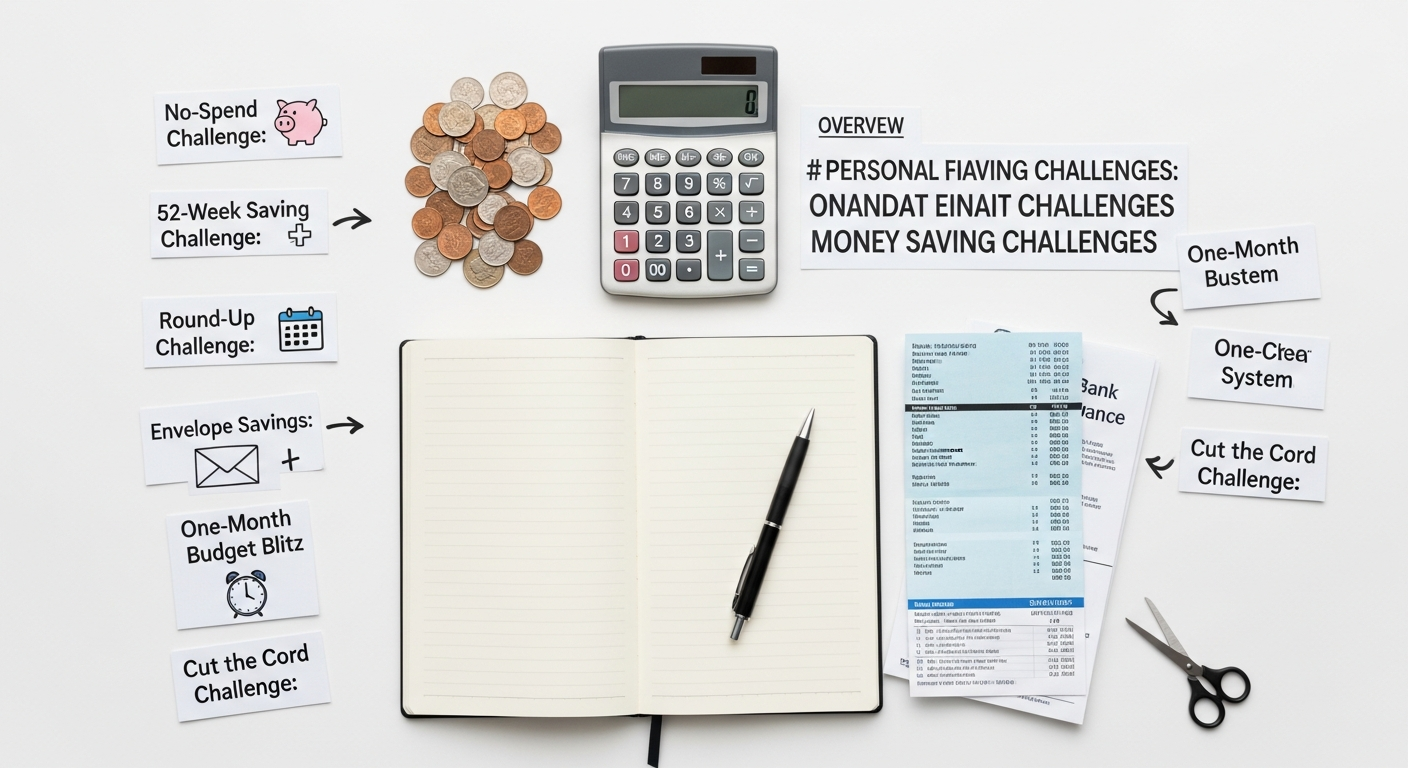
Before diving headfirst into any money saving challenge for 2026, establishing a solid financial foundation is non-negotiable. The cornerstone of this foundation is an effective and realistic budget. Without a clear understanding of your income and expenses, even the most enthusiastic saving efforts can falter. Think of your budget as the GPS for your financial journey in 2026, guiding you towards your goals and helping you navigate potential pitfalls. It’s not about restriction; it’s about empowerment – giving every dollar a job and ensuring it works towards your objectives.
The initial step in this process is to learn How To Create A Monthly Budget that truly reflects your financial reality. Start by gathering all your income sources and tracking every expense for a month. This might seem tedious, but it provides invaluable insight into your spending habits. Categorize your expenses into fixed (rent/mortgage, loan payments, insurance) and variable (groceries, entertainment, dining out). Many people are surprised to discover where their money is actually going, often revealing significant “money leaks” in discretionary spending that can be redirected towards savings.
Once you have a clear picture, you can choose a budgeting method that suits your lifestyle. Popular approaches include the 50/30/20 rule, where 50% of your income goes to needs, 30% to wants, and 20% to savings and debt repayment. Another effective method is zero-based budgeting, where every dollar is assigned a purpose, leaving no money unaccounted for. For those who prefer a more tactile approach, the envelope system can be highly effective, especially for variable expenses. Regardless of the method, the key is consistency and regular review. Fin3go advocates for using modern fintech solutions, many of which offer automated tracking, categorization, and visualization tools that simplify the budgeting process and make it easier to stick to your plan in 2026.
Setting realistic financial goals is another critical component of your budgeting blueprint. Are you aiming to build a 3-6 month emergency fund? Save for a down payment on a house? Pay off high-interest debt? Each goal requires a specific savings target and timeline. Integrate these goals directly into your budget, allocating a dedicated amount towards them each month. This proactive allocation turns saving into a non-negotiable expense, rather than an afterthought. Your budget for 2026 should be a living document, reviewed and adjusted quarterly or whenever significant life changes occur. This flexibility ensures your financial plan remains relevant and effective, truly setting the stage for success in any money saving challenge you choose to undertake.
Top Money Saving Challenges for 2026: Engaging Strategies to Boost Your Savings
- The 52-Week Money Saving Challenge: This classic challenge involves saving an increasing amount each week over the course of a year. You start by saving $1 in week one, $2 in week two, and so on, until you save $52 in the final week. By the end of 52 weeks, you’ll have accumulated $1,378. For those looking for a slightly easier start, you can reverse the challenge, saving $52 in week one and decreasing the amount each week. There are also variations where you pick a random amount between $1 and $52 each week, giving you more flexibility. This challenge is excellent for building consistent saving habits and seeing gradual, tangible progress. It’s a fantastic way to kickstart your savings for 2026 with a clear, achievable structure.
- The No-Spend Challenge: This challenge is exactly what it sounds like: designate a period (a day, a week, or even a month) where you commit to spending absolutely no money on non-essential items. This means no dining out, no impulse purchases, no new clothes, and no entertainment costs that require spending. The rules can be customized to allow for essential expenses like groceries, rent, and transportation. The No-Spend Challenge is incredibly effective at highlighting discretionary spending habits and forcing you to be creative with resources you already have. It’s a powerful way to reset your spending patterns and identify areas where you can cut back significantly for your 2026 financial goals.
- The Savings Jar/Envelope Challenge: This is a simple, visual, and highly motivating challenge. Set up a physical jar or a set of envelopes labeled for different savings goals (e.g., “Emergency Fund,” “Vacation,” “New Gadget”). Whenever you have spare cash, change, or a small amount you’ve saved from a specific budget category, drop it into the relevant jar or envelope. The visual growth of your savings acts as a powerful motivator. This challenge is particularly effective for those who deal with cash regularly or who benefit from seeing their progress physically accumulate. You can even automate small transfers to a dedicated savings account to mimic the digital version of this challenge.
- The Round-Up Challenge: Many fintech apps and banks now offer a “round-up” feature. With every debit card purchase, the transaction is rounded up to the nearest dollar, and the difference is automatically transferred to your savings account. For example, if you buy a coffee for $3.50, $0.50 is automatically saved. While each individual saving might seem small, these micro-savings accumulate rapidly over time without you even noticing the impact on your daily spending. This passive saving method is an excellent, effortless way to boost your savings throughout 2026, leveraging technology to do the heavy lifting.
- The “$X a Day/Week” Challenge: This challenge involves committing to save a fixed amount of money every day or every week. For instance, you might decide to save $5 a day, which accumulates to $1,825 over a year. Or, $20 a week, totaling $1,040 annually. This challenge is straightforward and easy to track. It fosters consistent saving habits and can be scaled up or down based on your financial capacity. The consistency is key here, building a habit of regularly moving money into your savings.
- The Declutter and Sell Challenge: This challenge tackles two goals simultaneously: decluttering your living space and earning extra cash. Over a set period, commit to identifying items you no longer need or use (clothes, electronics, furniture, books) and selling them online (e.g., eBay, Facebook Marketplace, local consignment stores) or at a garage sale. All proceeds go directly into your savings. Not only do you free up space, but you also generate immediate funds that can significantly boost your savings for 2026, especially if you have a lot of unused items gathering dust.
The key to success with any of these money saving challenges in 2026 is to choose one that excites you and that you can realistically stick to. Don’t be afraid to customize the rules to fit your personal circumstances. The goal is to make saving an enjoyable and rewarding part of your financial routine, leading to substantial progress towards your financial objectives.
Beyond the Challenge: Optimizing Your Expenses and Maximizing Returns
While money saving challenges provide a structured and motivating path to boost your savings in 2026, true financial mastery extends beyond these episodic efforts. It involves a continuous commitment to optimizing your expenses and ensuring your saved money works as hard as possible for you. This often means critically evaluating your recurring costs and actively seeking ways to reduce them permanently. One of the most impactful strategies in this regard is learning How To Negotiate Bills And Lower Expenses, a skill that can yield significant long-term savings.
Many common household bills are not set in stone. Services like internet, cable, mobile phone plans, and even insurance premiums are often negotiable. Begin by researching competitor rates to understand the market value of the services you receive. Then, arm yourself with this information and contact your current providers. Be polite but firm, expressing your satisfaction with their service but indicating you’re considering alternatives due to pricing. Often, providers are willing to offer loyalty discounts, upgrade your service for the same price, or match competitor rates to retain your business. This simple act of negotiation can shave hundreds of dollars off your annual expenses, directly freeing up more capital for your savings challenges and investment goals in 2026.
Beyond negotiation, a thorough review of your recurring subscriptions is essential. In the digital age, it’s easy to accumulate numerous streaming services, apps, and memberships that you rarely use. Take a quarterly audit of all your subscriptions, canceling anything that isn’t providing significant value. Similarly, consider refinancing high-interest debt, such as credit card balances or personal loans, to secure lower interest rates. This reduces your monthly payments and the total amount of interest you pay over the life of the loan, accelerating your path to debt freedom and allowing more funds to be directed towards wealth building. For mortgages or student loans, exploring refinancing options in a favorable interest rate environment can also lead to substantial long-term savings.
Maximizing returns on your savings for 2026 also involves strategic investment. Once you’ve built an emergency fund, consider moving your excess savings into higher-yield savings accounts or exploring diversified investment options. Automation is your ally here; set up automatic transfers from your checking account to your savings and investment accounts on payday. This “pay yourself first” approach ensures that saving and investing become non-negotiable parts of your financial routine, rather than an afterthought. By consistently optimizing expenses and strategically investing your savings, you transition from merely participating in money saving challenges to actively building a robust financial future, moving towards greater financial independence and prosperity in 2026 and beyond.
From Savings to Significance: Building Generational Wealth in 2026 and Beyond
The journey from disciplined saving through challenges to significant financial freedom culminates in the powerful concept of building generational wealth. While money saving challenges for 2026 are excellent catalysts for immediate financial improvement, their ultimate purpose, particularly for Fin3go readers, is to serve as a stepping stone towards a legacy of lasting prosperity. It’s about thinking beyond your immediate financial needs and planning for the financial well-being of your children, grandchildren, and future generations. The principles you apply to save for a specific goal in 2026 are the same foundational elements that, when scaled and sustained, contribute to a financial legacy.
The concept of How To Build Generational Wealth goes far beyond simply accumulating money. It encompasses financial literacy, smart investing, asset protection, and the deliberate transfer of knowledge and resources to ensure future generations are not just financially secure, but also financially savvy. Your success in money saving challenges in 2026 can free up capital that can then be strategically invested, allowing the power of compound interest to work its magic over decades. This means moving beyond a traditional savings account once your emergency fund is robust, and exploring diversified investment portfolios that include stocks, bonds, real estate, and other assets that appreciate over time.
A key component of building generational wealth is financial education. It’s not enough to leave an inheritance; it’s vital to equip your heirs with the knowledge and skills to manage and grow that wealth responsibly. This includes teaching them about budgeting, investing, debt management, and the importance of long-term financial planning. Fin3go emphasizes that the habits you cultivate through your 2026 money saving challenges – discipline, goal-setting, delayed gratification – are invaluable lessons to pass on. By openly discussing finances and involving younger family members in age-appropriate financial planning, you instill a culture of financial responsibility that can perpetuate wealth for generations.
Sustaining Momentum: Overcoming Obstacles and Staying Motivated in 2026
Embarking on money saving challenges for 2026 is an admirable goal, but sustaining momentum over weeks and months can be challenging. Life is unpredictable, and unexpected expenses, financial setbacks, or simply a loss of motivation can derail even the best-laid plans. Recognizing these common obstacles and having strategies to overcome them is crucial for long-term success. The path to financial freedom is rarely a straight line, but with resilience and adaptability, you can stay on track and achieve your 2026 savings goals.
One of the most common hurdles is unexpected expenses. A sudden car repair, medical bill, or home maintenance issue can quickly deplete savings or force you to dip into funds allocated for a challenge. This is where your emergency fund, built through diligent budgeting and earlier saving efforts, becomes your financial safety net. Having a robust emergency fund prevents unexpected costs from derailing your specific challenge, allowing you to address life’s surprises without sacrificing your savings goals. If you don’t have one yet, make building a starter emergency fund (e.g., $1,000) your first mini-challenge for 2026.
Another significant challenge is maintaining motivation, especially during longer saving periods. The initial excitement of starting a new challenge can wane. To combat this, Fin3go recommends several strategies. Firstly, visualize your goals regularly. Create a vision board, use a savings tracker with visual progress bars, or set up automated reminders that highlight how far you’ve come and what you’re working towards. Secondly, find an accountability partner – a friend, family member, or even an online community – who can share the journey with you, offer encouragement, and hold you accountable for your progress. Sharing your goals and celebrating small victories along the way can significantly boost morale.
Flexibility is also key. If you miss a week in the 52-week challenge or break your no-spend streak, don’t view it as a failure that necessitates giving up entirely. Instead, acknowledge the slip, learn from it, and get back on track immediately. Adjust your goals if necessary; it’s better to modify a challenge to make it achievable than to abandon it altogether. Perhaps your original savings target for 2026 was too ambitious, or your income situation changed. Re-evaluate your budget, adjust your challenge parameters, and restart with renewed commitment. Remember, the ultimate goal is to build sustainable financial habits, not just to complete a specific challenge perfectly. By anticipating obstacles and equipping yourself with strategies to overcome them, you empower yourself to navigate the complexities of personal finance in 2026 with confidence and achieve lasting financial success.
Frequently Asked Questions
Recommended Resources
For more on money saving challenges, see How To Use Linkedin For Marketing on Page Release.
For more on money saving challenges, see How To Create A B2B Content Marketing Strategy on Kacerr.