



Understanding the Core Difference: Neobanks vs. Traditional Banks
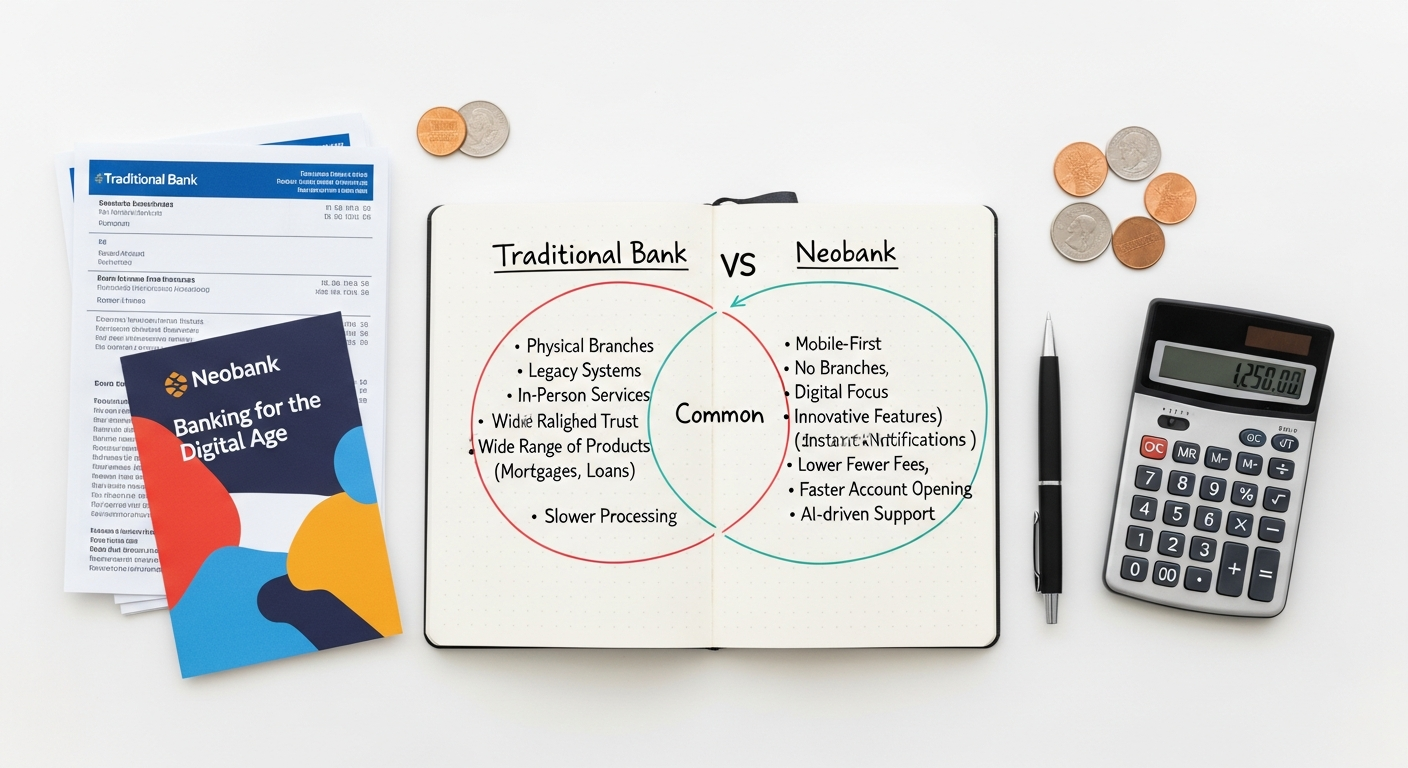
At their fundamental level, the distinction between neobanks and traditional banks lies in their operational model and historical legacy. Traditional banks, often referred to as incumbent banks, are institutions with a long-standing history, characterized by their extensive network of physical branches, ATMs, and a well-established infrastructure built over decades, if not centuries. These institutions typically offer a full spectrum of financial services, from basic checking and savings accounts to complex investment products, mortgages, and wealth management, catering to a diverse clientele ranging from individuals to large corporations. Their strength often comes from their perceived stability, deep regulatory integration, and a legacy of personal, face-to-face customer interactions.
Neobanks, on the other hand, represent a new wave of financial innovation. They are digital-first or mobile-only banks that operate almost exclusively online, without the overhead of physical branches. Born in the era of smartphones and ubiquitous internet access, neobanks leverage cutting-edge technology to deliver banking services through intuitive mobile apps and web platforms. While they offer many of the same core services as traditional banks, such as checking and savings accounts, their approach is fundamentally different. They prioritize user experience, speed, and often lower fees, appealing to a generation comfortable with managing their lives through digital interfaces. It’s crucial to note that many neobanks are not banks in the traditional sense themselves; instead, they partner with FDIC-insured (or equivalent international) traditional banks to hold customer deposits, thereby providing the same level of insurance and security that consumers expect.
The core difference boils down to infrastructure and philosophy. Traditional banks are often constrained by legacy systems and a physical footprint, which can lead to slower innovation and higher operational costs. Neobanks, free from these constraints, can innovate rapidly, offer more competitive rates, and focus entirely on optimizing the digital customer journey. This distinction sets the stage for a thorough examination of how these differences manifest in the practical aspects of banking, from day-to-day transactions to long-term financial planning.
The User Experience: Convenience, Technology, and Accessibility

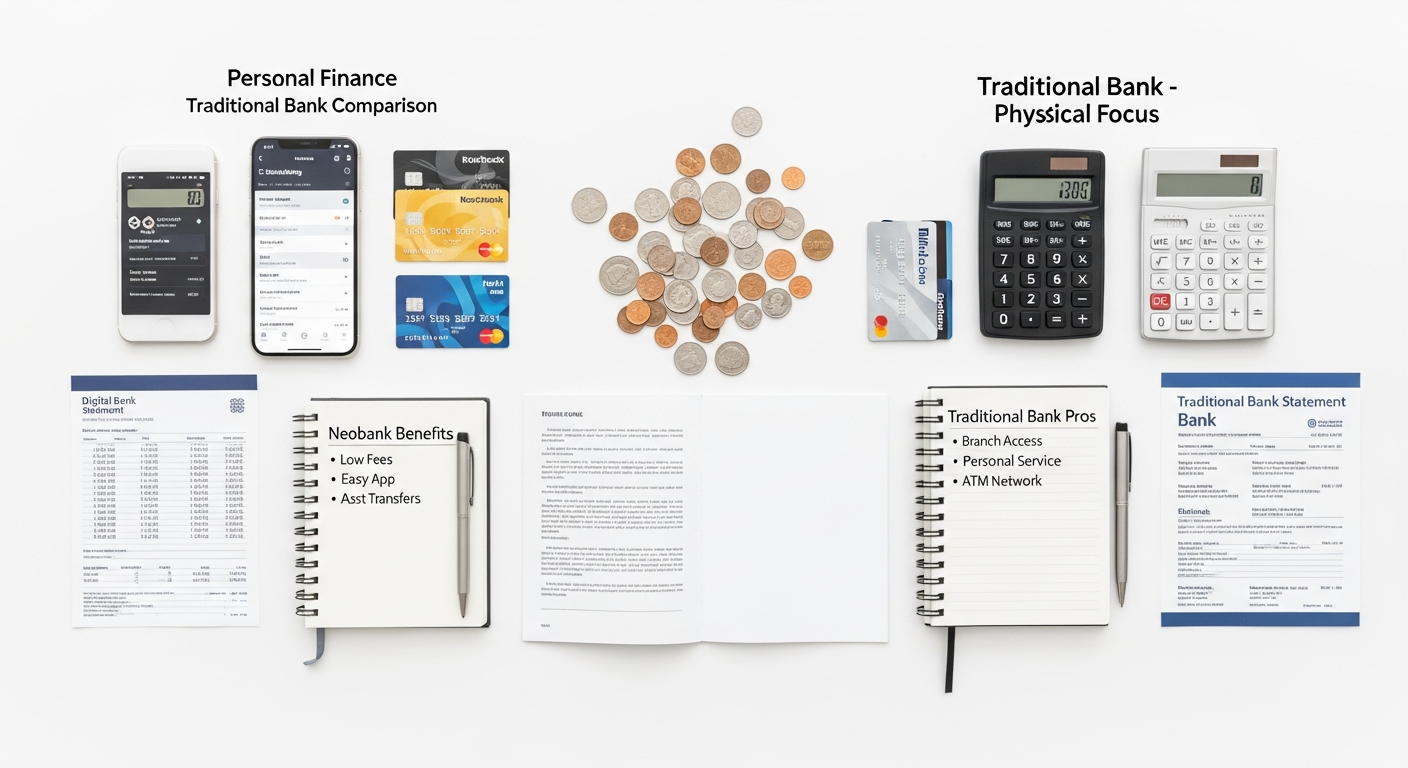
The user experience is arguably the most palpable differentiator between neobanks and traditional banks, profoundly influencing daily financial interactions. Traditional banks, with their brick-and-mortar presence, offer a unique form of accessibility: the ability to walk into a branch, speak face-to-face with a teller or financial advisor, and conduct complex transactions or seek personalized advice. For many, this human element provides a sense of security and trust, especially when dealing with significant financial decisions like applying for a mortgage or discussing retirement planning. However, this accessibility often comes with limitations such as banking hours, geographical constraints, and sometimes lengthy wait times. While traditional banks have invested heavily in online banking portals and mobile apps, their digital offerings can sometimes feel like an extension of their physical operations rather than a natively digital experience, often reflecting the complexities of their legacy systems.
Neobanks, conversely, are built from the ground up with the digital user in mind. Their entire ecosystem revolves around a sleek, intuitive mobile application that serves as the primary interface for all banking activities. This digital-first approach translates into unparalleled convenience and accessibility. Users can open an account in minutes from their smartphone, deposit checks by snapping a photo, transfer funds instantly, pay bills, and monitor their spending in real-time, all without ever leaving their home. Notifications for every transaction, categorization of spending, and integrated budgeting tools are standard features designed to empower users with greater control and insight into their finances. The absence of physical branches means banking is available 24/7, anywhere with an internet connection. For individuals who prefer managing their finances on the go and value efficiency above all else, the neobank experience is often a revelation.
Moreover, the technological prowess of neobanks extends beyond mere convenience. Many integrate advanced features such as AI-powered financial insights, round-up savings programs, virtual debit cards, and seamless integration with other fintech tools. This allows for a more proactive and personalized approach to money management. While traditional banks are rapidly catching up, their technological adoption can be slower due to the need to integrate new systems with existing infrastructure. The digital native design of neobanks means they can often innovate faster, rolling out new features and improvements with greater agility, constantly enhancing the user experience based on real-time feedback and evolving technological capabilities.
Fees, Interest Rates, and Financial Products: A Cost-Benefit Analysis
Fees: A Neobank Advantage
Traditional banks are notorious for their array of fees. These can include monthly maintenance fees (often waived with a minimum balance or direct deposit), overdraft fees (which can quickly accumulate), ATM fees (especially out-of-network), foreign transaction fees, wire transfer fees, and more. While many traditional banks offer ways to avoid some of these charges, they still represent a significant potential cost for consumers who don’t meticulously manage their account activity. The existence of these fees is often justified by the cost of maintaining physical branches, staffing, and legacy infrastructure.
Neobanks, by contrast, typically operate with a lean cost structure, allowing them to offer accounts with minimal to no fees. Many neobanks boast no monthly maintenance fees, no overdraft fees (or offer mechanisms to avoid them, like temporary advances), and often provide fee-free access to extensive ATM networks. Foreign transaction fees are also frequently lower or non-existent, making them attractive for international travelers. This focus on eliminating fees is a major draw, particularly for younger demographics and those on tight budgets, for whom every dollar saved from fees can make a tangible difference in their financial well-being.
Interest Rates: Maximizing Your Savings
On the savings front, neobanks often offer significantly higher interest rates on savings accounts compared to their traditional counterparts. This is again a direct consequence of their lower operating costs. Without the need to maintain expensive branch networks, neobanks can pass on these savings to their customers in the form of more competitive Annual Percentage Yields (APYs). While the difference might seem small on a month-to-month basis, over time, these higher interest rates can contribute meaningfully to wealth accumulation, especially for those diligently building an emergency fund or saving for a large purchase.
Traditional banks, while offering competitive rates on certain specialized products (like high-yield CDs or money market accounts), generally provide very low interest rates on standard savings accounts. This disparity highlights a key advantage for neobanks in helping customers grow their money more effectively.
Financial Products: Breadth vs. Specialization
The range of financial products available also differs considerably. Traditional banks offer a comprehensive suite of services, making them a one-stop shop for almost any financial need. This includes:
- Standard checking and savings accounts
- Mortgages and home equity loans
- Personal loans and lines of credit
- Auto loans
- Credit cards with various rewards programs
- Investment services (brokerage accounts, mutual funds, wealth management)
- Retirement accounts (IRAs, 401(k)s)
- Business banking services (merchant accounts, business loans)
- International wire transfers and foreign exchange
This extensive product portfolio makes traditional banks suitable for individuals and businesses with complex or evolving financial requirements, particularly those seeking bundled services or in-person advisory for long-term planning.
Neobanks, while rapidly expanding their offerings, typically focus on a more streamlined set of core products. Their strengths lie in:
- Checking accounts with advanced budgeting features
- High-yield savings accounts
- Early access to direct deposits
- Simple personal loans or cash advances
- Secured credit cards or debit cards with credit-building features
- Integration with third-party investment apps (though direct investment platforms are less common)
- Tools for tracking spending and creating a monthly budget, often superior to traditional bank offerings.
The integrated budgeting tools found in many neobank apps are particularly valuable. They make it significantly easier for users to track every penny, categorize expenses automatically, and visualize their spending habits. This can be immensely helpful for individuals who are learning How To Create A Monthly Budget, providing real-time insights that traditional banks are only now beginning to replicate. While neobanks may not offer complex mortgages or extensive investment portfolios directly, their focus on core banking with advanced digital tools makes them exceptionally efficient for day-to-day money management and smart saving.
For individuals embarking on their financial journey or those prioritizing low costs and digital convenience, neobanks present a compelling proposition. However, for those with complex borrowing needs, significant investment portfolios, or who prefer to consolidate all financial services under one roof with in-person advisory, traditional banks still hold a distinct advantage.
Security, Regulation, and Trust: Safeguarding Your Finances
When it comes to money, security and trust are paramount. Both neobanks and traditional banks operate within established frameworks designed to protect consumer funds, though their approaches and the public’s perception of their security can differ.
Traditional Banks: A Legacy of Trust and Robust Regulation
Traditional banks have built their reputation on decades, if not centuries, of trust. They are heavily regulated institutions, subject to stringent oversight by government bodies such as the Federal Reserve, the Office of the Comptroller of the Currency (OCC), and the Consumer Financial Protection Bureau (CFPB) in the United States, or similar authorities internationally. This regulatory environment ensures compliance with capital requirements, consumer protection laws, and anti-money laundering (AML) protocols. Furthermore, deposits in traditional banks are typically insured by government agencies like the Federal Deposit Insurance Corporation (FDIC) up to a certain limit ($250,000 per depositor, per insured bank, for each account ownership category), providing a safety net in case of bank failure. This long history of regulation and insurance contributes significantly to the perceived security and trustworthiness of traditional institutions.
Beyond regulatory compliance, traditional banks often invest heavily in cybersecurity infrastructure to protect their vast networks and customer data. They employ sophisticated fraud detection systems, encryption technologies, and multi-factor authentication for online access. While no system is entirely impervious, the sheer scale and long-standing nature of their operations suggest a deep-seated commitment to security.
Neobanks: Modern Security Measures and Evolving Trust
The primary concern for many potential neobank users revolves around security and regulation, largely due to their newer status and digital-only nature. However, it’s a misconception that neobanks are inherently less secure. In fact, most reputable neobanks partner with traditional, FDIC-insured banks to hold customer deposits. This means that funds held in a neobank account are typically protected by the same FDIC insurance as those in a traditional bank, up to the same limits. The neobank itself acts as a technology layer, providing the user interface and specific features, while the underlying financial infrastructure is often provided by a regulated and insured banking partner. It is always prudent for consumers to verify the insurance status of any financial institution, traditional or neobank, before depositing funds.
Neobanks, by virtue of being digital-first, often incorporate state-of-the-art security features directly into their platforms. These include:
- Advanced Encryption: All data transmitted and stored is typically heavily encrypted.
- Biometric Authentication: Fingerprint and facial recognition for app access enhance security beyond traditional passwords.
- Real-time Notifications: Instant alerts for every transaction help users detect unauthorized activity immediately.
- Virtual Card Numbers: Some neobanks offer disposable virtual card numbers for online purchases, adding an extra layer of protection against fraud.
- Card Freezing/Unfreezing: The ability to instantly freeze and unfreeze debit cards directly from the app provides immediate control in case of loss or suspected fraud.
- Stronger Fraud Detection: Leveraging AI and machine learning, neobanks can often identify and flag unusual spending patterns more quickly.
While neobanks don’t have the centuries of trust that traditional banks do, their commitment to modern digital security and their reliance on established FDIC-insured partners provide a robust framework for safeguarding customer funds. The challenge for neobanks lies in building and communicating this trust effectively to a broader audience, demonstrating that their digital-first approach does not compromise safety but rather enhances it through innovative security measures.
Customer Service: Human Touch vs. Digital Efficiency
Customer service is a critical component of the banking experience, and here, the divergence between traditional banks and neobanks is particularly pronounced, reflecting their operational models and target audiences.
Traditional Banks: The Power of Personal Interaction
The hallmark of traditional bank customer service is the option for human interaction. Customers can walk into a physical branch, speak face-to-face with a teller for routine transactions, or consult with a personal banker or financial advisor for more complex issues like loan applications, investment advice, or resolving account discrepancies. This direct, in-person support provides a level of reassurance and personalized attention that many customers value, especially when dealing with sensitive financial matters or when they prefer not to navigate automated systems. Beyond branches, traditional banks also offer extensive phone support, often with dedicated lines for specific services, and increasingly, online chat and email support.
The advantages of this model include:
- Personal Relationships: The ability to build a relationship with a specific banker can be invaluable for personalized advice and streamlined service.
- Complex Issue Resolution: In-person discussions can be more effective for resolving intricate problems that require detailed explanations or documentation.
- Accessibility for Certain Demographics: Older generations or those less comfortable with technology may prefer face-to-face or phone interactions.
- Tangible Presence: Knowing there’s a physical location to visit offers a sense of security and accountability.
However, this model can also come with drawbacks:
- Limited Hours: Branch banking is restricted to business hours, which may not align with everyone’s schedule.
- Wait Times: Phone queues and in-branch waits can be frustratingly long.
- Geographical Constraints: Access to a branch depends on proximity.
Neobanks: Digital-First, Efficient Support
Neobanks, lacking physical branches, rely entirely on digital channels for customer support. Their primary modes of communication are in-app chat, email, and sometimes phone support, though phone lines might be less prominent or reserved for specific issues. The emphasis is on efficiency, speed, and self-service, leveraging technology to provide quick answers and resolutions.
Key aspects of neobank customer service include:
- 24/7 Availability: Digital support channels are typically accessible around the clock, allowing users to get help whenever they need it.
- In-App Chat: This is often the primary and most convenient support method, offering instant messaging with support agents or AI-powered chatbots for common queries.
- Knowledge Bases & FAQs: Extensive online resources allow users to find answers to their questions independently.
- Seamless Integration: Support is integrated directly into the banking app, making it easy to access without switching platforms.
- Speed and Responsiveness: Without physical queues, digital support can often provide faster initial responses, though resolution times can vary depending on complexity.
While neobank customer service prioritizes efficiency and digital convenience, some users might find the lack of a human voice or face-to-face interaction less reassuring, especially for complex or sensitive issues. The quality of chat support can vary, and direct phone access might be limited. However, for routine inquiries, account management, and troubleshooting, the digital-first approach often proves to be highly effective and perfectly aligned with the needs of tech-savvy users.
Ultimately, the preferred customer service model hinges on individual preferences. Those who value personal relationships and the option of in-person consultation may lean towards traditional banks, while those who prioritize speed, digital efficiency, and 24/7 access will likely find neobanks more appealing.
Who Benefits Most? Tailoring Your Banking Choice to Your Financial Goals
The optimal choice between a neobank and a traditional bank isn’t universal; it depends heavily on individual financial goals, lifestyle, technological comfort, and specific banking needs. Understanding who benefits most from each model can help Fin3go readers make a truly informed decision.
Traditional Banks: Ideal for Complexity, Personal Touch, and Specific Needs
Traditional banks remain the preferred choice for several segments of the population and for particular financial situations:
- Individuals with Complex Financial Needs: If you require mortgages, extensive business loans, wealth management services, or sophisticated investment banking products, traditional banks, with their broad portfolios and specialized advisors, are generally better equipped. They can offer integrated solutions across various financial domains.
- Those Who Value In-Person Interaction: Customers who prefer face-to-face discussions for advice, problem-solving, or simply enjoy the human element of banking will find traditional banks more appealing. This includes individuals who might be less comfortable with digital interfaces.
- Businesses Requiring Comprehensive Services: Small and large businesses often need specific services like merchant processing, complex lines of credit, international trade finance, and dedicated business banking advisors, which traditional banks have historically excelled at providing.
- Cash-Heavy Users: While ATMs are widespread, depositing large amounts of cash or frequently making cash transactions is often more convenient at a traditional bank branch.
- Bundled Service Seekers: Many traditional banks offer incentives for customers who consolidate multiple accounts (checking, savings, loans, investments) under one institution.
- Seniors and Less Tech-Savvy Individuals: For those who grew up with traditional banking and may find mobile-only platforms daunting, the familiarity and accessibility of physical branches and traditional phone support are invaluable.
For example, if you’re planning for retirement and need comprehensive financial planning that integrates investments, insurance, and estate planning, a traditional bank with its array of specialized departments might be a better fit. Similarly, if you’re a small business owner looking for a merchant account and a business loan, the established infrastructure of a traditional bank can offer more robust solutions.
Neobanks: Perfect for Digital Natives, Cost-Conscious Savers, and Budgeters
Neobanks cater to a distinct demographic and offer specific advantages that make them highly attractive to others:
- Tech-Savvy Individuals and Digital Natives: Those who are comfortable managing their entire financial life through a smartphone app will thrive with a neobank. They appreciate intuitive interfaces, instant notifications, and the ability to bank anytime, anywhere.
- Cost-Conscious Consumers: With typically no monthly fees, low or no overdraft fees, and often higher interest rates on savings, neobanks are ideal for individuals looking to minimize banking costs and maximize their savings growth.
- Budgeters and Spenders Who Need Control: Many neobank apps excel in providing advanced budgeting tools, spending categorization, and real-time insights. These features are incredibly useful for anyone trying to master How To Create A Monthly Budget, track their spending, and stick to financial goals. They can provide the granular data necessary to make informed decisions about debt repayment, regardless of whether one opts for the Snowball Vs Avalanche Debt Payoff Method.
- Frequent Travelers: Neobanks often offer favorable foreign exchange rates and low or no foreign transaction fees, making them an excellent choice for international travel.
- Individuals Focused on Savings Growth: With generally higher APYs on savings accounts, neobanks can be a great place to park emergency funds or money designated for short-to-medium-term goals, contributing to the capital needed for future Passive Income Ideas 2026.
- Minimalists Who Prefer Simplicity: Neobanks often strip away the complexities of traditional banking, offering streamlined services that focus on essential banking functions with greater transparency.
Consider a young professional who travels frequently, manages all their bills online, and wants to aggressively save for a down payment. A neobank’s fee-free checking, high-yield savings, and robust budgeting app could be a perfect fit. The ability to monitor spending in real-time can be instrumental in identifying areas to cut back, directly supporting debt reduction strategies like the Snowball or Avalanche method by freeing up more funds for principal payments. Furthermore, by maximizing savings through higher interest rates and minimizing fees, individuals can accelerate their journey towards financial independence and explore various passive income ideas 2026, such as investing in dividend stocks or real estate, with more capital at their disposal.
The Hybrid Approach: Best of Both Worlds
It’s important to remember that these choices are not mutually exclusive. Many individuals successfully employ a hybrid banking strategy, leveraging the strengths of both. They might use a neobank for daily spending and budgeting due to its convenience and low fees, while maintaining a traditional bank account for larger loans, investments, or services that still require a physical presence. This approach allows consumers to optimize their financial ecosystem by choosing the best tool for each specific financial task.
The Future of Banking: Convergence and Innovation
The financial services industry is dynamic, and both neobanks and traditional banks are continually evolving, leading to a fascinating convergence of services and an acceleration of innovation. The “neobank vs traditional bank comparison” of today might look different in just a few years.
Traditional Banks Embracing Digital Transformation
Under pressure from agile neobanks and changing consumer expectations, traditional banks are investing heavily in digital transformation. They are:
- Enhancing Mobile Apps and Online Platforms: Many are redesigning their digital interfaces to be more user-friendly, incorporating features like spending trackers, financial insights, and improved mobile check deposit.
- Streamlining Processes: Efforts are underway to reduce paperwork, automate loan applications, and speed up transaction processing.
- Investing in Fintech: Traditional banks are acquiring or partnering with fintech startups to integrate new technologies and services, from AI-powered chatbots to advanced fraud detection systems.
- Offering Digital-Only Accounts: Some traditional banks are launching their own digital-only brands or specific accounts to compete directly with neobanks on fees and user experience.
- Modernizing Branches: While branches won’t disappear entirely, many are being redesigned to be more consultative spaces, focusing on complex advice rather than routine transactions, which are increasingly self-service.
This push for digital excellence by traditional banks aims to retain their existing customer base and attract new, tech-savvy clients without abandoning their legacy strengths.
Neobanks Expanding Services and Seeking Profitability
Neobanks, while successful in attracting users with their superior digital experience and low fees, are now focusing on expanding their product offerings and establishing sustainable business models. This includes:
- Diversifying Revenue Streams: Moving beyond interchange fees, neobanks are exploring subscription models, premium features, and offering simple lending products.
- Obtaining Full Banking Licenses: A growing number of neobanks are applying for full banking licenses (e.g., chartering as a bank), which would allow them to hold deposits directly, offer a wider range of lending products, and reduce reliance on partner banks. This move signifies a maturation of the industry and a commitment to long-term stability.
- Introducing Lending Products: From personal loans to small business credit, neobanks are gradually expanding their lending capabilities, directly competing with traditional banks.
- Integrating Investment & Wealth Management: While often through partnerships, neobanks are starting to offer pathways to investment, potentially including micro-investing or links to brokerage accounts, aligning with consumers’ broader financial goals, including building capital for diverse Passive Income Ideas 2026.
- Focusing on Niche Markets: Some neobanks are specializing in serving specific demographics or industries, offering tailored products and services.
The future will likely see a blurring of lines. Traditional banks will become more digital and efficient, while neobanks will grow in scope, offering a broader array of products and seeking to build deeper relationships with their customers beyond just transactional banking. The ultimate beneficiary of this competitive evolution is the consumer, who will have access to more innovative products, better service, and more choices to tailor their banking experience to their specific needs. The key for Fin3go readers will be to stay informed about these changes and adapt their banking strategies accordingly, ensuring their financial tools always align with their evolving financial journey.
Frequently Asked Questions
Are neobanks safe and regulated?▾
Can I get a mortgage or complex loan from a neobank?▾
Do neobanks have physical ATMs?▾
What are the main advantages of a neobank over a traditional bank?▾
What are the drawbacks of neobanks?▾
Is it possible to use both a neobank and a traditional bank?▾
Recommended Resources
For more on neobank vs traditional, see Chase Ultimate Rewards Guide 2026 on Gold Points.
You might also enjoy Health Savings Account Hsa Guide from Trading Costs.