


Debt Consolidation Loans 2026: Your Smart Path to Simplified Finances
What Exactly is a Debt Consolidation Loan?
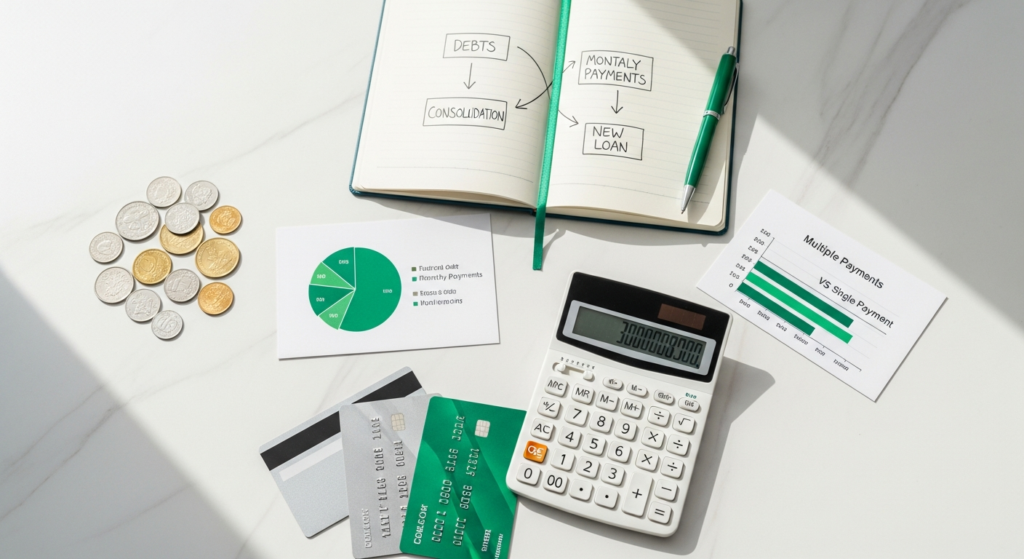
Imagine your financial life as a set of individual responsibilities: a credit card bill here, a personal loan payment there, perhaps a retail store card due on another date, all with varying interest rates and minimum payment amounts. This fragmentation can be incredibly challenging to track, often resulting in higher overall interest costs and the risk of late payments. A debt consolidation loan is a financial product specifically designed to simplify this complex picture by gathering all those scattered obligations under one umbrella.
Here’s a breakdown of how it typically functions:
- One New Loan: You apply for and receive a single, larger loan from a financial institution. This could be a traditional bank, a local credit union, or one of the many agile online lenders specializing in personal loans in 2026.
- One Purpose: The funds from this newly acquired loan are exclusively used to pay off all your specified existing, high-interest debts. This often includes credit card balances, outstanding medical bills, lingering store financing agreements, or even other smaller personal loans you’ve accumulated.
- One Payment: Once your old, individual debts are fully settled and paid off, you are left with just one straightforward monthly payment. This single payment is made to your new lender, often comes with a more favorable, lower interest rate than the average rate of your original debts, and adheres to a fixed, predictable repayment schedule.
In essence, a debt consolidation loan allows you to hit the “reset” button on your debt obligations. Instead of owing money to several different creditors, you now owe money to just one entity, typically under more advantageous and manageable terms. The overarching goal is to make your debt repayment process not only simpler and more predictable but, crucially, more affordable in the long run.
The Core Benefits: Why Consider Debt Consolidation?
For many individuals grappling with the weight of multiple debts, a debt consolidation loan isn’t merely a convenience; it’s a powerful and transformative tool for financial recovery and tangible progress. Here are the key advantages that make this option a compelling consideration:
- Potentially Lower Interest Rates: This benefit is frequently the most significant and attractive draw. If your current debts, particularly credit card balances, carry exorbitant annual percentage rates (APRs) – which can often be upwards of 20%, 25%, or even 30% or more in 2026 – consolidating them into a personal loan with a single-digit or low double-digit APR can lead to monumental savings over the entire life of the loan. A lower interest rate means a larger portion of your monthly payment goes directly towards reducing your principal balance, effectively helping you shed debt faster.
- Simplified Monthly Payments: The mental burden of juggling multiple due dates, varying minimum payments, and navigating numerous online portals from different creditors is a common and profound source of financial stress. With consolidation, this complexity evaporates. You’ll have just one payment to remember, one singular due date to mark on your calendar, and one relationship to manage with a single lender. This simplification dramatically reduces the risk of missed payments, which, in turn, helps you avoid costly late fees and prevents detrimental damage to your credit score.
- Fixed Repayment Schedule and Clear End Date: The vast majority of personal consolidation loans come with a fixed interest rate and a precisely defined repayment term (e.g., 3-5 years, but sometimes longer). This provides unparalleled predictability and, perhaps most importantly, a clear, definitive end date for your debt journey. You’ll know precisely how much you need to pay each month and exactly when you’ll be entirely debt-free, which can be an incredibly powerful and motivating factor for staying on track.
- Improved Credit Utilization Ratio: When you successfully pay off high-balance credit cards using the funds from a consolidation loan, your credit utilization ratio – which is the amount of credit you’re currently using compared to your total available credit – can plummet significantly. A lower utilization ratio is consistently viewed very favorably by major credit bureaus and can exert a positive influence on your credit score over time, assuming, of course, that you diligently avoid running up new balances on those now-zeroed-out cards.
- Reduced Financial Stress and Enhanced Peace of Mind: The psychological toll of overwhelming and fragmented debt is immense. By simplifying your payments, potentially lowering your overall costs, and providing a clear, structured path out of debt, a consolidation loan can dramatically reduce your stress levels and free up mental bandwidth. This newfound clarity allows you to focus on other crucial financial goals, such as saving for retirement or building a robust emergency fund.
Potential Pitfalls: When Debt Consolidation Isn’t the Answer
- Doesn’t Address Root Causes: Perhaps the most critical pitfall is that a debt consolidation loan effectively treats the symptom (multiple, high-interest debts) but does not inherently address the underlying disease (poor spending habits, a fundamental lack of budgeting, or unresolved financial emergencies that initially led to the debt accumulation). If you fail to fundamentally change the behaviors that contributed to your debt in the first place, you run a significant risk of simply running up new balances on your now-paid-off credit cards. This scenario can leave you in an even worse financial position than before, burdened with two sets of debt.
- Fees and Charges Can Add Up: While the promise of a lower interest rate is attractive, many consolidation loans come with various fees. The most common is an origination fee, which is a percentage of the loan amount (typically ranging from 1% to 8%). There might also be other charges, such as late payment fees or, less commonly with personal loans, prepayment penalties if you pay off the loan early. Always read the fine print meticulously and factor all these potential costs into your total savings calculation to ensure the loan remains beneficial.
- Potentially Extending the Repayment Period: While a longer repayment term can result in more attractive, lower monthly payments, it can also paradoxically mean paying significantly more interest over the entire life of the loan, even if the APR is lower. For instance, consolidating a debt that you could have paid off in 2 years into a new loan with a 5-year term will almost certainly cost you more in total interest paid, despite the lower monthly outlay. Evaluate the total cost, not just the monthly payment.
- Risk Associated with Secured Loans: Some lenders might offer “secured” debt consolidation loans, which require you to put up collateral (such as your car, boat, or even your home in the case of a HELOC). While these loans typically come with lower interest rates due to the reduced risk for the lender, they introduce a substantial risk for you: if you default on payments, you could lose the asset you pledged as collateral. Unsecured personal loans are generally the preferred option for debt consolidation if your credit profile allows.
- Not Suitable for All Debt Types: Certain types of debt, such as federal student loans and mortgages, typically have much lower interest rates and come with specific protections and repayment options that consumer debt lacks. These are generally not good candidates for consolidation into a personal loan, as doing so would likely result in a higher interest rate, loss of protections, and less favorable terms.
- Temporary Credit Score Impact: Initially, applying for any new loan involves a “hard inquiry” on your credit report, which can cause a slight, temporary dip in your credit score. While this is usually minor and often outweighed by the long-term benefits of improved credit utilization and payment history, it’s an initial impact to be aware of.
Types of Debt Consolidation Loans (and Alternatives)
When you decide to tackle your debt through consolidation, it’s important to be aware of the different avenues available to you:
Unsecured Personal Loans
This is arguably the most common and widely accessible form of debt consolidation. An unsecured loan means that you are not required to put up any collateral (like a house or car) to secure the loan. Your approval and the interest rate you receive are primarily based on your creditworthiness (credit score), your income, and your debt-to-income ratio. Lenders for these loans include traditional banks, local credit unions, and a burgeoning number of online lenders and fintech companies. As of 2026, the online lending market is robust and highly competitive, offering streamlined application processes and often rapid approval for borrowers with good to excellent credit.
Secured Personal Loans
While less common for general debt consolidation, a secured personal loan requires you to provide collateral. This could be a vehicle, a savings account, or a certificate of deposit. Because the lender’s risk is mitigated by the collateral, these loans typically come with lower interest rates. However, the trade-off is significant: you put your assets at risk if you are unable to make your loan payments.
Home Equity Loan or HELOC (Home Equity Line of Credit)
If you own your home and have accumulated significant equity, a home equity loan (which provides a lump sum of money) or a Home Equity Line of Credit (HELOC, a revolving line of credit you can draw from as needed) can be used for debt consolidation. These options usually boast very low interest rates because they are secured by your home, making them attractive. However, the risk is substantial: if you default on payments, you could face foreclosure and lose your home. This path should be approached with extreme caution, reserved only for those with very stable incomes, excellent financial discipline, and a deep understanding of the risks involved.
Balance Transfer Credit Cards
Though not a “loan” in the traditional sense, a balance transfer credit card can effectively function as a debt consolidation tool. These cards typically offer a 0% introductory APR for a promotional period (commonly ranging from 12 to 21 months in 2026). You transfer high-interest balances from your existing credit cards to this new card. If you possess the discipline and financial capacity to pay off the entire transferred balance before the promotional period expires, you can save a considerable amount on interest charges. Be mindful of balance transfer fees, which are usually 3-5% of the transferred amount, and the significantly higher standard APR that will kick in once the introductory period concludes.
Credit Counseling and Debt Management Plans (DMPs)
Is Debt Consolidation Right for You? Key Questions to Ask
Deciding whether to pursue a debt consolidation loan requires an honest and thorough self-assessment of your financial situation and habits. Carefully consider these critical questions:
- What is Your Current Credit Score? Lenders consistently reserve the most attractive interest rates and terms for borrowers who demonstrate strong creditworthiness (typically FICO scores of 670 or higher). If your score is low, you might not qualify for a favorable APR, or you might not be approved for an unsecured loan at all. In 2026, lenders remain risk-averse, meaning a higher credit score directly correlates with better, more affordable loan terms.
- What are Your Current Interest Rates? Take the time to calculate the average interest rate across all the debts you intend to consolidate. If the APR offered on a potential consolidation loan isn’t significantly lower than this average, the financial benefit might be minimal, or even non-existent once any associated fees are factored in. The goal is real savings, not just simplification.
- Can You Comfortably Afford the New Monthly Payment? Utilize online loan calculators to accurately estimate your potential new monthly payment. It is absolutely crucial to ensure that this payment comfortably and sustainably fits within your existing budget. While a lower interest rate on a longer term might reduce your payment, ensure you’re not merely postponing your debt or increasing the total interest paid over time.
- What Was the Root Cause of Your Debt? This is arguably the most crucial and introspective question. Did your debts arise from an unavoidable, unexpected emergency (like a major medical crisis or job loss), or are they a consistent result of chronic overspending, impulse purchases, or a lack of budgeting discipline? If it’s the latter, a consolidation loan alone will not solve your underlying financial issues. You must commit to fundamental changes in your spending habits, diligently create and stick to a strict budget, and prioritize building a robust emergency fund.
- Do You Possess the Necessary Financial Discipline? If you successfully pay off your high-balance credit cards with a consolidation loan, will you be tempted to rack up new debt on those now-zeroed-out credit lines? For the debt consolidation strategy to be truly effective and successful, you must demonstrate strong financial discipline and a firm commitment to avoid accumulating new debt once your old obligations have been consolidated.
- Have You Thoroughly Explored All Alternatives? Before committing to a consolidation loan, have you considered other viable options? This might include a balance transfer credit card (if you have excellent credit and a realistic plan to pay off the balance before the promotional APR expires) or enrolling in a Debt Management Plan through a reputable credit counseling agency. Sometimes, an alternative approach might be a more suitable and effective fit for your specific circumstances.
Navigating the Application Process in 2026
Applying for a debt consolidation loan follows a process similar to that of applying for other personal loans. Here’s a general overview of what you can expect in today’s dynamic financial climate:
- Check Your Credit Score and Report: Before you even begin applying, know exactly where you stand. You are entitled to free copies of your credit report annually from annualcreditreport.com, and you can often check your credit score for free through various financial apps or your existing credit card providers. Identifying any errors and understanding your credit profile is a critical first step.
- Shop Around for Lenders: Do not simply settle for the first offer or restrict yourself to your primary bank. A wide array of financial institutions, including online lenders, credit unions, and traditional banks, all offer debt consolidation loans. Each will have distinct rates, repayment terms, and specific eligibility requirements. Utilize online comparison tools to obtain “pre-qualified” offers, which typically involve a “soft inquiry” on your credit report that does not negatively impact your score.
- Gather Your Essential Documents: Lenders will generally require specific documentation to verify your identity and financial stability. This typically includes:
- Proof of identity (e.g., valid driver’s license, passport, state ID)
- Proof of income (recent pay stubs, W-2 forms, tax returns, bank statements)
- Proof of residence (a recent utility bill, lease agreement, or mortgage statement)
- Comprehensive details of your current debts (recent statements from credit cards and other loans, clearly showing account numbers, current balances, and interest rates)
- Submit Your Application: In 2026, the application process for most personal loans, particularly from online lenders, can often be completed entirely online. Many fintech lenders pride themselves on offering rapid approval processes, sometimes within minutes or just a few hours.
- Carefully Review the Loan Offer: Once you receive an offer, scrutinize every detail. Examine the total loan amount, the exact interest rate (APR, which includes fees), the repayment term, the fixed monthly payment amount, and any associated fees (paying particular attention to origination fees). Ensure you fully understand the total cost of the loan over its entire duration.
- Fund Disbursement: Upon final approval, the lender typically handles the disbursement of funds in one of two ways: they may directly pay off your specified creditors on your behalf, or they might deposit the entire loan amount into your designated bank account. If the latter, it is absolutely paramount that you use those funds immediately and responsibly to pay off your old debts and avoid the temptation to spend them elsewhere.
In 2026, expect a generally seamless and efficient digital experience from most reputable lenders, characterized by transparency and user-friendly interfaces. However, always exercise due diligence by verifying the lender’s credibility and ensuring they are properly licensed to operate in your state.
Making Debt Consolidation Work: Post-Loan Strategies
Securing a debt consolidation loan is undeniably a significant and proactive step towards financial improvement, but it marks only the beginning of your journey. To truly succeed, achieve lasting financial stability, and prevent yourself from falling back into the cycle of debt, you need to implement a robust and disciplined post-consolidation strategy:
- Commit to a Strict, Sustainable Budget: This step is absolutely non-negotiable. Track every single dollar that enters and leaves your bank accounts. Diligently identify areas where you can comfortably cut back on expenses and reallocate those liberated funds towards accelerating the repayment of your consolidation loan, or, even better, towards building a robust emergency fund. Tools and resources like Fin3go’s budgeting templates can prove to be an invaluable asset in this process.
- Absolutely Avoid New Debt: This point cannot be overemphasized. Resist the powerful temptation to utilize your now-zeroed-out credit cards. For many, it’s advisable to consider closing some of these accounts if you recognize a pattern of lacking self-control, though be aware that closing older accounts can have a minor, temporary impact on your credit utilization ratio and the average age of your credit accounts.
- Prioritize Building an Emergency Fund: A primary reason why many individuals spiral into debt is due to unexpected expenses. Aim to diligently save at least 3 to 6 months’ worth of essential living expenses in an easily accessible, high-yield savings account. This dedicated fund will serve as your crucial financial buffer, preventing you from having to rely on credit cards or taking on new debt for unforeseen emergencies.
- Diligently Monitor Your Progress: Regularly review your loan statements and actively monitor your bank account to ensure that your payments are consistently being made on time. Visually observing your loan balance steadily decrease can be an incredibly powerful and motivating factor that reinforces good financial habits.
- Consider Making Additional Payments: If your meticulously crafted budget allows, making extra payments towards the principal of your consolidation loan can significantly reduce the total amount of interest paid over the life of the loan and effectively shorten your repayment period. Always confirm that your specific loan agreement does not impose any prepayment penalties before doing so.
- Continue Your Financial Education: Financial literacy is an ongoing, lifelong process. Stay informed about personal finance best practices, investment strategies, and debt management techniques. Fin3go is dedicated to offering a wealth of continually updated resources to help you make smart, informed financial decisions long after your debt is a distant memory.
Ultimately, a debt consolidation loan can serve as a truly fantastic and empowering tool for taking decisive control of your financial future. However, its ultimate success hinges squarely on your unwavering commitment to adopting and maintaining sustainable financial habits. By thoroughly understanding how it works, rigorously evaluating if it aligns with your personal circumstances, and diligently implementing smart post-loan strategies, you can fundamentally transform your relationship with debt and build a significantly stronger, more resilient financial foundation for many prosperous years to come.