


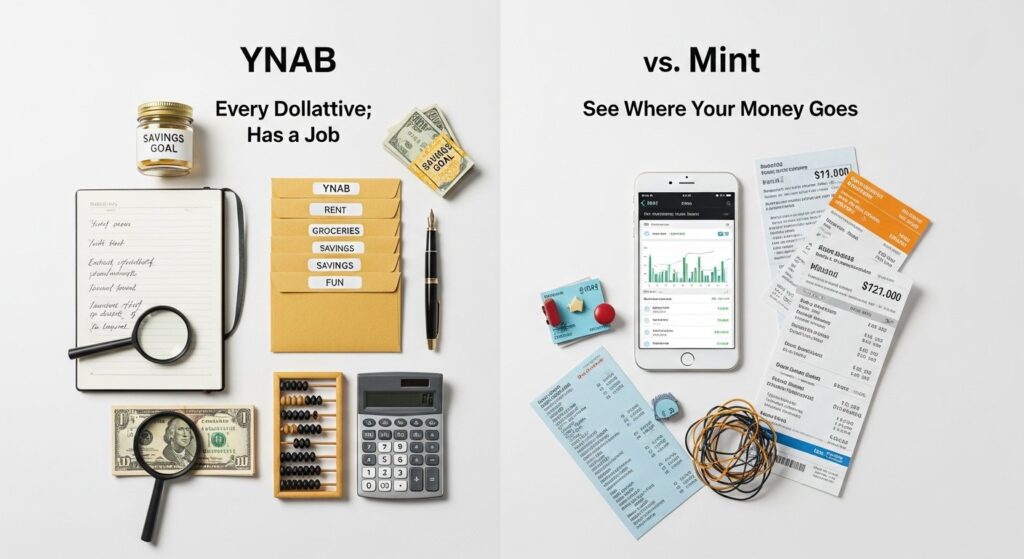
YNAB vs Mint: The Definitive Showdown for Your Financial Future in 2026
Affiliate disclosure: This article may contain affiliate links. Recommendations are independent and editorially driven.
In the evolving landscape of personal finance technology, choosing the right digital tool to manage your money can be as critical as the financial decisions themselves. Two titans have long stood out in this arena: You Need A Budget (YNAB) and Mint. Both aim to help you gain control over your finances, but their approaches, philosophies, and feature sets diverge significantly. For anyone navigating their financial journey in 2026, understanding these differences is paramount to selecting the platform that best aligns with their goals, habits, and budget.
The choice between YNAB vs Mint isn’t merely about picking an app; it’s about embracing a specific methodology for financial management. YNAB champions a proactive, “zero-based budgeting” approach, demanding intentionality for every single dollar. Mint, on the other hand, excels as a comprehensive financial dashboard, offering a holistic overview of your accounts, transactions, and net worth, primarily focusing on tracking and categorization. This article will meticulously dissect both platforms, exploring their core philosophies, feature sets, user experience, pricing, security, and more, to provide a clear, in-depth comparison to empower your decision-making.
Whether you’re looking to meticulously plan every expense, simply track where your money goes, or get a full picture of your financial health, this expert guide will help you determine which platform—YNAB or Mint—is the superior choice for you in 2026. Prepare to dive deep into the nuances that distinguish these two powerful personal finance tools.
Understanding the Core Philosophies: YNAB’s “Every Dollar Has a Job” vs. Mint’s Holistic Overview
At the heart of the YNAB vs Mint debate lies a fundamental difference in their underlying philosophies. These distinct approaches dictate everything from their user interface to their feature prioritization and, ultimately, the financial habits they encourage. Understanding these foundational principles is the first step in determining which platform resonates more with your personal financial goals.
YNAB: The Zero-Based Budgeting Method Explained
YNAB operates on a strict, four-rule system of “zero-based budgeting.” This method, often described as giving “every dollar a job,” requires you to allocate every dollar you have to a specific purpose before you spend it. This isn’t about projecting future income; it’s about budgeting the money you possess right now. The four rules are:
- Give Every Dollar a Job: Before you even think about spending, you assign all your available money to categories like rent, groceries, savings, or entertainment. This prevents “phantom money” syndrome.
- Embrace Your True Expenses: Instead of being surprised by annual insurance premiums or holiday gifts, YNAB encourages you to break down large, infrequent expenses into smaller monthly savings goals.
- Roll With the Punches: Life is unpredictable, and YNAB acknowledges this. If you overspend in one category, you simply move money from another category to cover the deficit. This flexibility prevents guilt and encourages constant re-evaluation.
- Age Your Money: The ultimate goal is to reach a point where the money you’re spending this month is money you earned last month or earlier. This creates a buffer, reducing financial stress and breaking the paycheck-to-paycheck cycle.
This philosophy fosters an active, hands-on relationship with your money. It’s designed to change your financial behavior, forcing you to think intentionally about every expenditure and prioritize your spending according to your actual goals. YNAB isn’t just a budgeting app; it’s a budgeting methodology wrapped in a digital tool.
Mint: Your Financial Dashboard for Tracking and Trends
Mint, by contrast, adopts a more passive, observational approach to personal finance. It functions primarily as a comprehensive financial aggregator and tracker. Its core strength lies in its ability to connect to virtually all your financial accounts—bank accounts, credit cards, investments, loans, and even property values—and pull all that data into one central dashboard. Mint’s philosophy is built around providing a clear, real-time snapshot of your financial health.
- Holistic Overview: Mint aims to show you where you stand financially, aggregating your net worth, income, spending, and debts.
- Automatic Categorization: Transactions are automatically downloaded and categorized, making it easy to see where your money is going without manual input.
- Spending Tracking: It helps you monitor your spending against budgets you set (often based on past spending), identify trends, and receive alerts for unusual activity.
- Bill Management: Mint helps track upcoming bills and alerts you to potential late payments.
- Goal Setting: While it allows for goal setting (e.g., saving for a down payment), its emphasis is more on tracking progress towards these goals rather than micro-managing the cash flow to achieve them.
Mint is less about prescriptive budgeting and more about providing insights. It’s excellent for those who want a clear, aggregated view of their finances without necessarily changing their core spending habits through a strict budgeting methodology.
Who Each Philosophy Best Serves
The choice between YNAB and Mint often boils down to your desired level of engagement and your existing financial habits:
- Choose YNAB if: You are ready to fundamentally change your relationship with money, commit to an active budgeting process, and want to achieve specific financial goals (like debt payoff or saving large sums) through intentional spending. It’s for those who want to be proactive and understand precisely where every dollar goes.
- Choose Mint if: You prefer a hands-off approach to tracking, want a comprehensive overview of your financial accounts in one place, and are interested in monitoring spending trends and net worth over time. It’s ideal for those who are generally financially stable but want better visibility and perhaps gentle nudges towards better habits.
Neither approach is inherently superior; rather, their effectiveness is entirely dependent on the individual user’s needs and willingness to engage with their finances.
Feature Set Face-Off: What Each Platform Brings to the Table

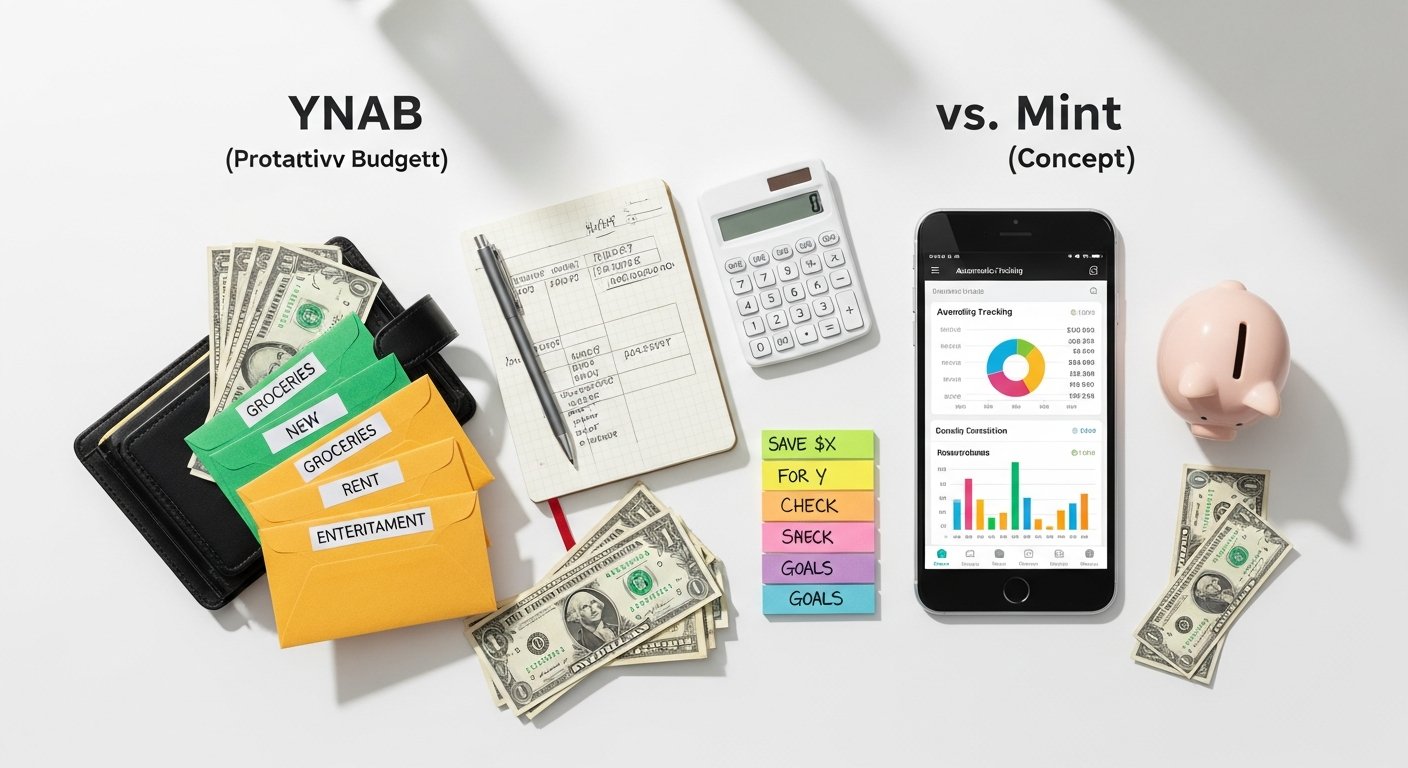
Beyond their core philosophies, YNAB and Mint offer a distinct array of features designed to help users manage their money. A direct comparison of these features reveals where each app truly excels and where it might fall short, especially for different user needs. This section will delve into the specific functionalities of YNAB vs Mint.
Budgeting Capabilities: Granularity vs. Simplicity
- YNAB: As a zero-based budgeter, YNAB’s budgeting capabilities are its undisputed core. Users manually assign every dollar to a category (e.g., “Groceries,” “Rent,” “Savings Goal”). When money comes in, it’s categorized as “To Be Budgeted,” and then you decide its job. If you overspend in a category, YNAB prompts you to “roll with the punches” by moving money from another category. This hands-on approach offers unparalleled control and forces conscious spending decisions. It doesn’t allow you to budget money you don’t yet have, promoting financial realism.
- Mint: Mint offers traditional envelope-style budgeting. You can set monthly spending limits for various categories. It automatically tracks your spending against these limits and provides visual cues (e.g., green for under budget, red for over budget). While helpful for identifying overspending, Mint’s budgeting is less about proactive allocation and more about reactive monitoring. It allows you to budget based on projected income, which can sometimes lead to budgeting money you don’t actually have yet.
Transaction Tracking and Categorization
- YNAB: YNAB provides robust transaction tracking. You can link bank accounts for automatic import, or manually enter transactions. Manual entry is often encouraged by YNAB power users for a more immediate and mindful connection to spending. While it attempts to auto-categorize, YNAB’s emphasis is on user-driven categorization, ensuring accuracy and promoting engagement. Users reconcile accounts regularly to ensure balances match.
- Mint: Mint excels in automatic transaction importing and categorization. It connects to thousands of financial institutions and downloads transactions frequently. Its categorization algorithm is generally very good, though users often need to fine-tune it. Mint makes it incredibly easy to see where your money went without much effort, providing a quick overview of spending patterns.
Goal Setting and Debt Management
- YNAB: Goals in YNAB are deeply integrated into the budgeting process. You create categories for specific goals (e.g., “New Car Down Payment,” “Debt Payoff – Credit Card X”), and then budget money into those categories each month. This direct allocation makes goal progress tangible and reinforces the zero-based method. Debt management is handled by allocating funds to debt categories, clearly showing how much you’re sending to each creditor.
- Mint: Mint offers a dedicated section for setting financial goals, such as saving for a home, paying off debt, or retirement. It tracks your progress towards these goals based on linked accounts and investments. For debt, Mint can visualize your debt repayment strategy and help you understand how different payment amounts affect your payoff timeline. While it provides a good overview, it doesn’t offer the same granular control over the funds being directed to those goals as YNAB.
Reporting and Analytics
- YNAB: YNAB’s reports are geared towards understanding your budgeting behavior. It offers spending reports (showing where your money went by category), net worth reports (tracking assets vs. liabilities over time), and “Age of Money” reports (a key metric for its methodology). These reports are designed to reinforce good budgeting habits and illustrate the impact of your proactive financial decisions.
- Mint: Mint shines with its comprehensive reporting and analytics. It provides detailed breakdowns of spending by category, merchant, and trend. You can see your net worth trends, cash flow, and even investment performance. Its strength lies in providing a broad, historical view of your finances, allowing users to identify trends, pinpoint areas of overspending, and assess overall financial health at a glance.
Investment Tracking
- YNAB: YNAB is primarily a budgeting tool and does not offer robust investment tracking. While you can link investment accounts to track their balances for your net worth, it won’t provide performance analysis, asset allocation breakdowns, or integrate with trading platforms. Investment accounts are generally treated as “tracking accounts” within YNAB, meaning money isn’t budgeted within them.
- Mint: Mint provides excellent investment tracking capabilities. It can connect to various brokerage accounts, IRAs, 401(k)s, and other investment platforms. It offers a consolidated view of your portfolio, tracks performance, breaks down asset allocation, and can even offer insights into fees and diversification. For users with significant investments, Mint’s robust investment dashboard is a major advantage.
Bill Management and Reminders
- YNAB: Bill management in YNAB is handled through its budgeting categories. You create categories for upcoming bills (e.g., “Electricity Bill,” “Car Payment”) and budget for them. The app allows you to schedule future transactions, which can act as reminders. However, it’s not designed to automatically pull bill due dates from providers or send external alerts in the same way Mint does.
- Mint: Mint has a dedicated “Bills” section that automatically tracks upcoming due dates from linked accounts and manually entered bills. It provides alerts for due dates, helping users avoid late payments. This proactive notification system is a significant convenience feature, consolidating all bill information in one place.
Mobile App Experience
- YNAB: YNAB’s mobile app (iOS and Android) is fully functional, allowing users to budget on the go, categorize transactions, enter manual transactions at the point of sale, and check category balances. It mirrors the desktop experience well, making it easy to stay on top of your budget anytime, anywhere.
- Mint: Mint’s mobile app is also highly rated, offering a clean, intuitive interface for checking balances, reviewing transactions, and monitoring budgets. It provides quick access to spending trends, net worth updates, and bill reminders. Both apps are generally well-designed for their respective core functions.
User Experience and Interface: Navigating Your Finances
The user experience (UX) and interface (UI) design of a personal finance app are critical to its long-term adoption and effectiveness. An app might have powerful features, but if it’s difficult to navigate or has a steep learning curve, users are less likely to stick with it. Here, we compare how YNAB vs Mint approach usability and design.
Ease of Onboarding and Setup
- YNAB: Onboarding with YNAB typically involves linking your bank accounts and then immediately diving into its zero-based budgeting philosophy. The initial setup can feel more involved because it requires a conceptual shift in how you view your money. There’s a learning curve to understand categories, “To Be Budgeted,” and how to “roll with the punches.” YNAB provides extensive educational resources, webinars, and a helpful community to guide new users, but it demands a commitment to learn its system.
- Mint: Mint’s onboarding is generally quicker and more intuitive for new users. You link your accounts, and Mint immediately begins aggregating your financial data. The dashboard quickly populates with your balances, transactions, and an initial overview of your spending. It’s designed for instant gratification and minimal setup friction, allowing users to get a snapshot of their finances almost immediately without having to learn a new budgeting methodology.
Daily Usage Workflow
- YNAB: Daily usage of YNAB is active. Users are encouraged to check their budget before making spending decisions. When a transaction occurs, they categorize it (either manually or by approving an imported one) and ensure funds are available in the allocated category. If overspending occurs, they actively move money between categories. This workflow promotes mindfulness and constant engagement with your budget.
- Mint: Daily usage of Mint is more passive. Users typically check in to review their spending, see upcoming bills, and monitor their net worth. Transactions are largely auto-categorized, requiring less manual intervention unless corrections are needed. It serves as a financial monitor rather than a daily financial planner, making it suitable for those who prefer to observe rather than actively manage every dollar.
Customization Options
- YNAB: YNAB offers significant customization, especially in how you structure your budget categories and groups. You can create as many categories as needed, arrange them logically, and set specific targets for each. This flexibility allows users to tailor the budgeting experience precisely to their lifestyle and financial goals. The interface itself is clean but doesn’t offer extensive visual customization beyond category organization.
- Mint: Mint offers moderate customization. Users can create custom spending categories, set specific budget limits, and choose which accounts are visible on their dashboard. The overall layout and design are fairly fixed, aiming for a standardized, easy-to-understand experience. While you can customize alerts and notifications, the core visual presentation remains consistent.
Learning Curve Assessment
- YNAB: The learning curve for YNAB is steeper than Mint’s. It’s not just an app; it’s a system. Users must internalize the “give every dollar a job” philosophy and understand how to manage funds, handle overspending, and “age their money.” While the interface itself is clean, mastering the methodology takes time and commitment. However, once understood, many users find it incredibly powerful and transformative.
- Mint: Mint has a very gentle learning curve. Most users can connect their accounts and start seeing valuable insights within minutes. The concepts are straightforward: track spending, monitor balances, set simple budgets. There’s no complex methodology to learn, making it highly accessible for anyone seeking a quick, aggregated view of their financial life without a deep dive into budgeting theory.
Pricing Models and Value Proposition: Free vs. Subscription
The financial commitment required by a personal finance app is often a significant factor in a user’s decision. YNAB vs Mint present a stark contrast in their pricing models: one is a paid subscription service, while the other is primarily free. Understanding the implications of these models on features, user experience, and the overall value proposition is crucial.
YNAB’s Subscription: What You Get for Your Money
YNAB operates on a subscription model, typically billed annually or monthly. While the exact pricing may vary slightly, it consistently positions itself as a premium service. For this fee, YNAB offers:
- Ad-Free Experience: A clean interface completely devoid of advertisements, allowing for an uninterrupted focus on your finances.
- Dedicated Support: Access to comprehensive customer support, including email, live workshops, a robust knowledge base, and an active user community.
- Educational Resources: Extensive free workshops, guides, and tutorials designed to teach the YNAB methodology and help users master budgeting. This is a significant part of their value offering, as they are selling a system, not just software.
- Continuous Development: As a paid product, YNAB has a clear revenue stream to fund ongoing development, feature enhancements, and security improvements, ensuring the app remains current and reliable.
- No Data Monetization: YNAB explicitly states that it does not sell user data. Its business model relies solely on subscriptions, which aligns with the privacy concerns of many users.
The value proposition of YNAB’s subscription lies in its promise to fundamentally change your financial behavior, help you save more, pay off debt, and reduce financial stress through its proven methodology. Many users report that the savings and financial clarity they achieve with YNAB far outweigh the annual subscription cost, effectively paying for itself many times over.
Mint’s Free Model: Understanding the Trade-offs
Mint’s primary offering is free to use. This makes it highly accessible to a broad audience, from students to seasoned professionals. However, a “free” service typically comes with trade-offs:
- Advertisement-Supported: Mint generates revenue primarily through contextual advertisements and sponsored offers for financial products (e.g., credit cards, loans, investment services) that appear within the app. While these ads are often personalized based on your financial data, they can be intrusive for some users.
- Limited Direct Support: While Mint offers a comprehensive help center and community forums, direct customer support (e.g., live chat or phone support) might be less robust or readily available compared to paid services.
- Optional Premium Features: Mint has introduced a premium tier for a monthly fee, offering features like subscription cancellation assistance, ad-free experience, and enhanced data visualizations. This acknowledges that even “free” services often seek additional revenue streams from their most engaged users.
- Data Usage: As a free service, Mint’s business model involves analyzing aggregated and anonymized user data to identify trends and present relevant offers. While user data is generally anonymized and not sold directly, the collection and analysis of this data are intrinsic to its operation.
The value of Mint’s free model is its unparalleled convenience as a financial aggregator and tracker. It provides a quick, effortless way to see all your finances in one place, identify spending patterns, and monitor net worth without any direct cost. For users who primarily want an overview and basic budgeting, Mint offers significant value for no monetary outlay.
Long-Term Value and ROI Analysis
When assessing YNAB vs Mint, considering long-term value and return on investment (ROI) is crucial:
- YNAB’s ROI: For users who commit to the YNAB methodology, the ROI can be substantial. Many users report saving thousands of dollars within their first year, paying off significant debt, and achieving financial stability that far exceeds the annual subscription cost. The investment is in changing behavior, which yields long-term financial benefits.
- Mint’s ROI: Mint’s ROI is less about direct savings from behavioral change and more about the value of convenience and insight. It can save time by automating financial tracking, prevent late fees with bill reminders, and help users make better financial decisions by providing a clear picture of their finances. The “free” price point means its ROI is infinite if it provides any useful insight or prevents a single late fee.
Ultimately, the “better” value depends on your personal commitment to budgeting. If you’re ready to embrace a new financial system and actively manage your money, YNAB’s paid model offers significant returns. If you primarily seek a powerful, free tool for tracking, aggregation, and basic budgeting, Mint provides excellent value without a direct cost.
Here’s a comparison table summarizing some key aspects:
| Feature/Aspect | YNAB (You Need A Budget) | Mint |
|---|---|---|
| Core Philosophy | Zero-Based Budgeting (“Every Dollar Has a Job”) | Financial Aggregation, Tracking & Overview |
| Pricing Model | Subscription (Monthly/Annually) | Primarily Free (Ad-supported, optional Premium) |
| Budgeting Style | Proactive, Envelope-style, Real-time cash flow management | Reactive, Limit-based, Tracks against historical spending |
| Transaction Categorization | User-driven, Manual or approved auto-categorization | Mostly automatic, AI-driven, User corrections |
| Goal Setting | Integrated into budget categories, active funding | Separate goals section, tracks progress visually |
| Investment Tracking | Basic balance tracking (off-budget) | Robust portfolio tracking, performance, asset allocation |
| Net Worth Tracking | Comprehensive, reflects budgeted & tracking accounts | Comprehensive, pulls data from all linked accounts |
| Bill Reminders | Manual scheduling within budget | Automatic alerts and tracking of due dates |
| Learning Curve | Steep (requires learning new methodology) | Gentle (intuitive for basic tracking) |
| Ad Experience | None | Present in free version (contextual offers) |
| Data Privacy | No data selling, revenue from subscriptions | Aggregated & anonymized data used for offers |
| Customer Support | Excellent (workshops, email, community) | Good (help center, community, limited direct support) |
Data Security and Privacy: Protecting Your Financial Information
In an era where digital threats are ever-present, the security and privacy protocols of financial apps are paramount. Users entrust these platforms with highly sensitive data, making robust protection a non-negotiable requirement. When comparing YNAB vs Mint, it’s essential to scrutinize their approaches to safeguarding your information and their policies regarding data usage.
Encryption and Authentication Protocols
- YNAB: YNAB employs industry-standard security measures to protect user data. This includes bank-level encryption (256-bit AES) for data in transit and at rest. Multi-factor authentication (MFA) is strongly encouraged and typically available, adding an extra layer of security beyond just a password. They do not store your bank login credentials directly; instead, they use secure third-party aggregators (like Plaid) which use tokens for connectivity, ensuring your credentials remain private.
- Mint: Mint, being part of Intuit (a major financial software company), also adheres to stringent security practices. It uses 256-bit encryption, physical safeguards, and real-time monitoring to protect data. MFA is standard. Like YNAB, Mint does not store your banking credentials directly. It relies on secure connections and anonymized data feeds from financial institutions, ensuring that your sensitive login details are never directly handled by Mint’s servers. Intuit’s vast experience in financial technology contributes to its robust security infrastructure.
Both platforms understand the critical importance of security and implement measures comparable to those used by banks themselves. For most users, the technical security protocols of both YNAB and Mint are robust and trustworthy.
Data Handling and Monetization Policies
This is where YNAB and Mint diverge significantly due to their different business models:
- YNAB: YNAB is very explicit about its data privacy policy: it does not sell or share your personal financial data with third parties for advertising or marketing purposes. Its revenue comes entirely from user subscriptions. This model provides peace of mind for users who are highly sensitive to their data being used beyond the core function of the app. Your financial data is used solely to provide you with the budgeting service.
- Mint: As a free service, Mint’s business model relies on leveraging user data (in an anonymized and aggregated form) to present targeted offers for financial products and services. While they state they do not sell personally identifiable information, they do analyze spending habits and financial profiles to display relevant advertisements within the app. For example, if Mint detects you’re paying high credit card interest, it might suggest credit card balance transfer offers. This is the trade-off for the “free” service – your data, in some form, is indirectly monetized. Users should be aware of this model and comfortable with it. Mint does offer a privacy policy that details how your information is collected, used, and shared.
User Trust and Reputation
Both YNAB and Mint have built strong reputations over many years, garnering trust from millions of users. However, the nature of that trust can differ:
- YNAB: YNAB’s trust comes from its transparent, user-centric business model and its clear focus on financial empowerment. Users trust that their data is private and that the company’s sole interest is to help them budget effectively. The strong community around YNAB also reinforces a sense of shared purpose and trust.
- Mint: Mint’s trust is built on its long-standing presence, its association with Intuit, and its convenience. Many users implicitly trust large, established companies with their data. However, the advertising model and the perception of data monetization can sometimes be a point of contention for privacy-conscious individuals, even if the data is anonymized.
In summary, both platforms offer excellent technical security. The key differentiator lies in their privacy policies and data monetization strategies. If absolute privacy and a strict barrier between your financial data and advertising are paramount, YNAB stands out. If you’re comfortable with a free service that uses anonymized data to fund its operations and present relevant offers, Mint remains a highly secure and convenient option.
Integrations and Ecosystem: Connecting Your Financial World
A personal finance app’s utility is significantly enhanced by its ability to seamlessly integrate with a wide array of financial institutions and, in some cases, other third-party services. This interconnectedness forms a robust ecosystem, allowing users to consolidate their financial life into a single, comprehensive view. Let’s explore how YNAB vs Mint handle integrations.
Bank and Credit Card Connectivity
- YNAB: YNAB connects to thousands of banks, credit unions, and credit card companies across the U.S. and internationally. It primarily uses third-party financial data aggregators (like Plaid, Finicity, and MX) to establish these secure connections. These aggregators facilitate the automatic import of transactions, making it easier to keep your budget up-to-date. While automation is available and widely used, YNAB also strongly supports manual transaction entry and account reconciliation, which some power users prefer for a deeper connection to their spending. This dual approach offers flexibility for various user preferences.
- Mint: Mint is renowned for its broad connectivity, boasting links to an even wider range of financial institutions than YNAB. As a product of Intuit, it benefits from extensive partnerships and a mature aggregation infrastructure. Mint typically connects to over 15,000 financial institutions, encompassing banks, credit cards, investment firms, loan providers, and even property values. The strength of Mint’s ecosystem is its ability to pull virtually all aspects of your financial life into one dashboard, offering a truly holistic view without much manual effort. This extensive connectivity is one of Mint’s most compelling features.
Third-Party App Integrations
Neither YNAB nor Mint are designed for deep, active integrations with a broad array of third-party apps outside of core financial services. Their focus remains squarely on personal finance management.
- YNAB: YNAB’s integrations are primarily focused on its core budgeting function. It offers an open API, which allows tech-savvy users or third-party developers to build custom integrations. This has led to a small but dedicated ecosystem of unofficial tools and extensions that enhance specific aspects of YNAB, such as reporting or data manipulation. However, out-of-the-box integrations with non-financial productivity tools or other fintech apps are not a primary feature.
- Mint: Mint’s integrations are largely limited to its direct financial connections. While it’s part of the broader Intuit ecosystem (which includes QuickBooks and TurboTax), direct, active integrations with other non-Intuit financial or productivity apps are minimal. Its strength is in consolidating information from many sources, not in sending its data to other platforms or receiving complex data feeds from them (beyond transaction history).
Manual Entry Options for Disconnected Accounts
- YNAB: YNAB provides excellent support for manual transaction entry and the creation of “tracking accounts” for assets or debts that cannot be linked automatically (e.g., physical cash, specific real estate, or private loans). This flexibility ensures that even if an account cannot be connected, it can still be incorporated into your overall financial picture and net worth calculations. Manual entry is a core component of the YNAB philosophy for many users, offering immediate control and awareness of spending.
- Mint: Mint also allows for manual entry of accounts and transactions, but it’s less emphasized. You can manually add cash accounts, property, or other assets/debts to contribute to your net worth calculation. While you can manually input transactions, Mint’s primary appeal lies in its automation, so users are less likely to rely on manual entry for day-to-day spending. If an institution isn’t supported, the primary value proposition of Mint is diminished for that particular account.
In essence, Mint generally offers broader and more seamless automated connections to financial institutions, making it ideal for those seeking a hands-off, aggregated view. YNAB, while also providing robust connections, offers greater flexibility with manual entry and a more focused ecosystem around its budgeting methodology. Your choice may depend on whether extensive automated aggregation or meticulous, flexible control over every dollar (even manually entered ones) is more important to your financial strategy. For more fintech solutions, explore our guide on the best budgeting apps of 2026.
Support and Community: Getting Help When You Need It
Even the most intuitive personal finance app can present challenges, whether it’s understanding a specific feature, troubleshooting an account connection, or seeking guidance on financial strategies. The quality and accessibility of customer support, alongside a thriving user community, can significantly enhance the user experience. YNAB vs Mint approach support with different philosophies, largely dictated by their business models and core user bases.
Customer Service Channels (Email, Chat, Phone)
- YNAB: YNAB offers highly regarded customer support. They provide direct email support, typically with prompt and helpful responses. For more immediate assistance, live chat is available during business hours. While phone support is not a primary channel, their other options are often sufficient and personalized. YNAB’s support team is known for being not only technically proficient but also deeply knowledgeable about the YNAB methodology, often providing advice that goes beyond simple bug fixes to help users implement the budgeting system effectively.
- Mint: As a free service, Mint’s direct customer support channels are more limited. They primarily offer email support, which can sometimes have longer response times. Live chat may be available for specific issues or during certain hours, but it’s not as consistently highlighted as a core support channel. Phone support is generally reserved for premium users or for highly complex issues. Given its massive user base, Mint relies heavily on its self-service options to manage support queries.
Knowledge Bases and Tutorials
- YNAB: YNAB boasts an exceptionally comprehensive and well-organized knowledge base. It includes detailed articles on every feature, troubleshooting guides for common issues, and extensive educational content explaining the nuances of zero-based budgeting. Beyond written articles, YNAB offers a wealth of video tutorials, free live workshops, and recorded webinars that cater to different learning styles and help users master their system. This commitment to education is a cornerstone of their service.
- Mint: Mint also provides a substantial online help center with a wide range of articles covering features, account connection issues, and FAQs. The information is generally clear and easy to understand, reflecting Mint’s focus on user accessibility. While it has tutorials, they are typically less comprehensive than YNAB’s in terms of teaching a budgeting methodology, focusing more on how to use specific app features.
Community Forums and Resources
- YNAB: The YNAB community is one of its strongest assets. It has a vibrant, active forum where users share tips, ask questions, and support each other. Beyond the official forum, there are thriving YNAB subreddits, Facebook groups, and other online communities. This peer-to-peer support is invaluable, especially for navigating the initial learning curve and staying motivated. The community often shares creative ways to apply the YNAB rules to diverse financial situations.
- Mint: Mint also has community forums, but they are generally less active and cohesive than YNAB’s. While users can post questions and seek advice, the sense of a shared journey or a unifying methodology is not as strong. The community tends to be more focused on troubleshooting individual issues or discussing general financial topics rather than collective learning about a specific budgeting system.
For users who value robust, personalized support and a strong, engaged community to guide their budgeting journey, YNAB’s offerings are superior. If your support needs are minimal or primarily revolve around self-service troubleshooting, Mint’s extensive knowledge base will likely suffice, though direct assistance may be less accessible without a premium subscription.
Target Audience: Who Will Benefit Most?
Ultimately, the choice between YNAB vs Mint hinges on individual financial habits, goals, and desired level of engagement. While both aim to improve financial health, they serve distinct user profiles most effectively.
YNAB: For the Engaged, Proactive Budgeter
YNAB is ideal for individuals who are:
- Ready for a Behavioral Change: Those who acknowledge they need to fundamentally alter their spending habits and are committed to a disciplined, proactive approach to budgeting.
- Struggling with Debt or Low Savings: YNAB’s system is incredibly effective for getting out of debt or building significant savings because it forces intentionality with every dollar.
- Seeking Granular Control: Users who want to know exactly where every dollar goes, before it’s spent, and prefer a hands-on approach to financial management.
- Comfortable with a Learning Curve: Individuals willing to invest time in learning a new budgeting methodology and embracing a system that may initially feel restrictive but ultimately empowering.
- Value Privacy: Those who prioritize an ad-free experience and
YNAB vs Mint: The Definitive Showdown for Your Financial Future in 2026
Affiliate disclosure: This article may contain affiliate links. Recommendations are independent and editorially driven.
In the evolving landscape of personal finance technology, choosing the right digital tool to manage your money can be as critical as the financial decisions themselves. Two titans have long stood out in this arena: You Need A Budget (YNAB) and Mint. Both aim to help you gain control over your finances, but their approaches, philosophies, and feature sets diverge significantly. For anyone navigating their financial journey in 2026, understanding these differences is paramount to selecting the platform that best aligns with their goals, habits, and budget.
The choice between YNAB vs Mint isn’t merely about picking an app; it’s about embracing a specific methodology for financial management. YNAB champions a proactive, “zero-based budgeting” approach, demanding intentionality for every single dollar. Mint, on the other hand, excels as a comprehensive financial dashboard, offering a holistic overview of your accounts, transactions, and net worth, primarily focusing on tracking and categorization. This article will meticulously dissect both platforms, exploring their core philosophies, feature sets, user experience, pricing, security, and more, to provide a clear, in-depth comparison to empower your decision-making.
Whether you’re looking to meticulously plan every expense, simply track where your money goes, or get a full picture of your financial health, this expert guide will help you determine which platform—YNAB or Mint—is the superior choice for you in 2026. Prepare to dive deep into the nuances that distinguish these two powerful personal finance tools.
Understanding the Core Philosophies: YNAB’s “Every Dollar Has a Job” vs. Mint’s Holistic Overview
At the heart of the YNAB vs Mint debate lies a fundamental difference in their underlying philosophies. These distinct approaches dictate everything from their user interface to their feature prioritization and, ultimately, the financial habits they encourage. Understanding these foundational principles is the first step in determining which platform resonates more with your personal financial goals.
YNAB: The Zero-Based Budgeting Method Explained
YNAB operates on a strict, four-rule system of “zero-based budgeting.” This method, often described as giving “every dollar a job,” requires you to allocate every dollar you have to a specific purpose before you spend it. This isn’t about projecting future income; it’s about budgeting the money you possess right now. The four rules are:
- Give Every Dollar a Job: Before you even think about spending, you assign all your available money to categories like rent, groceries, savings, or entertainment. This prevents “phantom money” syndrome.
- Embrace Your True Expenses: Instead of being surprised by annual insurance premiums or holiday gifts, YNAB encourages you to break down large, infrequent expenses into smaller monthly savings goals.
- Roll With the Punches: Life is unpredictable, and YNAB acknowledges this. If you overspend in one category, you simply move money from another category to cover the deficit. This flexibility prevents guilt and encourages constant re-evaluation.
- Age Your Money: The ultimate goal is to reach a point where the money you’re spending this month is money you earned last month or earlier. This creates a buffer, reducing financial stress and breaking the paycheck-to-paycheck cycle.
This philosophy fosters an active, hands-on relationship with your money. It’s designed to change your financial behavior, forcing you to think intentionally about every expenditure and prioritize your spending according to your actual goals. YNAB isn’t just a budgeting app; it’s a budgeting methodology wrapped in a digital tool.
Mint: Your Financial Dashboard for Tracking and Trends
Mint, by contrast, adopts a more passive, observational approach to personal finance. It functions primarily as a comprehensive financial aggregator and tracker. Its core strength lies in its ability to connect to virtually all your financial accounts—bank accounts, credit cards, investments, loans, and even property values—and pull all that data into one central dashboard. Mint’s philosophy is built around providing a clear, real-time snapshot of your financial health.
- Holistic Overview: Mint aims to show you where you stand financially, aggregating your net worth, income, spending, and debts.
- Automatic Categorization: Transactions are automatically downloaded and categorized, making it easy to see where your money is going without manual input.
- Spending Tracking: It helps you monitor your spending against budgets you set (often based on past spending), identify trends, and receive alerts for unusual activity.
- Bill Management: Mint helps track upcoming bills and alerts you to potential late payments.
- Goal Setting: While it allows for goal setting (e.g., saving for a down payment), its emphasis is more on tracking progress towards these goals rather than micro-managing the cash flow to achieve them.
Mint is less about prescriptive budgeting and more about providing insights. It’s excellent for those who want a clear, aggregated view of their finances without necessarily changing their core spending habits through a strict budgeting methodology.
Who Each Philosophy Best Serves
The choice between YNAB and Mint often boils down to your desired level of engagement and your existing financial habits:
- Choose YNAB if: You are ready to fundamentally change your relationship with money, commit to an active budgeting process, and want to achieve specific financial goals (like debt payoff or saving large sums) through intentional spending. It’s for those who want to be proactive and understand precisely where every dollar goes.
- Choose Mint if: You prefer a hands-off approach to tracking, want a comprehensive overview of your financial accounts in one place, and are interested in monitoring spending trends and net worth over time. It’s ideal for those who are generally financially stable but want better visibility and perhaps gentle nudges towards better habits.
Neither approach is inherently superior; rather, their effectiveness is entirely dependent on the individual user’s needs and willingness to engage with their finances.
Feature Set Face-Off: What Each Platform Brings to the Table
Beyond their core philosophies, YNAB and Mint offer a distinct array of features designed to help users manage their money. A direct comparison of these features reveals where each app truly excels and where it might fall short, especially for different user needs. This section will delve into the specific functionalities of YNAB vs Mint.
Budgeting Capabilities: Granularity vs. Simplicity
- YNAB: As a zero-based budgeter, YNAB’s budgeting capabilities are its undisputed core. Users manually assign every dollar to a category (e.g., “Groceries,” “Rent,” “Savings Goal”). When money comes in, it’s categorized as “To Be Budgeted,” and then you decide its job. If you overspend in a category, YNAB prompts you to “roll with the punches” by moving money from another category. This hands-on approach offers unparalleled control and forces conscious spending decisions. It doesn’t allow you to budget money you don’t yet have, promoting financial realism.
- Mint: Mint offers traditional envelope-style budgeting. You can set monthly spending limits for various categories. It automatically tracks your spending against these limits and provides visual cues (e.g., green for under budget, red for over budget). While helpful for identifying overspending, Mint’s budgeting is less about proactive allocation and more about reactive monitoring. It allows you to budget based on projected income, which can sometimes lead to budgeting money you don’t actually have yet.
Transaction Tracking and Categorization
- YNAB: YNAB provides robust transaction tracking. You can link bank accounts for automatic import, or manually enter transactions. Manual entry is often encouraged by YNAB power users for a more immediate and mindful connection to spending. While it attempts to auto-categorize, YNAB’s emphasis is on user-driven categorization, ensuring accuracy and promoting engagement. Users reconcile accounts regularly to ensure balances match.
- Mint: Mint excels in automatic transaction importing and categorization. It connects to thousands of financial institutions and downloads transactions frequently. Its categorization algorithm is generally very good, though users often need to fine-tune it. Mint makes it incredibly easy to see where your money went without much effort, providing a quick overview of spending patterns.
Goal Setting and Debt Management
- YNAB: Goals in YNAB are deeply integrated into the budgeting process. You create categories for specific goals (e.g., “New Car Down Payment,” “Debt Payoff – Credit Card X”), and then budget money into those categories each month. This direct allocation makes goal progress tangible and reinforces the zero-based method. Debt management is handled by allocating funds to debt categories, clearly showing how much you’re sending to each creditor.
- Mint: Mint offers a dedicated section for setting financial goals, such as saving for a home, paying off debt, or retirement. It tracks your progress towards these goals based on linked accounts and investments. For debt, Mint can visualize your debt repayment strategy and help you understand how different payment amounts affect your payoff timeline. While it provides a good overview, it doesn’t offer the same granular control over the funds being directed to those goals as YNAB.
Reporting and Analytics
- YNAB: YNAB’s reports are geared towards understanding your budgeting behavior. It offers spending reports (showing where your money went by category), net worth reports (tracking assets vs. liabilities over time), and “Age of Money” reports (a key metric for its methodology). These reports are designed to reinforce good budgeting habits and illustrate the impact of your proactive financial decisions.
- Mint: Mint shines with its comprehensive reporting and analytics. It provides detailed breakdowns of spending by category, merchant, and trend. You can see your net worth trends, cash flow, and even investment performance. Its strength lies in providing a broad, historical view of your finances, allowing users to identify trends, pinpoint areas of overspending, and assess overall financial health at a glance.
Investment Tracking
- YNAB: YNAB is primarily a budgeting tool and does not offer robust investment tracking. While you can link investment accounts to track their balances for your net worth, it won’t provide performance analysis, asset allocation breakdowns, or integrate with trading platforms. Investment accounts are generally treated as “tracking accounts” within YNAB, meaning money isn’t budgeted within them.
- Mint: Mint provides excellent investment tracking capabilities. It can connect to various brokerage accounts, IRAs, 401(k)s, and other investment platforms. It offers a consolidated view of your portfolio, tracks performance, breaks down asset allocation, and can even offer insights into fees and diversification. For users with significant investments, Mint’s robust investment dashboard is a major advantage.
Bill Management and Reminders
- YNAB: Bill management in YNAB is handled through its budgeting categories. You create categories for upcoming bills (e.g., “Electricity Bill,” “Car Payment”) and budget for them. The app allows you to schedule future transactions, which can act as reminders. However, it’s not designed to automatically pull bill due dates from providers or send external alerts in the same way Mint does.
- Mint: Mint has a dedicated “Bills” section that automatically tracks upcoming due dates from linked accounts and manually entered bills. It provides alerts for due dates, helping users avoid late payments. This proactive notification system is a significant convenience feature, consolidating all bill information in one place.
Mobile App Experience
- YNAB: YNAB’s mobile app (iOS and Android) is fully functional, allowing users to budget on the go, categorize transactions, enter manual transactions at the point of sale, and check category balances. It mirrors the desktop experience well, making it easy to stay on top of your budget anytime, anywhere.
- Mint: Mint’s mobile app is also highly rated, offering a clean, intuitive interface for checking balances, reviewing transactions, and monitoring budgets. It provides quick access to spending trends, net worth updates, and bill reminders. Both apps are generally well-designed for their respective core functions.
User Experience and Interface: Navigating Your Finances
The user experience (UX) and interface (UI) design of a personal finance app are critical to its long-term adoption and effectiveness. An app might have powerful features, but if it’s difficult to navigate or has a steep learning curve, users are less likely to stick with it. Here, we compare how YNAB vs Mint approach usability and design.
Ease of Onboarding and Setup
- YNAB: Onboarding with YNAB typically involves linking your bank accounts and then immediately diving into its zero-based budgeting philosophy. The initial setup can feel more involved because it requires a conceptual shift in how you view your money. There’s a learning curve to understand categories, “To Be Budgeted,” and how to “roll with the punches.” YNAB provides extensive educational resources, webinars, and a helpful community to guide new users, but it demands a commitment to learn its system.
- Mint: Mint’s onboarding is generally quicker and more intuitive for new users. You link your accounts, and Mint immediately begins aggregating your financial data. The dashboard quickly populates with your balances, transactions, and an initial overview of your spending. It’s designed for instant gratification and minimal setup friction, allowing users to get a snapshot of their finances almost immediately without having to learn a new budgeting methodology.
Daily Usage Workflow
- YNAB: Daily usage of YNAB is active. Users are encouraged to check their budget before making spending decisions. When a transaction occurs, they categorize it (either manually or by approving an imported one) and ensure funds are available in the allocated category. If overspending occurs, they actively move money between categories. This workflow promotes mindfulness and constant engagement with your budget.
- Mint: Daily usage of Mint is more passive. Users typically check in to review their spending, see upcoming bills, and monitor their net worth. Transactions are largely auto-categorized, requiring less manual intervention unless corrections are needed. It serves as a financial monitor rather than a daily financial planner, making it suitable for those who prefer to observe rather than actively manage every dollar.
Customization Options
- YNAB: YNAB offers significant customization, especially in how you structure your budget categories and groups. You can create as many categories as needed, arrange them logically, and set specific targets for each. This flexibility allows users to tailor the budgeting experience precisely to their lifestyle and financial goals. The interface itself is clean but doesn’t offer extensive visual customization beyond category organization.
- Mint: Mint offers moderate customization. Users can create custom spending categories, set specific budget limits, and choose which accounts are visible on their dashboard. The overall layout and design are fairly fixed, aiming for a standardized, easy-to-understand experience. While you can customize alerts and notifications, the core visual presentation remains consistent.
Learning Curve Assessment
- YNAB: The learning curve for YNAB is steeper than Mint’s. It’s not just an app; it’s a system. Users must internalize the “give every dollar a job” philosophy and understand how to manage funds, handle overspending, and “age their money.” While the interface itself is clean, mastering the methodology takes time and commitment. However, once understood, many users find it incredibly powerful and transformative.
- Mint: Mint has a very gentle learning curve. Most users can connect their accounts and start seeing valuable insights within minutes. The concepts are straightforward: track spending, monitor balances, set simple budgets. There’s no complex methodology to learn, making it highly accessible for anyone seeking a quick, aggregated view of their financial life without a deep dive into budgeting theory.
Pricing Models and Value Proposition: Free vs. Subscription
The financial commitment required by a personal finance app is often a significant factor in a user’s decision. YNAB vs Mint present a stark contrast in their pricing models: one is a paid subscription service, while the other is primarily free. Understanding the implications of these models on features, user experience, and the overall value proposition is crucial.
YNAB’s Subscription: What You Get for Your Money
YNAB operates on a subscription model, typically billed annually or monthly. While the exact pricing may vary slightly, it consistently positions itself as a premium service. For this fee, YNAB offers:
- Ad-Free Experience: A clean interface completely devoid of advertisements, allowing for an uninterrupted focus on your finances.
- Dedicated Support: Access to comprehensive customer support, including email, live workshops, a robust knowledge base, and an active user community.
- Educational Resources: Extensive free workshops, guides, and tutorials designed to teach the YNAB methodology and help users master budgeting. This is a significant part of their value offering, as they are selling a system, not just software.
- Continuous Development: As a paid product, YNAB has a clear revenue stream to fund ongoing development, feature enhancements, and security improvements, ensuring the app remains current and reliable.
- No Data Monetization: YNAB explicitly states that it does not sell user data. Its business model relies solely on subscriptions, which aligns with the privacy concerns of many users.
The value proposition of YNAB’s subscription lies in its promise to fundamentally change your financial behavior, help you save more, pay off debt, and reduce financial stress through its proven methodology. Many users report that the savings and financial clarity they achieve with YNAB far outweigh the annual subscription cost, effectively paying for itself many times over.
Mint’s Free Model: Understanding the Trade-offs
Mint’s primary offering is free to use. This makes it highly accessible to a broad audience, from students to seasoned professionals. However, a “free” service typically comes with trade-offs:
- Advertisement-Supported: Mint generates revenue primarily through contextual advertisements and sponsored offers for financial products (e.g., credit cards, loans, investment services) that appear within the app. While these ads are often personalized based on your financial data, they can be intrusive for some users.
- Limited Direct Support: While Mint offers a comprehensive help center and community forums, direct customer support (e.g., live chat or phone support) might be less robust or readily available compared to paid services.
- Optional Premium Features: Mint has introduced a premium tier for a monthly fee, offering features like subscription cancellation assistance, ad-free experience, and enhanced data visualizations. This acknowledges that even “free” services often seek additional revenue streams from their most engaged users.
- Data Usage: As a free service, Mint’s business model involves analyzing aggregated and anonymized user data to identify trends and present relevant offers. While user data is generally anonymized and not sold directly, the collection and analysis of this data are intrinsic to its operation.
The value of Mint’s free model is its unparalleled convenience as a financial aggregator and tracker. It provides a quick, effortless way to see all your finances in one place, identify spending patterns, and monitor net worth without any direct cost. For users who primarily want an overview and basic budgeting, Mint offers significant value for no monetary outlay.
Long-Term Value and ROI Analysis
When assessing YNAB vs Mint, considering long-term value and return on investment (ROI) is crucial:
- YNAB’s ROI: For users who commit to the YNAB methodology, the ROI can be substantial. Many users report saving thousands of dollars within their first year, paying off significant debt, and achieving financial stability that far exceeds the annual subscription cost. The investment is in changing behavior, which yields long-term financial benefits.
- Mint’s ROI: Mint’s ROI is less about direct savings from behavioral change and more about the value of convenience and insight. It can save time by automating financial tracking, prevent late fees with bill reminders, and help users make better financial decisions by providing a clear picture of their finances. The “free” price point means its ROI is infinite if it provides any useful insight or prevents a single late fee.
Ultimately, the “better” value depends on your personal commitment to budgeting. If you’re ready to embrace a new financial system and actively manage your money, YNAB’s paid model offers significant returns. If you primarily seek a powerful, free tool for tracking, aggregation, and basic budgeting, Mint provides excellent value without a direct cost.
Here’s a comparison table summarizing some key aspects:
Feature/Aspect YNAB (You Need A Budget) Mint Core Philosophy Zero-Based Budgeting (“Every Dollar Has a Job”) Financial Aggregation, Tracking & Overview Pricing Model Subscription (Monthly/Annually) Primarily Free (Ad-supported, optional Premium) Budgeting Style Proactive, Envelope-style, Real-time cash flow management Reactive, Limit-based, Tracks against historical spending Transaction Categorization User-driven, Manual or approved auto-categorization Mostly automatic, AI-driven, User corrections Goal Setting Integrated into budget categories, active funding Separate goals section, tracks progress visually Investment Tracking Basic balance tracking (off-budget) Robust portfolio tracking, performance, asset allocation Net Worth Tracking Comprehensive, reflects budgeted & tracking accounts Comprehensive, pulls data from all linked accounts Bill Reminders Manual scheduling within budget Automatic alerts and tracking of due dates Learning Curve Steep (requires learning new methodology) Gentle (intuitive for basic tracking) Ad Experience None Present in free version (contextual offers) Data Privacy No data selling, revenue from subscriptions Aggregated & anonymized data used for offers Customer Support Excellent (workshops, email, community) Good (help center, community, limited direct support) Data Security and Privacy: Protecting Your Financial Information
In an era where digital threats are ever-present, the security and privacy protocols of financial apps are paramount. Users entrust these platforms with highly sensitive data, making robust protection a non-negotiable requirement. When comparing YNAB vs Mint, it’s essential to scrutinize their approaches to safeguarding your information and their policies regarding data usage.
Encryption and Authentication Protocols
- YNAB: YNAB employs industry-standard security measures to protect user data. This includes bank-level encryption (256-bit AES) for data in transit and at rest. Multi-factor authentication (MFA) is strongly encouraged and typically available, adding an extra layer of security beyond just a password. They do not store your bank login credentials directly; instead, they use secure third-party aggregators (like Plaid) which use tokens for connectivity, ensuring your credentials remain private.
- Mint: Mint, being part of Intuit (a major financial software company), also adheres to stringent security practices. It uses 256-bit encryption, physical safeguards, and real-time monitoring to protect data. MFA is standard. Like YNAB, Mint does not store your banking credentials directly. It relies on secure connections and anonymized data feeds from financial institutions, ensuring that your sensitive login details are never directly handled by Mint’s servers. Intuit’s vast experience in financial technology contributes to its robust security infrastructure.
Both platforms understand the critical importance of security and implement measures comparable to those used by banks themselves. For most users, the technical security protocols of both YNAB and Mint are robust and trustworthy.
Data Handling and Monetization Policies
This is where YNAB and Mint diverge significantly due to their different business models:
- YNAB: YNAB is very explicit about its data privacy policy: it does not sell or share your personal financial data with third parties for advertising or marketing purposes. Its revenue comes entirely from user subscriptions. This model provides peace of mind for users who are highly sensitive to their data being used beyond the core function of the app. Your financial data is used solely to provide you with the budgeting service.
- Mint: As a free service, Mint’s business model relies on leveraging user data (in an anonymized and aggregated form) to present targeted offers for financial products and services. While they state they do not sell personally identifiable information, they do analyze spending habits and financial profiles to display relevant advertisements within the app. For example, if Mint detects you’re paying high credit card interest, it might suggest credit card balance transfer offers. This is the trade-off for the “free” service – your data, in some form, is indirectly monetized. Users should be aware of this model and comfortable with it. Mint does offer a privacy policy that details how your information is collected, used, and shared.
User Trust and Reputation
Both YNAB and Mint have built strong reputations over many years, garnering trust from millions of users. However, the nature of that trust can differ:
- YNAB: YNAB’s trust comes from its transparent, user-centric business model and its clear focus on financial empowerment. Users trust that their data is private and that the company’s sole interest is to help them budget effectively. The strong community around YNAB also reinforces a sense of shared purpose and trust.
- Mint: Mint’s trust is built on its long-standing presence, its association with Intuit, and its convenience. Many users implicitly trust large, established companies with their data. However, the advertising model and the perception of data monetization can sometimes be a point of contention for privacy-conscious individuals, even if the data is anonymized.
In summary, both platforms offer excellent technical security. The key differentiator lies in their privacy policies and data monetization strategies. If absolute privacy and a strict barrier between your financial data and advertising are paramount, YNAB stands out. If you’re comfortable with a free service that uses anonymized data to fund its operations and present relevant offers, Mint remains a highly secure and convenient option.
Integrations and Ecosystem: Connecting Your Financial World
A personal finance app’s utility is significantly enhanced by its ability to seamlessly integrate with a wide array of financial institutions and, in some cases, other third-party services. This interconnectedness forms a robust ecosystem, allowing users to consolidate their financial life into a single, comprehensive view. Let’s explore how YNAB vs Mint handle integrations.
Bank and Credit Card Connectivity
- YNAB: YNAB connects to thousands of banks, credit unions, and credit card companies across the U.S. and internationally. It primarily uses third-party financial data aggregators (like Plaid, Finicity, and MX) to establish these secure connections. These aggregators facilitate the automatic import of transactions, making it easier to keep your budget up-to-date. While automation is available and widely used, YNAB also strongly supports manual transaction entry and account reconciliation, which some power users prefer for a deeper connection to their spending. This dual approach offers flexibility for various user preferences.
- Mint: Mint is renowned for its broad connectivity, boasting links to an even wider range of financial institutions than YNAB. As a product of Intuit, it benefits from extensive partnerships and a mature aggregation infrastructure. Mint typically connects to over 15,000 financial institutions, encompassing banks, credit cards, investment firms, loan providers, and even property values. The strength of Mint’s ecosystem is its ability to pull virtually all aspects of your financial life into one dashboard, offering a truly holistic view without much manual effort. This extensive connectivity is one of Mint’s most compelling features.
Third-Party App Integrations
Neither YNAB nor Mint are designed for deep, active integrations with a broad array of third-party apps outside of core financial services. Their focus remains squarely on personal finance management.
- YNAB: YNAB’s integrations are primarily focused on its core budgeting function. It offers an open API, which allows tech-savvy users or third-party developers to build custom integrations. This has led to a small but dedicated ecosystem of unofficial tools and extensions that enhance specific aspects of YNAB, such as reporting or data manipulation. However, out-of-the-box integrations with non-financial productivity tools or other fintech apps are not a primary feature.
- Mint: Mint’s integrations are largely limited to its direct financial connections. While it’s part of the broader Intuit ecosystem (which includes QuickBooks and TurboTax), direct, active integrations with other non-Intuit financial or productivity apps are minimal. Its strength is in consolidating information from many sources, not in sending its data to other platforms or receiving complex data feeds from them (beyond transaction history).
Manual Entry Options for Disconnected Accounts
- YNAB: YNAB provides excellent support for manual transaction entry and the creation of “tracking accounts” for assets or debts that cannot be linked automatically (e.g., physical cash, specific real estate, or private loans). This flexibility ensures that even if an account cannot be connected, it can still be incorporated into your overall financial picture and net worth calculations. Manual entry is a core component of the YNAB philosophy for many users, offering immediate control and awareness of spending.
- Mint: Mint also allows for manual entry of accounts and transactions, but it’s less emphasized. You can manually add cash accounts, property, or other assets/debts to contribute to your net worth calculation. While you can manually input transactions, Mint’s primary appeal lies in its automation, so users are less likely to rely on manual entry for day-to-day spending. If an institution isn’t supported, the primary value proposition of Mint is diminished for that particular account.
In essence, Mint generally offers broader and more seamless automated connections to financial institutions, making it ideal for those seeking a hands-off, aggregated view. YNAB, while also providing robust connections, offers greater flexibility with manual entry and a more focused ecosystem around its budgeting methodology. Your choice may depend on whether extensive automated aggregation or meticulous, flexible control over every dollar (even manually entered ones) is more important to your financial strategy. For more fintech solutions, explore our guide on the best budgeting apps of 2026.
Support and Community: Getting Help When You Need It
Even the most intuitive personal finance app can present challenges, whether it’s understanding a specific feature, troubleshooting an account connection, or seeking guidance on financial strategies. The quality and accessibility of customer support, alongside a thriving user community, can significantly enhance the user experience. YNAB vs Mint approach support with different philosophies, largely dictated by their business models and core user bases.
Customer Service Channels (Email, Chat, Phone)
- YNAB: YNAB offers highly regarded customer support. They provide direct email support, typically with prompt and helpful responses. For more immediate assistance, live chat is available during business hours. While phone support is not a primary channel, their other options are often sufficient and personalized. YNAB’s support team is known for being not only technically proficient but also deeply knowledgeable about the YNAB methodology, often providing advice that goes beyond simple bug fixes to help users implement the budgeting system effectively.
- Mint: As a free service, Mint’s direct customer support channels are more limited. They primarily offer email support, which can sometimes have longer response times. Live chat may be available for specific issues or during certain hours, but it’s not as consistently highlighted as a core support channel. Phone support is generally reserved for premium users or for highly complex issues. Given its massive user base, Mint relies heavily on its self-service options to manage support queries.
Knowledge Bases and Tutorials
- YNAB: YNAB boasts an exceptionally comprehensive and well-organized knowledge base. It includes detailed articles on every feature, troubleshooting guides for common issues, and extensive educational content explaining the nuances of zero-based budgeting. Beyond written articles, YNAB offers a wealth of video tutorials, free live workshops, and recorded webinars that cater to different learning styles and help users master their system. This commitment to education is a cornerstone of their service.
- Mint: Mint also provides a substantial online help center with a wide range of articles covering features, account connection issues, and FAQs. The information is generally clear and easy to understand, reflecting Mint’s focus on user accessibility. While it has tutorials, they are typically less comprehensive than YNAB’s in terms of teaching a budgeting methodology, focusing more on how to use specific app features.
Community Forums and Resources
- YNAB: The YNAB community is one of its strongest assets. It has a vibrant, active forum where users share tips, ask questions, and support each other. Beyond the official forum, there are thriving YNAB subreddits, Facebook groups, and other online communities. This peer-to-peer support is invaluable, especially for navigating the initial learning curve and staying motivated. The community often shares creative ways to apply the YNAB rules to diverse financial situations.
- Mint: Mint also has community forums, but they are generally less active and cohesive than YNAB’s. While users can post questions and seek advice, the sense of a shared journey or a unifying methodology is not as strong. The community tends to be more focused on troubleshooting individual issues or discussing general financial topics rather than collective learning about a specific budgeting system.
For users who value robust, personalized support and a strong, engaged community to guide their budgeting journey, YNAB’s offerings are superior. If your support needs are minimal or primarily revolve around self-service troubleshooting, Mint’s extensive knowledge base will likely suffice, though direct assistance may be less accessible without a premium subscription.
Target Audience: Who Will Benefit Most?
Ultimately, the choice between YNAB vs Mint hinges on individual financial habits, goals, and desired level of engagement. While both aim to improve financial health, they serve distinct user profiles most effectively.
YNAB: For the Engaged, Proactive Budgeter
YNAB is ideal for individuals who are:
- Ready for a Behavioral Change: Those who acknowledge they need to fundamentally alter their spending habits and are committed to a disciplined, proactive approach to budgeting.
- Struggling with Debt or Low Savings: YNAB’s system is incredibly effective for getting out of debt or building significant savings because it forces intentionality with every dollar.
- Seeking Granular Control: Users who want to know exactly where every dollar goes, before it’s spent, and prefer a hands-on approach to financial management.
- Comfortable with a Learning Curve: Individuals willing to invest time in learning a new budgeting methodology and embracing a system that may initially feel restrictive but ultimately empowering.
- Value Privacy: Those who prioritize an ad-free experience and