


By Fin3go Team | Published: July 30, 2024 | Last Updated: July 30, 2024
Your Complete Guide to Credit Scores & Debt Management
Understanding the Foundation: What is a Credit Score and Why Does It Matter?
Your credit score is a three-digit number that acts as a financial report card, reflecting your reliability as a borrower. Lenders use it to assess the risk involved in extending you credit. While often spoken of as a single entity, you actually have multiple credit scores generated by different models (e.g., FICO and VantageScore) using data from the three major credit bureaus (Equifax, Experian, and TransUnion).
What is a Credit Score?
- FICO Score: The most widely used credit scoring model, developed by the Fair Isaac Corporation. FICO scores typically range from 300 to 850.
- VantageScore: A newer model developed collaboratively by the three credit bureaus. VantageScores also range from 300 to 850 and are gaining traction among lenders.
Both models analyze the information contained within your credit reports—detailed summaries of your credit history—to calculate your score. This information includes your payment history, amounts owed, length of credit history, new credit, and credit mix.
Why Your Credit Score is Crucial
A strong credit score is more than just a number; it’s a powerful financial asset. Here’s why it matters profoundly:
- Access to Loans and Credit Cards: Lenders are more likely to approve applications from individuals with higher scores, offering them better interest rates and terms. For example, a borrower with a FICO score of 760 might secure a 30-year fixed mortgage at 6.5%, while someone with a 620 score could face an interest rate of 7.5% or higher, significantly increasing their total cost over the loan’s lifetime.
- Lower Interest Rates: Good credit can save you thousands, even tens of thousands, of dollars over your lifetime. Lower interest rates on mortgages, car loans, and personal loans translate directly into lower monthly payments and reduced overall costs.
- Rental Applications: Landlords often check credit scores to gauge a prospective tenant’s reliability and ability to pay rent on time. A poor score can make finding housing more challenging.
- Insurance Premiums: In many states, insurance companies use credit-based insurance scores to help determine your premiums for auto and home insurance. A higher score can lead to lower rates.
- Utility Services: Utility companies (electric, gas, water, internet) may check your credit when you sign up for service. A low score might require you to pay a security deposit.
- Employment Opportunities: While less common, some employers, particularly those in financial roles or positions of trust, may review credit reports (not scores) as part of their background check process.
Credit Report vs. Credit Score
It’s vital to distinguish between your credit report and your credit score. Your credit report is the raw data—a detailed account of your credit activities over time. Your credit score is a numerical interpretation of that data. You can access your credit reports from each of the three major bureaus for free once every 12 months at AnnualCreditReport.com. Regularly checking these reports is a critical step in maintaining financial health, as it allows you to spot errors or fraudulent activity that could negatively impact your score.
Practical Step: Make it a habit to check your credit report from each of the three major bureaus at least once a year. Staggering them (e.g., Experian in January, Equifax in May, TransUnion in September) allows you to monitor your credit more consistently throughout the year.
The Anatomy of Your Credit Score: Key Factors and How They’re Weighted

To truly master credit management, you need to understand the individual components that build your credit score and their relative importance. While the exact weighting can vary slightly between FICO and VantageScore models, the core categories remain consistent. Here’s a breakdown of the primary factors influencing your score, using FICO’s widely recognized percentages as a guide:
1. Payment History (Approximately 35%)
This is the most crucial factor, determining over a third of your credit score. It reflects whether you pay your bills on time. A consistent history of timely payments signals responsibility to lenders, while late payments, collections, bankruptcies, and foreclosures can severely damage your score.
- Impact of Missed Payments: A single payment that is 30 days or more past due can cause a significant drop in your score, potentially by 60-100 points for someone with an excellent credit history. The longer the payment is late (60, 90, 120+ days), and the more recent it occurred, the greater the negative impact.
- Public Records: Bankruptcies, foreclosures, and tax liens have a devastating and long-lasting effect, remaining on your report for up to 7-10 years.
Actionable Tip: Always pay your bills on time. Set up automatic payments for all your credit accounts to avoid missing due dates. If you anticipate difficulty making a payment, contact your creditor immediately to discuss options before it becomes a late payment.
2. Amounts Owed / Credit Utilization (Approximately 30%)
This factor looks at how much credit you’re using compared to your total available credit. It’s often expressed as a credit utilization ratio. For example, if you have a credit card with a $10,000 limit and an outstanding balance of $3,000, your utilization is 30% ($3,000 / $10,000).
- The “Magic” Number: Financial experts generally recommend keeping your overall credit utilization below 30%. However, top-tier scores often see utilization rates below 10%. The lower your utilization, the better it looks to lenders.
- Impact of High Utilization: Maxing out credit cards or consistently carrying high balances suggests financial strain and can significantly lower your score. It indicates a higher risk of default.
- Individual Card Utilization: Lenders also look at the utilization on individual credit accounts, not just your overall ratio.
Actionable Tip: Aim to keep your credit card balances as low as possible, ideally below 10% of your available credit. If you have multiple cards, spread out your balances rather than concentrating them on one card, and pay down the card with the highest utilization first.
3. Length of Credit History (Approximately 15%)
This factor assesses the age of your oldest credit account, the age of your newest account, and the average age of all your accounts. A longer credit history with responsible behavior indicates stability and experience in managing credit.
- Benefits of Longevity: The older your accounts, the more data lenders have to evaluate your long-term payment habits, which is generally a positive.
- Avoid Closing Old Accounts: Closing old credit card accounts, even if they have zero balances, can shorten your average credit age and reduce your total available credit, negatively impacting your credit utilization.
Actionable Tip: Don’t close your oldest credit accounts, even if you rarely use them. Consider making a small purchase and paying it off immediately every few months to keep the account active and benefit from its age.
4. New Credit (Approximately 10%)
This category considers how many new credit accounts you’ve recently opened and how many hard inquiries appear on your report. Applying for too much credit in a short period can be seen as risky behavior.
- Hard Inquiries: When you apply for new credit (e.g., a credit card, mortgage, car loan), a “hard inquiry” is placed on your credit report. Each hard inquiry can slightly ding your score for a few months.
- Soft Inquiries: Checking your own credit score or a pre-qualification for a loan results in a “soft inquiry,” which does not affect your score.
- Account Opening Spree: Opening several new accounts simultaneously can signal to lenders that you’re desperate for credit or taking on too much debt, leading to a score drop.
Actionable Tip: Only apply for new credit when you genuinely need it. Space out credit applications by at least six months to minimize the impact of hard inquiries.
5. Credit Mix (Approximately 10%)
Lenders like to see that you can responsibly manage different types of credit. This factor considers the variety of your credit accounts, such as installment loans (mortgages, car loans, student loans) and revolving credit (credit cards).
- Diversification is Key: Having a healthy mix of both revolving and installment credit can positively influence your score, demonstrating your ability to handle various financial responsibilities.
- Don’t Force It: While a diverse mix is beneficial, don’t take on debt you don’t need just to improve your credit mix. The benefits are minor compared to payment history and utilization.
Actionable Tip: Responsibly adding a new type of credit, such as a small personal loan (installment) if you only have credit cards (revolving), can gradually enhance this aspect of your score. However, ensure it aligns with your overall financial needs and ability to repay.
By understanding these five pillars, you gain a clear roadmap for improving and maintaining excellent credit, which is foundational to any sound complete guide to credit and debt management.
Building & Improving Your Credit Score: Practical Strategies for Financial Growth
Whether you’re starting with no credit or looking to elevate an existing score, proactive steps can significantly impact your financial standing. Here are practical, actionable strategies to build and improve your credit score:
1. Start Early and Build a Foundation
- Secured Credit Cards: If you have no credit history, a secured credit card is an excellent starting point. You deposit money (e.g., $200-$500) into an account, which then becomes your credit limit. This deposit acts as collateral, reducing the risk for the issuer. Use it responsibly and pay on time, and it will report to credit bureaus, helping you build credit.
- Authorized User Status: Ask a trusted family member (e.g., a parent or spouse) with excellent credit to add you as an authorized user on one of their credit card accounts. Their positive payment history will then appear on your credit report, helping to establish your own. Ensure they are highly responsible with their credit, as their mistakes could impact you.
- Credit Builder Loans: These specialized loans are designed to help you build credit. The loan amount is held in a locked savings account while you make regular payments. Once paid off, you receive the funds, and your payment history is reported to credit bureaus.
2. Master On-Time Payments
As the most impactful factor (35% of your FICO score), consistent on-time payments are non-negotiable.
- Set Up Autopay: Enroll in automatic payments for all your credit accounts (credit cards, loans, utilities that report to credit bureaus). This ensures you never miss a due date.
- Payment Reminders: Use calendar alerts, budgeting apps, or banking app notifications to remind you of upcoming due dates.
- Pay More Than the Minimum: While paying the minimum keeps your account current, paying more helps reduce your balance faster, lowering your credit utilization and saving you money on interest.
3. Keep Credit Utilization Low
Your credit utilization ratio (amounts owed / total credit limit) accounts for 30% of your FICO score. Lower is always better.
- Aim for Under 30%: Ideally, keep your total credit card balances below 30% of your combined credit limits. For example, if you have two cards with $5,000 limits each ($10,000 total), try to keep your combined balance below $3,000.
- Strive for Under 10%: For excellent scores, aim for utilization below 10%.
- Pay Down Balances Before Statement Date: Credit card companies typically report your balance to the credit bureaus on your statement closing date. Paying down a significant portion of your balance before this date ensures a lower reported utilization.
- Increase Credit Limits (Cautiously): A higher credit limit automatically lowers your utilization if your spending remains the same. However, only request an increase if you trust yourself not to overspend. Some issuers offer automatic credit limit increases for responsible users.
4. Don’t Close Old Accounts
Length of credit history (15%) benefits from older accounts.
- Maintain Old Accounts: Keep your oldest credit card accounts open, even if you don’t use them frequently. Their age contributes positively to your average account age.
- Small, Occasional Use: If you have an old card you rarely use, consider making a small purchase once every few months and paying it off immediately to keep the account active.
5. Diversify Your Credit Mix (Responsibly)
Credit mix accounts for 10% of your score.
- Balanced Portfolio: Lenders prefer to see a mix of revolving credit (credit cards) and installment loans (mortgage, car loan, student loan).
- Avoid Unnecessary Debt: Do not take on a loan or credit card solely to improve your credit mix. The interest costs and potential for new debt outweigh the minor credit score benefit. Focus on responsible use of the credit you already have.
6. Regularly Monitor Your Credit Reports
Errors can negatively impact your score without your knowledge.
- Annual Review: Get your free credit reports from AnnualCreditReport.com. Review them thoroughly for inaccuracies, unauthorized accounts, or outdated information.
- Dispute Errors: If you find an error, dispute it directly with the credit bureau and the creditor. Provide documentation to support your claim. This process can take time but is crucial for maintaining an accurate credit profile.
7. Be Mindful of New Credit Applications
New credit makes up 10% of your score.
- Apply Sparingly: Each “hard inquiry” from a credit application can slightly lower your score. Only apply for new credit when necessary and space out applications.
- Rate Shopping: If you’re shopping for a mortgage or car loan, multiple inquiries within a short period (typically 14-45 days, depending on the scoring model) are often treated as a single inquiry, recognizing that you’re seeking the best rates.
By diligently applying these strategies, you’re not just improving a number; you’re cultivating healthy financial habits that will serve you throughout your life. This dedication to building good credit is a cornerstone of any effective complete guide to credit and debt management.
Navigating Debt: Types, Risks, and Responsible Borrowing

Debt is an integral part of modern finance, but understanding its nuances—from different types to potential risks and the principles of responsible borrowing—is crucial. Not all debt is created equal, and your approach to it can significantly impact your financial well-being.
Types of Debt: Good vs. Bad
While the terms “good” and “bad” are subjective, they generally categorize debt based on its potential to create future value or generate income versus simply consuming resources.
- “Good” Debt: This type of debt often has a relatively low interest rate and is used to acquire assets that appreciate in value, generate income, or provide long-term benefits.
- Mortgage: Used to purchase a home, which typically appreciates over time and builds equity.
- Student Loans: An investment in education can lead to higher earning potential.
- Business Loans: Used to start or expand a business that generates revenue.
- Investment Loans: Used to invest in assets with a reasonable expectation of return that exceeds the interest rate.
- “Bad” Debt: This debt typically carries high interest rates and is used to purchase depreciating assets or consumable goods that provide no long-term financial benefit.
- Credit Card Debt: Often comes with high APRs (Annual Percentage Rates), sometimes 18-25% or more, especially when carrying a balance on consumer purchases.
- Payday Loans: Extremely high-interest, short-term loans designed to bridge gaps until your next paycheck, often trapping borrowers in a cycle of debt.
- High-Interest Personal Loans: While some personal loans can be good for consolidation, those with very high interest rates for discretionary spending can quickly become “bad” debt.
- Car Loans for Excessive Vehicles: While a car loan itself isn’t inherently bad, buying a car beyond your means, especially a rapidly depreciating luxury model, can be.
Secured vs. Unsecured Debt
- Secured Debt: This debt is backed by collateral, an asset the lender can seize if you default. Examples include mortgages (collateral is the house) and auto loans (collateral is the car). Because the lender has recourse, secured debt often comes with lower interest rates.
- Unsecured Debt: This debt is not backed by collateral. If you default, the lender cannot directly seize an asset. Examples include credit cards, most personal loans, and student loans. Due to the higher risk for lenders, unsecured debt generally carries higher interest rates.
Risks of Excessive Debt
While debt can be a tool for growth, excessive or unmanaged debt poses significant risks:
- High Interest Costs: Carrying balances on high-interest debt, like credit cards, means a large portion of your payment goes towards interest rather than the principal, prolonging repayment and increasing total cost. For example, a $5,000 credit card balance at 20% APR paid with only the minimum 2% payment could take over a decade to pay off, costing you thousands in interest.
- Impact on Credit Score: High credit utilization, missed payments, and defaults on debt accounts are major detractors to your credit score, limiting future borrowing opportunities and increasing costs.
- Financial Stress and Mental Health: The burden of overwhelming debt can lead to significant stress, anxiety, and even depression, impacting overall quality of life and relationships.
- Limited Financial Flexibility: A large portion of your income dedicated to debt payments leaves less for savings, investments, or unexpected emergencies, making you financially fragile.
- Bankruptcy: In severe cases, unmanageable debt can lead to bankruptcy, a legal process that provides relief but has long-lasting negative impacts on your credit and financial reputation.
Principles of Responsible Borrowing
Adopting these principles is fundamental to a healthy relationship with debt:
- Understand the Cost: Before borrowing, always calculate the total cost of the loan, including all interest and fees, not just the principal amount. Understand the APR.
- Borrow Only What You Need: Resist the urge to borrow more than necessary, even if approved for a higher amount. Every dollar borrowed is a dollar you must repay with interest.
- Assess Your Repayment Ability: Honestly evaluate your current income and expenses to determine if you can comfortably afford the monthly payments without straining your budget. Use a debt-to-income ratio (DTI) as a guide; typically, a DTI below 36% is considered healthy.
- Read the Fine Print: Understand all terms and conditions, including interest rates (fixed vs. variable), fees (origination, late payment), and prepayment penalties.
- Have a Repayment Plan: Every debt you take on should come with a clear strategy for repayment, whether it’s an aggressive payoff or a steady, budgeted approach.
Responsible borrowing is not about avoiding debt entirely, but about using it strategically and with a clear understanding of its implications. This forms a critical part of a successful complete guide to credit and debt management.
Effective Debt Management Strategies: Taking Control of Your Financial Future
1. Create a Detailed Budget and Track Spending
You can’t manage what you don’t measure. A budget is the cornerstone of effective debt management.
- Know Where Your Money Goes: Track every dollar coming in and going out for at least a month. Use budgeting apps, spreadsheets, or pen and paper.
- Identify Areas for Cuts: Pinpoint non-essential expenses that can be reduced or eliminated to free up more money for debt repayment. Even small cuts—like bringing coffee from home or canceling unused subscriptions—can add up.
- Implement a Budgeting Method:
- Zero-Based Budgeting: Assign every dollar a job, ensuring your income minus expenses and savings equals zero.
- 50/30/20 Rule: Allocate 50% of your income to needs, 30% to wants, and 20% to savings and debt repayment.
Actionable Tip: Dedicate a specific, recurring amount from your budget each month towards extra debt payments. Treat it as a non-negotiable expense.
2. Choose a Debt Repayment Strategy
Two popular methods help structure your debt payoff:
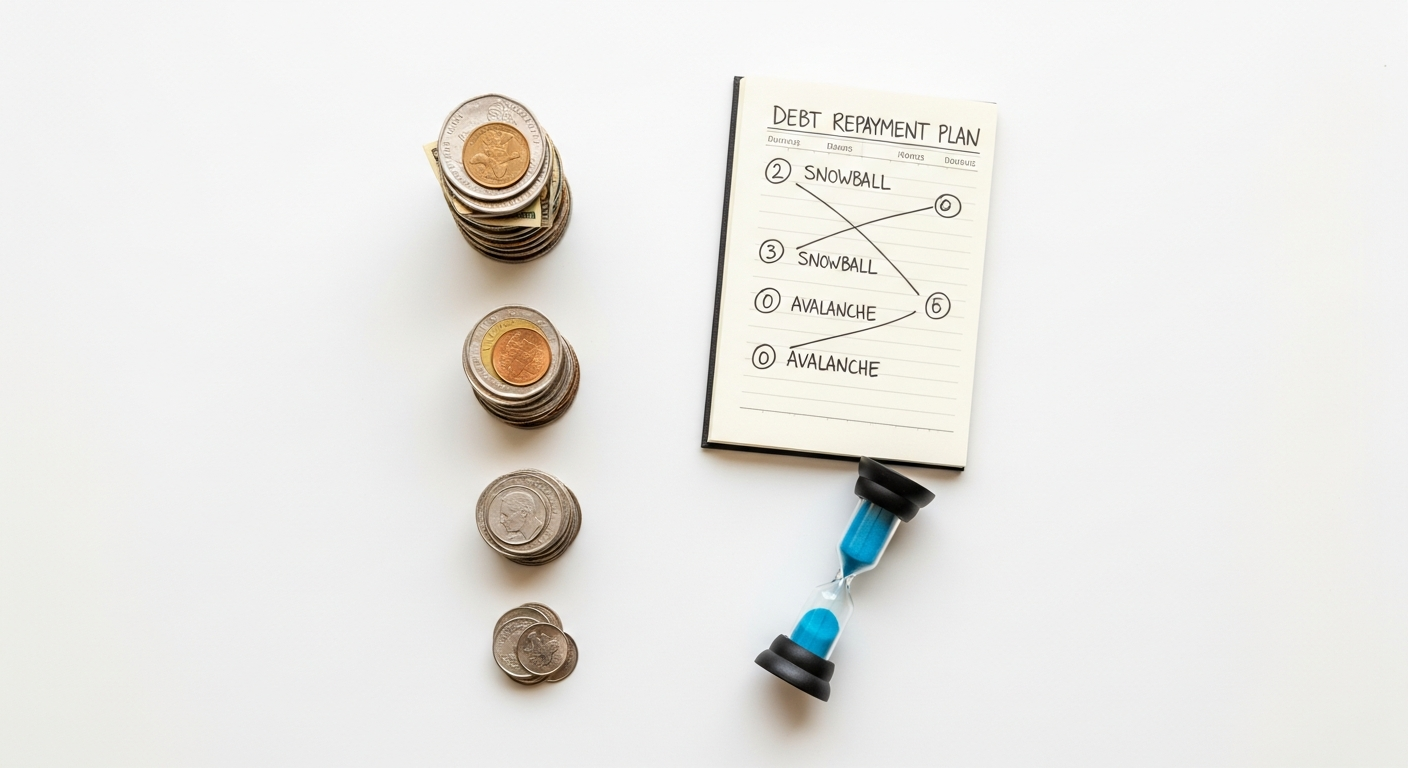
- Debt Snowball Method:
- How it works: List your debts from smallest balance to largest. Pay the minimum on all debts except the smallest, on which you pay as much as possible. Once the smallest debt is paid off, take the money you were paying on it and add it to the payment of the next smallest debt.
- Pros: Provides psychological wins and momentum as debts are paid off quickly, which can be motivating.
- Cons: May pay more interest over time compared to the avalanche method if your smallest debts have lower interest rates.
- Debt Avalanche Method:
- How it works: List your debts from highest interest rate to lowest. Pay the minimum on all debts except the one with the highest interest rate, on which you pay as much as possible. Once that debt is paid off, take that payment amount and apply it to the debt with the next highest interest rate.
- Pros: Saves you the most money on interest over time.
- Cons: May take longer to see the first debt paid off, which can be less motivating for some.
Actionable Tip: Choose the method that best aligns with your personality. If you need quick wins to stay motivated, go with the snowball. If saving the most money is your priority, choose the avalanche.
3. Consider Debt Consolidation
Consolidation can simplify your payments and potentially reduce interest.
- Personal Loans: Take out a single, lower-interest personal loan to pay off multiple high-interest debts (like credit cards). You then have one fixed monthly payment.
- Pros: Simpler payment structure, potentially lower interest rate.
- Cons: Requires good credit to qualify for favorable rates; if you continue to use old credit cards, you could end up with more debt.
- Balance Transfer Credit Cards: Transfer high-interest credit card balances to a new card offering a 0% introductory APR for a promotional period (e.g., 12-18 months).
- Pros: Opportunity to pay down principal quickly without accruing interest.
- Cons: Often an upfront balance transfer fee (e.g., 3-5% of the transferred amount); if the balance isn’t paid off by the end of the intro period, the remaining balance accrues high interest.
- Home Equity Loans or HELOCs: If you own a home and have equity, you might be able to borrow against it at a lower interest rate.
- Pros: Very low interest rates, often tax-deductible interest.
- Cons: Your home serves as collateral, meaning you could lose it if you default.
Actionable Tip: If you pursue debt consolidation, commit to closing the old credit accounts (or locking them away) and establishing strict rules to prevent new debt accumulation. Otherwise, you risk falling into a deeper debt trap.
4. Seek Professional Help: Credit Counseling and Debt Management Plans (DMPs)
If you’re overwhelmed, non-profit credit counseling agencies can provide invaluable assistance.
- Credit Counseling: A certified credit counselor can review your financial situation, help you create a budget, and explore options for debt relief. They offer personalized advice.
- Debt Management Plans (DMPs): If suitable, a counselor might recommend a DMP. They negotiate with your creditors to potentially lower interest rates, waive fees, and combine multiple unsecured debts into one monthly payment, which you pay to the counseling agency.
- Pros: Simpler payment, potentially lower interest, structured path to becoming debt-free.
- Cons: Requires closing participating credit accounts; may not be suitable for all types of debt.
Actionable Tip: Look for agencies accredited by the National Foundation for Credit Counseling (NFCC) or the Financial Counseling Association of America (FCAA) to ensure you’re working with a reputable organization.
5. Negotiating with Creditors
When facing hardship, directly contacting your creditors can sometimes yield positive results.
- Hardship Programs: Many creditors have hardship programs that can temporarily reduce payments, pause payments, or lower interest rates for a period if you explain your situation (e.g., job loss, medical emergency).
- Settlement: In severe cases of overdue debt, some creditors may agree to accept a lump sum payment that is less than the total amount owed to close the account. This can negatively impact your credit but might be an option to avoid bankruptcy.
Actionable Tip: Be prepared with your financial details (income, expenses, reason for hardship) when you call. Document everything, including the date, time, person you spoke with, and what was agreed upon.
Implementing these strategies requires discipline and commitment, but the reward—financial freedom—is immeasurable. Your ability to navigate and implement these steps is what truly defines a complete guide to credit and debt management.
Protecting Your Financial Health: Advanced Tips for Credit & Debt
Beyond the fundamentals, advanced strategies and proactive measures can further fortify your financial health, ensuring your credit remains strong and your debt manageable in the long term. These tips emphasize vigilance, foresight, and continuous optimization.
1. Vigilantly Monitor for Identity Theft and Fraud
Your credit profile is a prime target for fraudsters. Proactive monitoring is essential.
- Credit Monitoring Services: Many banks, credit card companies, and third-party services offer free or paid credit monitoring. These services alert you to suspicious activity, new accounts opened in your name, or significant changes to your credit report.
- Review Statements: Scrutinize all bank and credit card statements monthly for unauthorized transactions, no matter how small.
- Shred Documents: Securely shred any documents containing personal or financial information before discarding them.
Actionable Tip: Consider placing a credit freeze (or security freeze) on your credit reports with all three major bureaus. This prevents new creditors from accessing your report, making it difficult for identity thieves to open accounts in your name. You can temporarily lift the freeze when you need to apply for credit.
2. Understand and Leverage Credit Freezes and Locks
A credit freeze is a powerful tool, but differentiate it from a credit lock:
- Credit Freeze: A free service mandated by law. It restricts access to your credit report, preventing new accounts from being opened. You must contact each bureau individually to freeze/unfreeze.
- Credit Lock: Offered by some bureaus or credit monitoring services, often for a fee. It provides similar protection but typically allows for instant locking/unlocking via an app. While convenient, it doesn’t carry the same legal protections as a freeze.
Actionable Tip: If you’re not planning to apply for new credit in the near future, implementing a credit freeze is a strong defense against identity theft. It’s free and highly effective.
3. Build a Robust Emergency Fund
An emergency fund is your first line of defense against unexpected financial shocks that could otherwise force you into debt.
- Goal: Aim to save 3-6 months’ worth of essential living expenses in an easily accessible, high-yield savings account.
- Prevent Debt: Having an emergency fund means you won’t need to rely on high-interest credit cards or personal loans when your car breaks down, you lose a job, or face a medical emergency.
Actionable Tip: Automate contributions to your emergency fund. Treat it like a bill that must be paid every paycheck, even if it’s a small amount to start.
4. Strategically Use Credit Card Rewards
If you have excellent credit and manage your cards responsibly, rewards can be a valuable perk.
- Pay in Full: Only use rewards credit cards if you can pay your balance in full every single month. The interest you pay on a carried balance will always negate the value of any rewards earned.
- Match Spending Habits: Choose cards that offer rewards aligned with your typical spending (e.g., travel points if you fly often, cash back on groceries).
Actionable Tip: Don’t overspend to earn rewards. View rewards as a bonus for spending you would do anyway, not an incentive to spend more.
5. Regularly Review and Update Your Financial Plan
Your financial situation is dynamic, and your plans should be too.
- Annual Check-up: Schedule an annual review of your budget, debt repayment progress, credit reports, and overall financial goals.
- Adjust as Needed: Life changes—a new job, marriage, children, unexpected expenses—will require adjustments to your debt management strategies and credit building efforts.
- Stay Informed: Keep abreast of changes in personal finance, fintech trends, and economic conditions that could impact your financial decisions.
Actionable Tip: Consider consulting with a certified financial planner periodically, especially during major life transitions, to ensure your strategies remain optimized for your goals.
These advanced tips reinforce the principles discussed earlier, adding layers of protection and optimization to your financial journey. Mastering these elements ensures your ongoing financial health and serves as the capstone for your complete guide to credit and debt management.
Conclusion
Embarking on the journey to financial mastery begins with a clear understanding and disciplined management of your credit score and debt. This complete guide to credit and debt management has provided you with the comprehensive knowledge and actionable strategies needed to build a robust financial foundation, navigate borrowing wisely, and confidently tackle any existing debt.
From deciphering the components of your credit score to implementing strategic debt repayment plans and protecting yourself against financial threats, every piece of advice shared aims to empower you. Remember, improving your financial standing is not an overnight task; it’s a continuous process of learning, applying, and adapting. Each on-time payment, every reduction in debt, and every vigilant check of your credit report contributes to a stronger, more secure financial future.
Your next step: Don’t just read this guide; put it into action. Start by checking your credit reports today at AnnualCreditReport.com. Then, create a detailed budget, choose a debt repayment strategy that resonates with you, and commit to consistent, responsible financial habits. Your financial freedom is within reach, and Fin3go is here to support you every step of the way. Continue to explore our resources for more insights and tools to help you thrive in the world of personal finance and fintech.
Frequently Asked Questions
What is a good credit score?▾
How often should I check my credit report?▾
Is it better to use a debt snowball or debt avalanche?▾
Does checking my credit score hurt it?▾
What is credit utilization and why is it important?▾