


Zero Based Budgeting Method Explained
Unlike traditional budgeting methods that might roll over spending from month to month or allocate funds based on previous habits, Zero Based Budgeting starts from scratch. Every month, you treat your bank account like a blank slate, demanding a justification for every dollar spent. This isn’t about deprivation; it’s about intentionality, ensuring your money aligns perfectly with your priorities and aspirations. Fin3go is here to demystify ZBB, explaining what it is, why it works, and how you can implement it to transform your financial life.
What is Zero Based Budgeting (ZBB)?
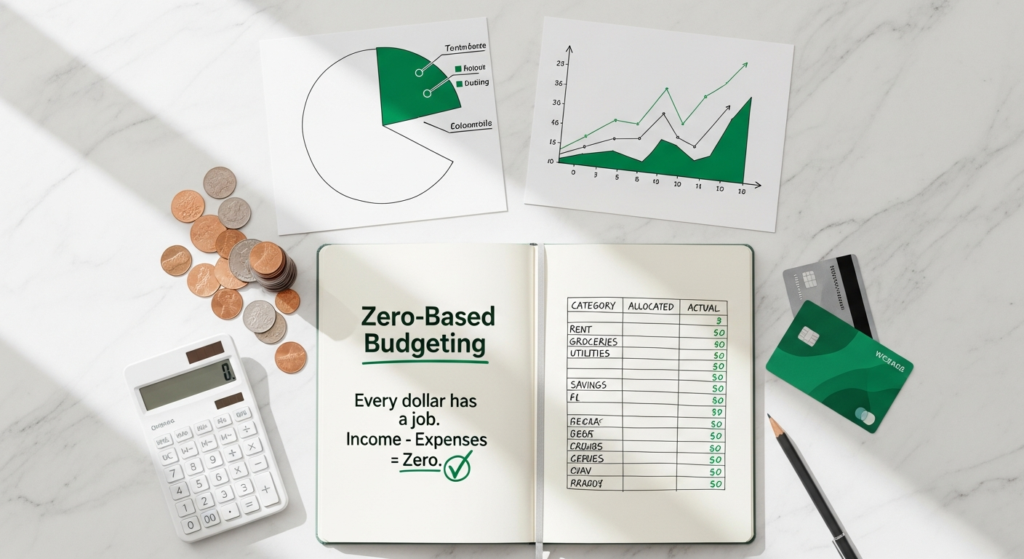
At its core, Zero Based Budgeting is a financial planning strategy where every dollar of your income is assigned a specific job or category until your income minus your expenses equals zero. Think of it this way: at the end of your budgeting process for the month, you shouldn’t have any “unassigned” money. Every penny should be allocated to savings, investments, debt repayment, or a spending category.
This contrasts sharply with incremental budgeting, where you might simply adjust last month’s budget slightly. With ZBB, you literally start from zero each month. You list all your expected income for the month and then meticulously allocate every dollar to your various expenses and savings goals. The goal isn’t necessarily to spend all your money; it’s to direct all your money. If you have surplus funds after covering all your essential and discretionary spending, those dollars aren’t left to wander; they’re intentionally assigned to something productive, like building an emergency fund, saving for a down payment, or accelerating debt payoff.
The beauty of the zero based budgeting approach lies in its active nature. It forces you to be deliberate and mindful about where your money goes. This process helps to uncover unconscious spending habits, eliminate wasteful expenditures, and ensure that your financial decisions are always aligned with your larger financial picture. It’s not just about tracking; it’s about proactive financial management.
Why Consider Zero Based Budgeting for Your Personal Finances?
- Increased Financial Awareness and Control: ZBB demands that you know exactly where every dollar is going. This deep dive into your spending habits reveals patterns you might not have noticed, empowering you to make informed decisions and take charge of your money.
- Elimination of Wasteful Spending: By scrutinizing every expense, you’re more likely to identify and cut unnecessary spending. That unused subscription, the daily coffee habit you didn’t realize was costing so much, or the impulse buys can all come to light and be addressed.
- Alignment with Financial Goals: ZBB ensures that your spending directly supports your aspirations. Whether it’s saving for a house, paying off student loans, or building an investment portfolio, every dollar is intentionally directed towards these objectives.
- Improved Savings and Debt Reduction: With a clear plan for every dollar, you can intentionally allocate more to savings and debt repayment, often accelerating your progress significantly. Unassigned money often gets spent frivolously; assigned money gets put to work.
- Adaptability to Changing Circumstances: Because you start from zero each month, ZBB is incredibly flexible. If your income changes, or you have an unexpected expense, you simply adjust your allocations for the new month without being tied to previous, outdated spending patterns.
- Reduced Financial Stress: Knowing exactly where your money is going and having a plan for it can significantly reduce anxiety related to finances. You move from reactive money management to proactive financial stewardship.
For those feeling overwhelmed by their finances or simply wanting to maximize their earning potential, Zero Based Budgeting offers a structured, yet flexible, framework to achieve true financial mastery.
How to Implement Zero Based Budgeting: A Step-by-Step Guide
Ready to give every dollar a job? Here’s a practical, step-by-step guide to help you implement Zero Based Budgeting:
-
Step 1: Calculate Your Total Income
Start by listing all the income you expect to receive in the upcoming month. This includes salaries, freelance income, bonuses, interest, dividends, and any other sources of money. If your income is variable, estimate conservatively or use an average of the last few months. It’s better to budget with a slightly lower income estimate and have a surplus than to overestimate and fall short.
-
Step 2: List All Your Expenses (Exhaustively!)
This is where the detailed work comes in. List every single expense you anticipate for the month. Categorize them into:
- Fixed Expenses: These are usually the same amount each month (e.g., rent/mortgage, loan payments, insurance premiums, subscriptions).
- Variable Expenses: These fluctuate (e.g., groceries, utilities, gas, dining out, entertainment). Estimate these based on past spending, but be realistic.
- Sinking Funds/Savings: Allocate money for irregular but anticipated expenses (e.g., car maintenance, holiday gifts, annual membership fees, emergency fund contributions, retirement savings). These are crucial for preventing financial surprises.
- Debt Repayment: Beyond minimum payments, allocate extra funds to accelerate debt reduction if that’s a goal.
Don’t forget small, infrequent expenses. The more thorough you are, the more accurate your budget will be.
-
Step 3: Assign Every Dollar a Job (Until Income – Expenses = 0)
Now, subtract your total planned expenses from your total estimated income. The core principle of ZBB is that this difference should equal zero. If you have money left over, you haven’t finished budgeting! Go back and assign that surplus. This could mean:
- Increasing your emergency fund contributions.
- Putting extra towards a high-interest debt.
- Saving for a specific goal (vacation, new gadget, down payment).
- Investing more.
- Even allocating it to a “fun money” category if everything else is covered.
If you find you have a deficit (expenses exceed income), you’ll need to go back and cut expenses until you reach zero. This is where the hard but necessary choices are made.
-
Step 4: Track Your Spending Throughout the Month
A budget is just a plan until you put it into action. Throughout the month, diligently track your actual spending against your allocated amounts. This can be done with a spreadsheet, a budgeting app, or even pen and paper. Be honest with yourself. If you overspend in one category, you’ll need to “roll with the punches” and adjust another category to maintain your zero balance. For example, if you spent more on groceries, you might need to cut back on entertainment or dining out for the rest of the month.
-
Step 5: Review and Re-budget Monthly
At the end of each month, review your performance. What worked? What didn’t? Where did you overspend or underspend? Use these insights to create a brand new budget for the next month, starting from zero again. This iterative process allows you to refine your budget, making it more accurate and effective over time. This monthly reset is key to ZBB’s power and flexibility.
Pros and Cons of Zero Based Budgeting
Pros of ZBB:
- Maximum Control and Clarity: You gain an unparalleled understanding of where every dollar goes, leading to greater financial confidence.
- Identifies and Eliminates Waste: The “start from zero” mentality naturally highlights unnecessary expenditures that can be cut.
- Goal-Oriented Spending: ZBB forces intentionality, ensuring your money actively supports your financial goals and values.
- Highly Adaptable: Each month is a fresh start, making it easy to adjust to income changes, unexpected expenses, or shifting priorities.
- Breaks Bad Habits: It challenges you to consciously decide on every expense, helping to break cycles of thoughtless spending.
Cons of ZBB:
- Time-Consuming Initially: The first few months can require a significant time investment to list all expenses and get accurate estimates.
- Requires Discipline and Consistency: Successful ZBB demands regular tracking and adherence to the budget. It’s not a set-it-and-forget-it method.
- Can Feel Restrictive at First: For those new to strict budgeting, the idea of assigning every dollar can feel daunting or overly controlling.
- Estimating Variable Expenses Can Be Tricky: Categories like groceries, utilities, and entertainment can fluctuate, requiring careful estimation and mid-month adjustments.
- Risk of Budget Burnout: The detailed nature of ZBB, if not managed well, can lead to feeling overwhelmed or “budget fatigue.”
Despite some of its challenges, for many, the immense benefits of ZBB in achieving financial freedom far outweigh the initial effort.
Tips for ZBB Success and Making it Sustainable
Implementing Zero Based Budgeting can be transformative, but it takes practice to master. Here are some tips to help you succeed and make ZBB a sustainable part of your financial life:
- Start Small and Be Patient: Don’t expect perfection in your first month. It takes time to accurately estimate expenses and get into the rhythm. Focus on progress, not perfection.
- Be Realistic with Your Estimates: Underestimating expenses (especially variable ones) is a common pitfall. Err on the side of caution or use historical data to make informed guesses.
- Build in a “Buffer” or “Miscellaneous” Category: Life happens. A small buffer for unexpected minor expenses can prevent you from derailing your budget and getting discouraged.
- Automate Where Possible: Set up automatic transfers for savings, investments, and bill payments. This ensures you consistently meet your goals and reduce the mental load.
- Involve Your Partner/Family: If you share finances, budgeting together is crucial. Open communication about spending and goals makes ZBB much more effective and reduces conflict.
- Use the Right Tools: Whether it’s a simple spreadsheet, a dedicated budgeting app (like YNAB, Mint, or personal finance software), or a notebook, find a system that works for you and stick with it.
- Don’t Be Afraid to Adjust: Your budget is a living document. If a category isn’t working, adjust it. If your priorities change, reflect that in your next month’s budget. Flexibility is key.
- Celebrate Small Wins: Acknowledge your progress! Successfully sticking to your budget, paying off a debt, or hitting a savings milestone can provide the motivation to keep going.
Zero Based Budgeting is more than just a numbers game; it’s a mindset shift towards intentional spending and proactive financial management. By embracing its principles, you empower yourself to make every dollar work towards the life you envision.
Zero Based Budgeting offers a powerful path to financial clarity and control by assigning every dollar a specific role each month. While it demands initial effort and consistent discipline, its ability to eliminate wasteful spending, align finances with personal goals, and adapt to changing circumstances makes it an incredibly effective tool. By following a structured approach and embracing a growth mindset, anyone can leverage ZBB to transform their financial habits and build a more secure future.