


The dream of financial independence, of being your own boss, and of building something truly your own, has never been more accessible than it is today. In an era defined by digital innovation and interconnectedness, the traditional barriers to entrepreneurship – primarily, the need for significant startup capital – have largely dissolved. Gone are the days when launching a business meant securing hefty loans, renting office space, or investing in extensive inventory. Today, with little more than an internet connection, a laptop, and a burning desire to succeed, you can tap into a global marketplace of opportunities. This article is your definitive guide to understanding how you can turn your ideas, skills, and passion into a thriving online venture, all without needing a single dollar to start. Welcome to the world of zero-cost online entrepreneurship, where your ingenuity is your greatest asset, and 2026 is the year you take control of your financial destiny.

The Foundation: Mindset, Skills, and the True Meaning of “No Money”

Embarking on the journey of starting an online business with no money isn’t just about finding free tools; it’s fundamentally about adopting a specific mindset. It’s about resourcefulness, creativity, and a willingness to leverage what you already have: your time, your existing skills, and your unique perspective. Many aspiring entrepreneurs are held back by the misconception that “no money” means “no potential.” In reality, it forces you to be lean, efficient, and deeply customer-focused from day one, which are invaluable traits for long-term success.

Understanding “No Money”

  • Leveraging Existing Skills: Think about what you’re good at, what people ask you for help with, or what you enjoy doing. These are your initial products or services.
  • Free Tools and Platforms: The internet is brimming with free resources for everything from website building to graphic design, project management, and communication. We’ll explore many of these.
  • Time as Your Investment: Instead of capital, your primary investment will be your time and effort. This requires discipline and consistent work, especially in the early stages.
  • Networking and Organic Growth: Building relationships and relying on word-of-mouth are powerful, zero-cost marketing strategies.

Identifying Your Niche and Value Proposition

Before diving into specific ideas, take a moment to reflect. What problems can you solve for others? What unique insights do you possess? Even with no money, a clear understanding of your niche and the value you bring is crucial. This doesn’t require a costly market research firm; it simply requires observation, empathy, and perhaps some informal conversations with potential customers. What are people complaining about in online forums? What questions are frequently asked in groups you belong to? These pain points are opportunities waiting to be addressed.

Your journey begins not with a bank loan, but with an honest inventory of your strengths and a keen eye for unmet needs. This foundational work will ensure that when you launch, you’re not just throwing ideas at the wall, but strategically addressing a real demand.

Service-Based Online Businesses: Turning Your Skills into Income

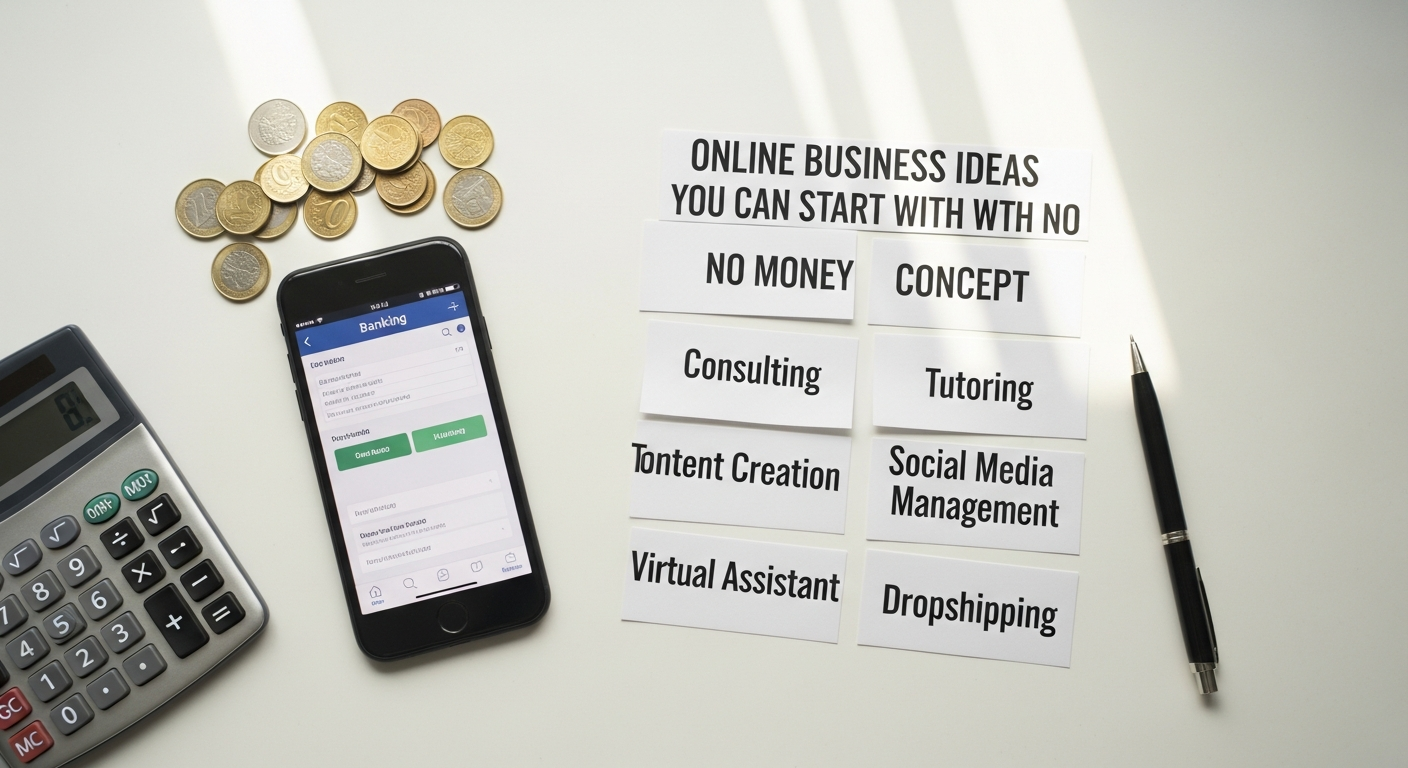
Online Business Ideas You Can Start With No Money

Perhaps the most straightforward path to starting an online business with no upfront capital is by offering services. You don’t need to create a product, manage inventory, or invest in complex infrastructure. You simply need to identify a skill you possess that others are willing to pay for, and then find those clients. The beauty of service-based businesses is their immediate cash flow potential and flexibility.

1. Freelance Writing and Content Creation

If you have a knack for words, the demand for high-quality content is insatiable. Businesses constantly need blog posts, articles, website copy, social media updates, and marketing materials. You can specialize in a niche (e.g., finance, health, technology) or offer general content writing services.

  • How to Start:
    • Create a few writing samples (even if they’re just personal blog posts or mock articles).
    • Build a simple online portfolio using a free platform like Google Sites or Medium.
    • Join freelance marketplaces like Upwork or Fiverr (though be mindful of competition and initial low rates).
    • Network on LinkedIn and reach out directly to small businesses that could benefit from your services.
    • Leverage social media groups dedicated to content marketing or specific industries.
  • Skills Needed: Strong grammar, research abilities, understanding of SEO basics (can be learned for free online), ability to meet deadlines.

2. Virtual Assistant (VA) Services

Many entrepreneurs, small business owners, and busy professionals need help with administrative tasks but can’t justify hiring a full-time employee. This is where a virtual assistant comes in. VAs handle a wide range of tasks remotely, from email management and scheduling to data entry, social media scheduling, and customer support.

  • How to Start:
    • List all your administrative and organizational skills.
    • Create a professional profile on LinkedIn or a simple website showcasing your services.
    • Offer introductory packages or hourly rates.
    • Seek clients through networking, online communities, and direct outreach.
  • Skills Needed: Organization, communication, proficiency with common office software, time management.

3. Graphic Design (Using Free Tools)

While professional graphic designers often use expensive software, you can start offering basic design services using free tools like Canva or GIMP. Businesses need logos, social media graphics, flyers, and simple website banners.

  • How to Start:
    • Practice with free tools and build a portfolio of diverse designs.
    • Offer your services to friends or local non-profits for free to gain experience and testimonials.
    • Market your services on social media, especially Instagram and Pinterest, where visuals are key.
    • Consider offering niche services, like creating social media templates for small businesses.
  • Skills Needed: Creativity, understanding of design principles (color theory, typography), proficiency with chosen design tools.

4. Social Media Management

Businesses understand the importance of social media but often lack the time or expertise to manage their presence effectively. As a social media manager, you’d create content, schedule posts, engage with followers, and analyze performance.

  • How to Start:
    • Showcase your own active and well-managed social media profiles.
    • Offer to manage social media for a friend’s business or a small local enterprise for a reduced rate or even free initially, to build a portfolio.
    • Learn about different social media platforms and their algorithms.
    • Network within business communities.
  • Skills Needed: Understanding of social media trends, content creation, engagement strategies, analytics.

The key to success in any service-based business is delivering exceptional value and building a strong reputation. As you gain clients and generate revenue, you can gradually invest in premium tools, specialized training, and even outsource some tasks to scale your operations. Remember, your first few clients are your most important, as their testimonials and referrals will fuel your growth.

Content Creation and Monetization: Building an Audience and Earning Passive Income

💡 Pro Tip

Content creation is a powerful avenue for starting an online business with no money, primarily because it leverages your knowledge, passion, and creativity. While it may not offer immediate cash flow like service-based businesses, it has the potential for significant passive income over time. The strategy here is to attract an audience by providing valuable, entertaining, or informative content, and then monetize that audience through various methods.

5. Blogging

Blogging remains a highly effective way to share your expertise, build a community, and drive traffic. You can blog about almost anything, from personal finance tips to niche hobbies. The “no money” aspect comes from using free blogging platforms.

  • How to Start:
    • Choose a niche you are passionate and knowledgeable about.
    • Set up a free blog on platforms like WordPress.com, Blogger, or Medium.
    • Consistently publish high-quality, SEO-optimized articles. Learn basic SEO principles (keyword research, on-page optimization) for free through online guides.
    • Share your content on social media and relevant online communities.
  • Monetization Strategies (once you have traffic):
    • Affiliate Marketing: Promote products or services relevant to your audience and earn a commission on sales made through your unique links.
    • Advertising: Display ads on your blog (e.g., Google AdSense).
    • Selling Digital Products: Create your own e-books, courses, or templates related to your niche.
    • Sponsored Content: Partner with brands to write sponsored posts.
  • Skills Needed: Writing, research, basic SEO, consistency, patience.

6. YouTube Channel

If you’re comfortable in front of a camera (or even just narrating over visuals), YouTube offers a massive platform to reach an audience. You can create tutorials, reviews, vlogs, educational content, or entertainment.

  • How to Start:
    • Use your smartphone to record high-quality video.
    • Edit videos using free software like DaVinci Resolve or Shotcut.
    • Create engaging thumbnails using free graphic design tools like Canva.
    • Optimize your video titles, descriptions, and tags for searchability.
    • Promote your videos across social media.
  • Monetization Strategies (once you meet eligibility requirements):
    • YouTube Partner Program (Ad Revenue): Earn a share of ad revenue displayed on your videos.
    • Affiliate Marketing: Include affiliate links in your video descriptions.
    • Sponsorships: Partner with brands for dedicated videos or product placements.
    • Selling Merchandise or Digital Products: Promote your own products directly to your viewers.
  • Skills Needed: Video recording and editing, presentation, creativity, understanding of YouTube SEO.

7. Podcasting

Podcasting allows you to share your voice and expertise with a growing audience of listeners. It’s an intimate medium that builds strong connections.

  • How to Start:
    • You can start with just a smartphone and free recording apps, though a decent microphone is a worthwhile early investment if you can swing it.
    • Edit audio using free software like Audacity.
    • Use free podcast hosting services (many offer free tiers to start).
    • Submit your podcast to directories like Spotify, Apple Podcasts, and Google Podcasts.
    • Promote your episodes on social media and other platforms.
  • Monetization Strategies:
    • Sponsorships and Advertisements: Companies pay to have their messages read during your episodes.
    • Affiliate Marketing: Mention products/services and provide unique codes or links.
    • Listener Support: Offer bonus content or early access through platforms like Patreon.
    • Selling Digital Products or Services: Use your podcast as a platform to promote your own offerings.
  • Skills Needed: Communication, interviewing (if applicable), audio editing, consistency.

The key to successful content creation is consistency, quality, and a genuine desire to connect with and provide value to your audience. Building an audience takes time, but the long-term rewards, including the potential for significant passive income, make it a highly attractive “no money” business model. As your audience grows, so does your influence and earning potential, paving the way for greater financial freedom and the ability to plan for significant milestones like how to plan for retirement, knowing you’re building diversified income streams.

Digital Products and E-learning: Create Once, Sell Many Times

Digital products are the epitome of passive income for many online entrepreneurs. The concept is simple: you create a product once, and then you can sell it an infinite number of times without needing to replenish stock or manage physical shipping. This model is perfectly suited for those starting with no money, as the primary investment is your time and knowledge.

8. E-books and Guides

If you have expertise in a specific area, writing an e-book or a detailed guide is an excellent way to package your knowledge. This could be a “how-to” guide, a collection of recipes, a fitness plan, or a deeper dive into a niche topic.

  • How to Start:
    • Write your content using a free word processor (Google Docs, LibreOffice Writer).
    • Design your cover and format your interior using free tools like Canva or Google Slides.
    • Sell directly from your own simple website (built with free tools) or through platforms like Gumroad, which allows you to set up a storefront and process payments for free (they take a transaction fee).
    • Promote your e-book through your blog, social media, and email list.
  • Skills Needed: Writing, organization, basic design, marketing.

9. Online Courses and Workshops

For more in-depth knowledge sharing, online courses can be incredibly lucrative. You can teach practically any skill, from coding to cooking, photography to personal finance. The barrier to entry is lower than ever, with platforms making it easy to host and sell your courses.

  • How to Start:
    • Outline your course curriculum, breaking it down into modules and lessons.
    • Record your lessons using your smartphone or computer’s webcam and microphone. Use free screen recording software if demonstrating software.
    • Edit your videos using free software like DaVinci Resolve.
    • Host and sell your course on platforms like Teachable (offers a free plan with transaction fees), Thinkific (free plan available), or even directly via Gumroad.
    • Pre-sell your course to gauge interest before fully building it out.
  • Skills Needed: Expertise in your subject, teaching ability, basic video/audio recording and editing, marketing.

10. Templates and Printables

Many individuals and businesses need templates for various tasks: social media posts, resumes, business plans, budgets, planners, or digital art. If you have an eye for design or organization, creating and selling templates can be a fantastic “no money” business.

  • How to Start:
    • Identify a need for a specific type of template (e.g., budget planners for students, Instagram story templates for small businesses).
    • Design your templates using free tools like Canva, Google Docs/Sheets, or even GIMP.
    • Create clear instructions on how to use your templates.
    • Sell them on platforms like Etsy (minimal listing fees, but you can start with a few) or Gumroad.
    • Market your templates on Pinterest, Instagram, and relevant online communities.
  • Skills Needed: Design, organization, understanding of user needs.

11. Stock Photos, Videos, or Audio

If you have a talent for photography, videography, or audio recording, you can monetize your creations by submitting them to stock media websites. While the per-download revenue might be small, it can accumulate over time into a significant passive income stream as your portfolio grows.

  • How to Start:
    • Use your smartphone or existing camera equipment.
    • Focus on high-quality, unique, and commercially viable content.
    • Upload your best work to free contributor platforms like Pexels, Unsplash (for free distribution, which can lead to exposure), or consider microstock sites like Adobe Stock or Shutterstock (they take a commission but offer wider reach).
  • Skills Needed: Photography/videography/audio recording, editing, understanding of licensing.

The beauty of digital products lies in their scalability. Once created, they can generate income for years to come with minimal ongoing effort, freeing up your time to create more products, market existing ones, or even explore other business ventures. As your digital empire grows, you’ll want to think strategically about your finances, including a step by step guide to opening a business bank account to keep your personal and business finances separate, which is crucial for tracking profitability and future tax planning.

Leveraging Marketplaces and Innovative Zero-Inventory Models

Beyond creating your own content or services from scratch, you can also leverage existing platforms and innovative business models that minimize upfront costs and inventory risk. These approaches often involve acting as a curator, a middleman, or a designer, without ever touching physical products yourself.

12. Print-on-Demand (POD) Design

Print-on-Demand allows you to create custom designs for t-shirts, mugs, phone cases, and other merchandise without holding any inventory. When a customer orders, the POD company prints your design on the item and ships it directly to them. You pay nothing until a sale is made.

  • How to Start:
    • Design unique graphics or slogans using free tools like Canva, GIMP, or Krita.
    • Sign up for a free account on POD platforms like Printful, Printify, or Redbubble.
    • Upload your designs and apply them to various products.
    • Create mockups of your products (many POD platforms provide these for free).
    • Promote your designs on social media (Pinterest, Instagram) or through your own simple online store (e.g., a free Shopify trial or linked from your social media).
  • Skills Needed: Graphic design, creativity, marketing.

13. Dropservicing

Dropservicing is like dropshipping, but for services. Instead of selling physical products you don’t own, you sell services you don’t personally perform. You act as the middleman, finding clients who need a service (e.g., website design, video editing, SEO) and then hiring a freelancer (often at a lower cost) to complete the work. You pocket the difference.

  • How to Start:
    • Identify a high-demand service that can be outsourced.
    • Find reliable, affordable freelancers on platforms like Upwork, Fiverr, or local talent networks.
    • Create a simple website or social media presence to market your services.
    • Focus on building relationships with clients and ensuring quality control from your outsourced team.
  • Skills Needed: Project management, communication, sales, quality control.

14. Online Tutoring or Coaching

If you excel in a particular academic subject, language, or life skill, you can offer online tutoring or coaching. This is a direct service model that can be scaled from one-on-one sessions to group workshops.

  • How to Start:
    • Identify your area of expertise.
    • Create a profile on free tutoring platforms (e.g., Chegg Tutors, Skooli – though some require applications) or market yourself directly on social media and local community groups.
    • Use free video conferencing tools (Zoom’s free tier, Google Meet) for sessions.
    • Offer a free introductory session to attract clients.
  • Skills Needed: Expertise in subject matter, communication, patience, coaching skills.

15. Affiliate Marketing (Pure Play)

While often integrated with content creation, pure-play affiliate marketing can also be a standalone business model. You promote other companies’ products or services and earn a commission for every sale or lead generated through your unique affiliate link. You don’t need to create your own product or handle customer service.

  • How to Start:
    • Choose a niche and research products or services that align with it.
    • Join affiliate programs (e.g., Amazon Associates, ShareASale, ClickBank).
    • Create a simple landing page or utilize social media to promote your links. Focus on providing value and honest reviews rather than just pushing products.
    • Utilize free email marketing services (like Mailchimp’s free tier) to build an audience and promote offers.
  • Skills Needed: Marketing, copywriting, understanding of your target audience, trust-building.

These models demonstrate that entrepreneurship isn’t limited to creating something entirely new. It often involves identifying existing needs and efficiently connecting solutions to those who seek them, leveraging the vast infrastructure of the internet and existing marketplaces. As you begin to generate income from these ventures, it’s wise to consider which online bank is right for you to manage your business funds effectively, separating them from personal accounts from the outset.

Scaling Your Zero-Cost Business and Financial Prudence in 2026

Starting with no money is an incredible feat, but the goal isn’t just to stay at zero cost forever. It’s about building a sustainable, profitable venture that can grow and eventually provide significant financial freedom. As your business generates revenue, strategic reinvestment and diligent financial planning become paramount. In 2026 and beyond, the landscape for online businesses will continue to evolve, making adaptability and smart financial management more critical than ever.

Reinvesting for Growth

Once you start earning, resist the urge to spend all your profits. Instead, think about how you can strategically reinvest a portion back into your business to accelerate growth. This doesn’t mean large capital outlays, but smart, incremental investments:

  • Premium Tools: Upgrade from free versions of software (e.g., a paid Canva subscription, a professional email marketing service, a better podcast microphone).
  • Skill Development: Invest in online courses or workshops to hone your skills (e.g., advanced SEO, video editing, specific software proficiency).
  • Outsourcing: As your time becomes more valuable, consider outsourcing repetitive tasks to freelancers (e.g., social media scheduling, basic video editing) to free up your time for higher-value activities.
  • Marketing and Advertising: While you started with free marketing, a small budget for targeted ads (e.g., Facebook Ads, Google Ads) can significantly expand your reach.

The Importance of Financial Separation

Even if your business starts as a side hustle, it’s crucial to separate your personal and business finances as soon as you start generating income. This provides clarity, simplifies tax preparation, and projects professionalism.

  • Business Bank Account: One of the first steps after generating consistent income is to open a dedicated business bank account. Our guide, A step by step guide to opening a business bank account, provides comprehensive instructions on how to do this, outlining the necessary documents and considerations. This separation is vital for legal and tax purposes, creating a clear audit trail.
  • Tracking Income and Expenses: Use free accounting software (many offer free tiers for small businesses) or even a simple spreadsheet to meticulously track all your income and expenses. This is crucial for understanding your profitability and fulfilling tax obligations.
  • Budgeting for Your Business: Just as you budget for personal finances, create a budget for your business. Allocate funds for reinvestment, operating expenses, and your own salary.

Planning for Long-Term Financial Goals

A successful online business isn’t just about immediate income; it’s a powerful vehicle for achieving your long-term financial aspirations. As your business matures and generates more substantial profits, integrate it into your broader financial planning.

  • Retirement Planning: Your business can be a significant contributor to your retirement savings. Explore options like setting up a SEP IRA or Solo 401(k) for self-employed individuals. Understanding how to plan for retirement becomes even more dynamic when you control your income streams.
  • Emergency Funds: Build both a personal and a business emergency fund. This provides a safety net against unforeseen expenses or downturns.
  • Diversification: As your business thrives, consider diversifying your investments beyond your core venture to minimize risk.

The journey from a “no money” idea to a thriving online enterprise is a marathon, not a sprint. It requires dedication, continuous learning, and smart financial management. By embracing the principles of resourcefulness and strategic growth, you’re not just starting a business; you’re building a foundation for a future of financial independence and personal fulfillment, ready to navigate the opportunities of 2026 and beyond with confidence.

Frequently Asked Questions

What does “no money” truly mean in the context of starting an online business?
“No money” means leveraging your existing skills, time, and free online tools rather than investing capital. It implies starting with minimal to zero financial outlay, relying on ingenuity, free platforms, and organic networking to acquire your first clients or generate initial revenue. As soon as you earn, you can then strategically reinvest small amounts to grow.
Is it really possible to start an online business with absolutely no money?
Yes, it is absolutely possible. Many of the ideas discussed, such as freelance writing, virtual assistance, starting a blog on a free platform, or designing digital products with free software, require only your time, skills, and an internet-connected device. The key is to be resourceful, patient, and consistent. Your first “investment” is often your effort and willingness to learn.
How long does it typically take to see income from a zero-cost online business?
The timeline varies significantly depending on the business model. Service-based businesses (like freelancing or VA work) can generate income relatively quickly, sometimes within weeks, as you directly exchange your time for money. Content creation or digital product businesses often take longer to build an audience and achieve consistent sales, potentially several months to a year or more. Patience and persistence are crucial for long-term success in any online venture.
What are the biggest challenges when starting an online business with no money?
The biggest challenges often include self-discipline and motivation (as you’re your own boss), finding your first clients or audience without a marketing budget, learning new skills (e.g., basic SEO, graphic design), and managing your time effectively. Overcoming these challenges requires resilience, continuous learning, and a proactive approach to problem-solving. It also means consistently delivering high-quality work to build a strong reputation.
How do I find my first clients or customers without an advertising budget?
Networking is your most powerful tool. Utilize social media groups (Facebook, LinkedIn), online forums related to your niche, and your personal connections. Offer introductory services at a reduced rate or even for free to gain testimonials and build a portfolio. Ask for referrals from early clients. Consistent, valuable content creation (blogging, social media posts) can also attract an audience organically over time. Platforms like Upwork or Fiverr can be starting points, though competition can be high.
Once I start earning, what’s the first financial step I should take?
Once you start earning consistent income, even if it’s small, the very first financial step you should take is to open a dedicated business bank account. This separates your personal and business finances, simplifying tax preparation, protecting personal assets, and projecting professionalism. Refer to our guide, A step by step guide to opening a business bank account, for detailed instructions. Following this, diligently track all income and expenses, and consider setting aside a portion for taxes.