
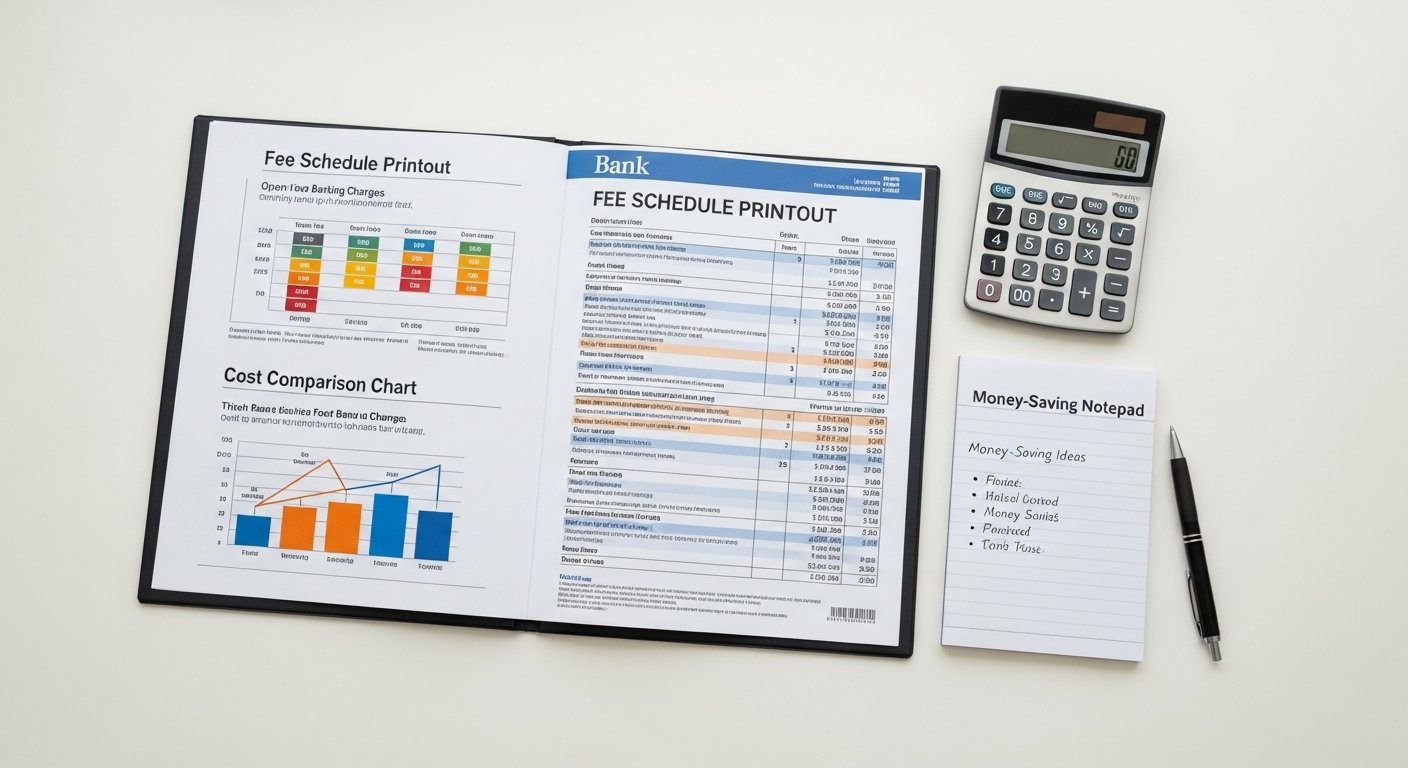
Understanding Bank Account Maintenance Fees: Your Comprehensive Guide to Avoiding Unnecessary Charges
In the pursuit of financial stability and growth, every dollar counts. Yet, for many, a significant portion of their hard-earned money quietly slips away each month, often unnoticed, through the seemingly innocuous mechanism of bank account maintenance fees. These charges, while sometimes small individually, can erode your savings, diminish your returns, and act as a silent tax on your financial progress. For personal finance readers keen on optimizing their banking solutions, understanding these fees isn’t just a matter of saving a few bucks—it’s about gaining control, making informed choices, and ensuring your money works for you, not against you.
This comprehensive guide will demystify how banks calculate and charge account maintenance fees. We’ll explore the various types of fees, provide practical insights into how you can effectively avoid or waive them, and delve into crucial security and safety considerations when choosing a banking partner. From traditional brick-and-mortar institutions to innovative online-only banks and fintech solutions, we’ll equip you with the knowledge to navigate the complex world of banking fees, ultimately empowering you to make smarter, more secure financial decisions.
—
The Anatomy of Account Maintenance Fees: What Banks Charge For
At its core, an account maintenance fee is a charge levied by a financial institution to cover the operational costs associated with managing your account, complying with regulations, and generating profit. While banks strive to offer competitive services, they are also businesses that need to sustain their operations. These fees help them do just that. However, for consumers, they represent a potential drain on resources if not managed proactively.
#
Common Types of Account Maintenance Fees
Understanding the specific fees you might encounter is the first step to avoiding them. Here are the most prevalent types:
1. Monthly Service Fees (or Monthly Maintenance Fees): This is arguably the most common and often the most frustrating fee. It’s a recurring charge assessed simply for the privilege of holding a checking, savings, or money market account. These fees can range from $5 to $30 or more per month, depending on the bank and the account type. For instance, a basic checking account might carry an $8-$12 monthly fee, while premium accounts could be higher. Without proper management, this fee alone could cost you over $100 annually.
2. Minimum Balance Fees: Many banks require you to maintain a certain average daily balance or a minimum daily balance in your account to avoid a monthly service fee. If your balance dips below this threshold at any point during the statement cycle, or if your average balance falls short, you’ll be charged. This is a common fee structure designed to incentivize customers to keep more money with the bank, which the bank can then use for lending or investing. For example, a bank might waive its $10 monthly fee if you maintain an average daily balance of $1,500 or more.
3. Inactivity or Dormancy Fees: If you have an account that sits unused for an extended period (e.g., 6 months to 2 years, depending on the bank and state laws), your bank might start charging an inactivity fee. These fees are meant to offset the cost of maintaining accounts that generate no activity or revenue for the bank. If an account remains dormant for even longer, it may eventually be turned over to your state’s unclaimed property division.
4. Paper Statement Fees: In an effort to reduce environmental impact and operational costs, many banks now charge a fee for receiving paper statements in the mail. This fee is usually small, often $2-$5 per statement, but it adds up. Banks typically encourage customers to opt for digital, paperless statements, which are usually free.
5. Excessive Transaction Fees: While less common for standard checking accounts, some savings accounts or specific checking account types may limit the number of transactions (e.g., debits, transfers) you can make per statement cycle. Exceeding this limit can trigger per-transaction fees. This is more prevalent with savings accounts due to federal Regulation D, which historically limited certain types of withdrawals and transfers to six per month (though this specific regulation has been suspended, many banks still maintain similar limits on their savings products).
6. Foreign Transaction Fees: If you use your debit card for purchases or ATM withdrawals outside of your home country, you might incur a foreign transaction fee, typically 1% to 3% of the transaction amount. While not strictly a “maintenance” fee, it’s a common charge related to account usage that many personal finance readers overlook.
#
How Banks Calculate & Apply These Fees
The process by which banks calculate and apply these fees is crucial to understanding how to avoid them:
* End-of-Cycle Assessment: Most maintenance fees are assessed at the end of your monthly or quarterly statement cycle. This means the bank reviews your account activity and balance over the entire period to determine if any waivers apply.
* Average Daily Balance vs. Minimum Daily Balance: Be sure to clarify which metric your bank uses for minimum balance requirements.
* Average Daily Balance: This calculates the sum of the balance in your account at the end of each day in the statement cycle, divided by the number of days in the cycle. This method is generally more forgiving, as a single dip below the minimum won’t necessarily trigger a fee if your average stays above it.
* Minimum Daily Balance: This is stricter. If your account balance falls below the specified threshold even for one day during the entire statement cycle, you could be charged the fee.
* Linking Accounts: Some banks allow you to link multiple accounts (e.g., checking, savings, investment accounts) to meet a combined minimum balance requirement across all linked accounts. This can be an excellent strategy for waiving fees if you have funds spread across different account types within the same institution.
* Automatic Deduction: Once determined, the fee is typically automatically deducted from your account. If your account doesn’t have sufficient funds, it could lead to an overdraft fee, compounding the problem.
* Terms and Conditions (T&Cs): Every bank account comes with a detailed fee schedule and terms and conditions document. This is where banks disclose all potential charges, how they are calculated, and the conditions for waiver. While lengthy, thoroughly reviewing this document is essential for any financially savvy individual.
Understanding these mechanics empowers you to be proactive. Knowing when your bank assesses fees and what criteria they use allows you to manage your balance and activities accordingly, preventing unexpected charges.
—
Strategies to Avoid and Waive Account Maintenance Fees

The good news is that most bank account maintenance fees are avoidable. Banks offer various pathways to waive these charges, often based on specific actions or account characteristics. By understanding and implementing these strategies, you can keep more of your money in your pocket.
#
1. Meeting Minimum Balance Requirements
This is one of the most common ways to avoid monthly service fees. Banks set a specific threshold, either an average daily balance or a minimum daily balance, that you must maintain.
* How it works: If your balance stays above the bank’s specified amount for the entire statement cycle (or meets the average requirement), the fee is waived.
* Practical Tip: Consolidate your funds. If you have small amounts spread across multiple accounts at different institutions, consider moving them to one primary account to meet the minimum. Set up low-balance alerts through your bank’s mobile app or online portal to notify you if your balance approaches the threshold.
* Example: Chase Total Checking® typically has a $12 monthly service fee, which can be waived by maintaining an average daily balance of $1,500 or more, or by having $5,000 or more in combined average daily balances across linked Chase accounts (checking, savings, and certain investment accounts).
#
2. Setting Up Regular Direct Deposits
Many banks waive monthly fees if you set up recurring direct deposits into your account, typically from an employer or government benefits. This is a win-win for banks, as direct deposit customers are often considered more engaged and stable.
* How it works: The bank usually requires a minimum total amount of direct deposits per statement cycle. This could be a single deposit or a sum of multiple deposits.
* Practical Tip: If your employer offers direct deposit, ensure your paychecks meet your bank’s minimum requirement. If you receive government benefits (like Social Security), you can often direct deposit those as well.
* Example: Wells Fargo Everyday Checking has a $10 monthly service fee, which is waived if you receive $500 or more in qualifying direct deposits each statement cycle.
#
3. Maintaining a Minimum Number of Transactions
While less common for standard checking account fee waivers, some accounts, particularly those with rewards or specific features, might require a certain number of debit card transactions per month to avoid a fee or earn rewards.
* How it works: Engage in a specified number of debit card purchases (e.g., 10-12 transactions) during the statement cycle.
* Practical Tip: Use your debit card for small, everyday purchases instead of cash, but always be mindful of your spending.
* Example: Some smaller, regional banks or credit unions might offer a checking account that waives fees or earns higher interest if you complete a set number of debit card transactions and enroll in e-statements.
#
4. Utilizing Online-Only Banks and Credit Unions
This is perhaps the most straightforward way to avoid maintenance fees altogether. Online-only banks (often called neobanks or challenger banks) and credit unions typically have lower operational overheads than traditional brick-and-mortar banks, allowing them to offer accounts with no monthly maintenance fees and often no minimum balance requirements.
* Online-Only Banks: These institutions conduct all their business digitally, passing the cost savings onto their customers in the form of lower (or no) fees and sometimes higher interest rates.
* Examples:
* Ally Bank Interest Checking Account: Offers no monthly maintenance fees, no minimum balance to open, and pays interest on all balances. They also provide fee-free access to a large ATM network.
* Capital One 360 Checking: Similar to Ally, it boasts no monthly fees, no minimums, and earns interest. They also offer a vast ATM network.
* Discover Bank Cash Back Debit: Another strong contender with no monthly fees, no minimums, and even offers 1% cash back on qualifying debit card purchases.
* Security/Safety Consideration: A common concern with online banks is security. It’s crucial to ensure that any online bank you choose is FDIC-insured. This means your deposits are protected up to $250,000 per depositor, per institution, in case the bank fails. All reputable online banks mentioned above are FDIC-insured.
* Credit Unions: These are non-profit financial cooperatives owned by their members. Their mission is to serve their members rather than maximize shareholder profits, which often translates to lower fees, better interest rates on deposits, and lower loan rates.
* Security/Safety Consideration: Credit union deposits are insured by the NCUA (National Credit Union Administration) up to $250,000 per depositor, per institution, offering the same level of safety as FDIC insurance.
* Comparison: While online banks excel in digital convenience, credit unions often provide a more personalized, community-focused experience with some physical branch access, albeit usually within a specific geographic area or for specific affiliations.
#
5. Age-Based Waivers and Student Accounts
Many banks offer special accounts or fee waivers for specific demographics, most commonly students and seniors.
* Student Accounts: Designed for younger customers, these accounts often waive maintenance fees and sometimes offer perks like no ATM fees. They typically require proof of enrollment.
* Example: Bank of America Advantage SafeBalance Banking® is an option for individuals under 25 to avoid the monthly fee without meeting other waiver requirements, promoting financial responsibility for young adults.
* Senior Accounts: Customers over a certain age (e.g., 60 or 65) may also qualify for fee-free checking or reduced fees, sometimes with additional benefits.
#
6. Leveraging Other Bank Relationships
If you have multiple financial products with a single bank, such as a mortgage, car loan, investment account, or credit card, you might qualify for fee waivers on your checking or savings accounts. Banks value “relationship banking” and often reward customers who consolidate their financial lives with them.
* How it works: The combined balances or active accounts across different product lines (e.g., a minimum investment balance with their brokerage arm) can waive checking account fees.
* Practical Tip: If you’re considering opening a new loan or investment account, inquire if it would qualify you for fee waivers on your existing checking or savings accounts at the same institution.
#
7. Proactively Communicating with Your Bank
Don’t underestimate the power of a phone call. If you’ve been a good customer and are hit with an unexpected or understandable fee (e.g., you briefly dipped below a minimum balance due to an unforeseen expense), politely calling your bank’s customer service can sometimes result in a one-time fee waiver.
* How it works: Explain your situation calmly and politely. Mention your loyalty to the bank.
* Practical Tip: Be prepared to explain why you believe the fee should be waived. This strategy works best if it’s an infrequent occurrence and you have a generally positive banking history.
—
Security, Safety, and Smart Banking Choices
Beyond just avoiding fees, making smart banking choices involves considering the security of your funds, the convenience of services, and how well a bank’s offerings align with your financial habits.
#
The Importance of Reading the Fine Print (T&Cs)
We’ve mentioned it before, but it bears repeating: the terms and conditions and fee schedule documents are your best friends. Bank policies, including fee structures, can change. What was free today might have a charge tomorrow.
* Practical Tip: Periodically review these documents (usually available on your bank’s website). Sign up for email or text alerts from your bank to be notified of changes to your account terms or if your balance is low. This vigilance helps you avoid surprises and adapt your strategy as needed.
#
FDIC/NCUA Insurance: Your Money’s Safety Net
Whether you choose a traditional bank, an online-only bank, or a credit union, ensuring your deposits are insured is paramount.
* FDIC (Federal Deposit Insurance Corporation): Protects deposits in traditional banks and most online banks up to $250,000 per depositor, per insured bank, for each account ownership category. This means if a bank fails, you won’t lose your money up to the insured limit.
* NCUA (National Credit Union Administration): Provides identical coverage ($250,000 per depositor, per insured credit union, for each account ownership category) for credit union members.
Always verify that your chosen financial institution is FDIC or NCUA insured. This information is typically prominently displayed on their website. This insurance is your ultimate safety net against bank failures, making your choice between a brick-and-mortar bank and an online alternative solely about convenience, fees, and features, not about the fundamental safety of your principal.
#
Balancing Convenience, Features, and Cost
There’s no single “best” bank for everyone. The ideal banking solution balances minimal fees with the features and convenience that best suit your lifestyle.
* Consider Your Habits:
* Do you primarily bank online and rarely visit a branch? An online-only bank might be perfect.
* Do you frequently need to deposit cash or speak to a teller in person? A traditional bank or a credit union with local branches might be a better fit.
* Do you value advanced budgeting tools, early direct deposit, or specific rewards programs? Some fintech solutions excel here.
* Digital Tools vs. Branch Access: Traditional banks are catching up with digital offerings, but online banks often lead with seamless apps and user interfaces. However, if physical branch access is a non-negotiable for you, factor that into your decision, accepting that it might come with a higher fee potential.
* Customer Service: Evaluate customer service options. Online banks often offer 24/7 phone, chat, or email support, while traditional banks have branch hours.
#
Fintech Innovations and Fee Structures
The rise of fintech (financial technology) companies has reshaped the banking landscape, often with a strong focus on fee-free models and innovative digital experiences. Neobanks like Chime and SoFi Money are prime examples.
* Chime: Known for its fee-free checking accounts (Chime Spending Account), no minimum balance, and early access to direct deposits. They generate revenue primarily through interchange fees from debit card transactions, not from charging customers monthly maintenance fees. Chime is a financial technology company, not a bank. Banking services are provided by The Bancorp Bank, N.A. or Stride Bank, N.A., Members FDIC.
* SoFi Money: Offers a checking and savings account hybrid with no monthly fees, no overdraft fees, and competitive interest rates on balances. They also provide a large network of fee-free ATMs and early direct deposit. SoFi Money is a cash management account, and funds are held with partner banks that are FDIC insured.
While these platforms offer attractive fee structures, always ensure they are partnered with an FDIC-insured bank. They provide fantastic alternatives to traditional banking for those comfortable with a fully digital experience, often incorporating budgeting tools and other features directly into their apps.
—
#
Practical Tips Readers Can Use Immediately:
1. Review Your Statements Monthly: Don’t just glance at your balance. Scrutinize your statements for any unexpected fees.
2. Set Up Low Balance Alerts: Configure your bank’s mobile app or online portal to send you notifications when your balance dips below a certain threshold, helping you avoid minimum balance fees.
3. Know Your Bank’s Waiver Conditions: Be intimately familiar with the specific requirements to avoid fees on your current account.
4. Automate Direct Deposits: If possible, set up automatic direct deposits to meet waiver requirements effortlessly.
5. Go Paperless: Opt for electronic statements to avoid paper statement fees.
6. Explore Alternatives: If your current bank consistently charges fees you can’t avoid, actively research online-only banks, credit unions, or fintech solutions that offer fee-free accounts.
7. Don’t Be Afraid to Ask: If you incur an unexpected fee, call your bank and politely ask if they can waive it, especially if it’s a first-time occurrence.
—
FAQ Section
Q1: Are all bank accounts subject to maintenance fees?
A1: No. While many traditional checking and savings accounts may have monthly maintenance fees, a significant number of accounts, especially those offered by online-only banks, credit unions, and some challenger banks, are inherently fee-free. Additionally, most traditional banks offer ways to waive fees by meeting certain conditions like maintaining a minimum balance, setting up direct deposits, or holding other accounts with them.
Q2: Can I get a bank fee refunded if I was unaware of it?
A2: Sometimes. Banks generally have discretion. If it’s your first time being charged a particular fee, or if you can demonstrate a misunderstanding of the terms and have a good banking history, politely calling customer service might result in a one-time refund. However, consistent charges due to not meeting waiver requirements are less likely to be refunded.
Q3: Is it safer to use a traditional bank with branches, even if it has fees?
A3: Not necessarily. The safety of your deposits is primarily determined by whether the institution is FDIC-insured (for banks) or NCUA-insured (for credit unions). Both traditional banks and reputable online-only banks (and their fintech partners) are typically insured, meaning your deposits up to $250,000 are protected regardless of whether they have physical branches. The choice between them should be based on fees, features, and convenience, not perceived safety.
Q4: Do business accounts have different fee structures than personal accounts?
A4: Yes, generally. Business accounts often have more complex fee structures, typically with higher monthly maintenance fees, higher minimum balance requirements, and additional fees for services like cash deposits, a large number of transactions, or specific business banking tools. These fees reflect the increased operational costs and specialized services required for business banking.
—
Conclusion
Navigating the landscape of bank account maintenance fees can feel daunting, but with the right knowledge and proactive strategies, you can transform these potential financial drains into opportunities for savings. By understanding the types of fees, how they’re calculated, and the various methods to avoid them—from maintaining minimum balances and setting up direct deposits to embracing fee-free online banking alternatives—you gain significant control over your financial health.
Remember that vigilance is key. Regularly review your account statements, stay informed about your bank’s terms and conditions, and don’t hesitate to explore options that better align with your financial goals and lifestyle. Whether you prefer the familiarity of a traditional bank or the innovative convenience of an online-only platform, numerous solutions exist that allow you to bank without the burden of unnecessary fees.
Empower yourself by making informed choices. Your financial well-being hinges on these small, yet impactful, decisions. Take control of your banking experience, eliminate avoidable fees, and watch your hard-earned money work harder for you.
Frequently Asked Questions