
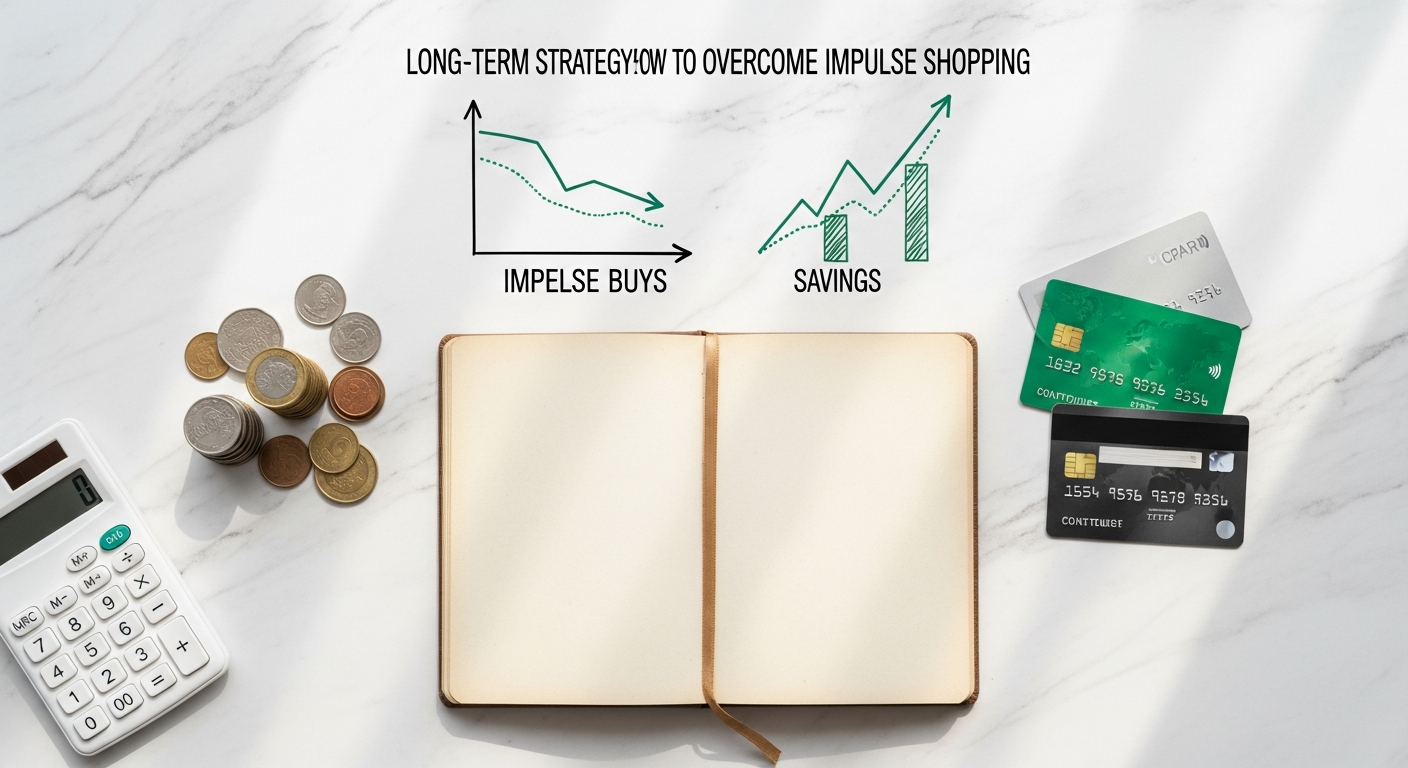
Mastering Your Wallet: How to Stop Impulsive Shopping for Good in 2026
By Fin3go Editorial Team — Financial writers covering personal finance, banking, and consumer protection.
The “Add to Cart” button is perhaps the most dangerous three-word phrase in the modern consumer’s vocabulary. In 2026, the retail landscape has transformed into a frictionless, AI-driven machine designed to anticipate your desires before you even feel them. Between hyper-personalized social commerce ads and one-click biometric checkouts, the barrier between a passing thought and a depleted bank account has never been thinner. Impulsive shopping is no longer just a “bad habit”; it is a sophisticated neurological response to a digital environment engineered for overconsumption.
For many personal finance enthusiasts, the struggle isn’t about lack of knowledge—it’s about the gap between knowing what to do and managing the dopamine hit of a new purchase. Research suggests that by 2026, the average consumer is exposed to over 10,000 brand messages a day. This constant bombardment leads to “decision fatigue,” making us more susceptible to emotional spending as a way to cope with stress, boredom, or FOMO (fear of missing out). Breaking this cycle requires more than just willpower; it requires a strategic overhaul of your environment and your mindset. Mastering your spending is the ultimate act of self-care, paving the way for long-term wealth and psychological peace.
—
1. Deconstruct the Psychology: The Dopamine Loop and Your Triggers
To stop impulsive shopping, you must first understand that your brain is being hacked. When you see a “Limited Time Offer” or a perfectly curated Instagram shop, your brain releases dopamine—the “anticipation” chemical. Interestingly, the highest spike of dopamine occurs during the *search* and the *click*, not when the item actually arrives at your door. This is why many impulsive shoppers feel a sense of “buyer’s remorse” immediately after the package is delivered.
**Identify Your “Why”:**
Most impulse spending falls into one of four categories:
* **The Reward:** “I had a hard day at work; I deserve this.”
* **The Ideal Self:** Buying gym gear or kitchen gadgets for a version of yourself that doesn’t actually exist.
* **The Fear of Scarcity:** “If I don’t buy this now, it will be gone forever.”
* **The Social Mirror:** Buying things to keep up with friends or influencers.
**Actionable Tip:** Keep a “Trigger Journal” for one week. Every time you feel the urge to buy something unplanned, write down what happened ten minutes prior. Were you tired? Did you just see a specific influencer’s post? Identifying the emotion (boredom, stress, loneliness) is 50% of the battle.
—
2. Implement “Digital Friction” in a One-Click World
In 2026, speed is the enemy of financial discipline. Retailers have spent billions removing “friction”—anything that makes you stop and think. To counter this, you must manually reintroduce friction into your shopping experience.
**Remove Saved Payment Info:**
The most effective way to stop a midnight Amazon or TikTok Shop binge is to delete your saved credit card information from your browser, phone, and apps. Forcing yourself to physically walk to your wallet, find your card, and type in 16 digits provides a “speed bump” that allows your logical prefrontal cortex to catch up with your emotional amygdala.
**Unsubscribe and Unfollow:**
Your inbox and social feeds are curated showrooms. By 2026, AI-driven marketing can predict your shopping cycles with eerie accuracy.
* **The 5-Minute Purge:** Use an unroll tool to mass-unsubscribe from retail newsletters.
* **The Mute Button:** If a certain influencer makes you feel like your life is “incomplete” without their latest recommendation, unfollow them. You aren’t being rude; you are protecting your financial boundaries.
**Real-World Example:** Sarah, a 28-year-old marketing manager, found she spent $400 a month on “lightning deals.” By deleting her shopping apps and removing her card from Apple Pay, her unplanned spending dropped by 85% in two months because the “hassle” of buying became greater than the “thrill” of the item.
—
3. The 72-Hour Rule and the “Cart Cooling” Strategy
The “72-Hour Rule” is a classic personal finance staple that remains the most effective tool in 2026. The premise is simple: if you see something you want, you must wait 72 hours before completing the purchase.
**Why it Works:**
This window allows the initial dopamine spike to subside. Often, after three days, the “must-have” item feels unnecessary or even unappealing.
**The Digital “Wishlist” Alternative:**
Instead of adding items to your cart, add them to a “Waitlist” note on your phone. Review this list once a month. You will likely find that 90% of the items were temporary whims.
**Data Insight for 2026:**
Market trends show that cart abandonment rates are higher than ever (over 75%). Retailers will often send you a discount code if you leave an item in your cart for 48 hours. By waiting, you aren’t just saving yourself from an impulse; you’re often getting a better price if you eventually decide the item is a genuine “need.”
—
4. Use the “Hourly Wage” Comparison
One of the most grounding ways to view a purchase is to translate the price tag into “Life Energy.” This concept, popularized by financial independence advocates, is more relevant than ever in a 2026 economy where inflation and wage growth are constantly in flux.
**The Calculation:**
1. Calculate your real hourly wage (Take-home pay divided by hours worked).
2. When looking at a $150 pair of shoes, don’t look at the $150. Ask: “Is this pair of shoes worth 5 hours of my life sitting behind a desk?”
**Example:**
If you earn $30 per hour after taxes, and you are eyeing a $600 smartphone upgrade you don’t strictly need, you are essentially trading 20 hours of your life for that device. When framed as a trade-off of your limited time and energy, the “shiny new object” often loses its luster. This shift from *currency* to *time* is a powerful psychological deterrent for impulsive spending.
—
5. Adopt the “One-In, One-Out” and “Cost-Per-Use” Mentality
Impulsive shopping often leads to “clutter creep,” where your physical space becomes as overwhelmed as your bank account. To combat this, implement a strict “One-In, One-Out” policy.
**The Rule:**
To buy a new item of clothing, an old one must be sold or donated. This forces you to evaluate if the new item is actually better than what you already own.
**Calculating Cost-Per-Use (CPU):**
Before an impulsive purchase, estimate the CPU.
* A $100 high-quality winter coat you wear 100 times has a CPU of $1.00.
* A $50 “trendy” shirt you wear twice before it goes out of style has a CPU of $25.00.
In 2026, the “slow fashion” and “minimalist” movements have gained massive traction because people are realizing that high-frequency, low-quality purchases are a drain on both their net worth and the environment. Focus on quality over quantity; it’s a strategy that pays dividends for years.
—
6. Build a “Fun Money” Sinking Fund
Total deprivation is the fastest route to a spending binge. Just as a crash diet often leads to overeating, a “zero-spending” ban usually ends in a massive, guilt-ridden shopping spree.
**The Solution: The Sinking Fund**
Create a dedicated “Fun Money” category in your budget. This is a set amount of money (e.g., $100 a month) that you are *allowed* to spend on whatever you want, no questions asked.
**The Psychological Benefit:**
When you see an item you want to buy impulsively, you don’t tell yourself “No.” Instead, you ask, “Do I want to use my Fun Money on this, or should I save it for something bigger next month?” This shifts you from a mindset of *restriction* to a mindset of *prioritization*. You are still in control, and the “itch” to shop is scratched without sabotaging your rent or retirement contributions.
—
FAQ: Navigating Impulse Spending in 2026
**Q: How do I handle “Buy Now, Pay Later” (BNPL) offers?**
**A:** In 2026, BNPL is integrated into almost every checkout. Treat BNPL as a red flag. If you cannot afford to pay for the item in full today, you cannot afford the item. These services are designed to make high prices look “small,” tricking your brain into bypassing your budget.
**Q: What should I do if I’ve already made an impulsive purchase?**
**A:** Don’t beat yourself up; shame leads to more “comfort spending.” Instead, keep the packaging and return it immediately. Most retailers in 2026 offer streamlined returns. The “return” is a win—it’s an act of reclaiming your financial power.
**Q: Is “retail therapy” ever okay?**
**A:** It’s okay to find joy in a purchase, but it shouldn’t be your primary coping mechanism for stress. If you feel the urge to shop after a bad day, try a “non-spending” dopamine hit: a workout, a walk in nature, or calling a friend.
**Q: How can I stop shopping when I’m bored?**
**A:** Boredom is a major trigger. Replace the shopping app on your phone’s home screen with a learning app (like a language tool or a book reader). When you reflexively reach for your phone to shop, you’ll land on something that enriches you instead.
**Q: My friends always want to go shopping. How do I say no?**
**A:** Suggest “activity-based” social outings instead of “consumption-based” ones. Propose a hike, a potluck dinner, or a museum visit. True friends will respect your financial goals, and you might find they were also looking for a reason to spend less!
—
Conclusion: The Path to Financial Freedom
Stopping impulsive shopping is not about depriving yourself of joy; it is about reclaiming your agency in a world that wants to keep you on a perpetual consumption treadmill. By 2026, the tools to tempt us have become incredibly sophisticated, but the human capacity for mindfulness and intentionality remains stronger.
The journey to breaking the habit starts with small, consistent steps:
1. **Acknowledge the triggers** that lead you to shop.
2. **Create digital barriers** to slow down the process.
3. **Evaluate purchases through the lens of time** and utility rather than just price.
4. **Allow yourself a controlled outlet** for fun spending so you don’t feel restricted.
When you stop spending impulsively, you aren’t just saving money—you are reducing stress, declining the clutter of “stuff,” and redirecting your hard-earned capital toward experiences and investments that actually build the life you want. The next time you’re tempted by a “Flash Sale,” remember: the best thing you can buy is your own future financial freedom. That’s a luxury that never goes out of style.